

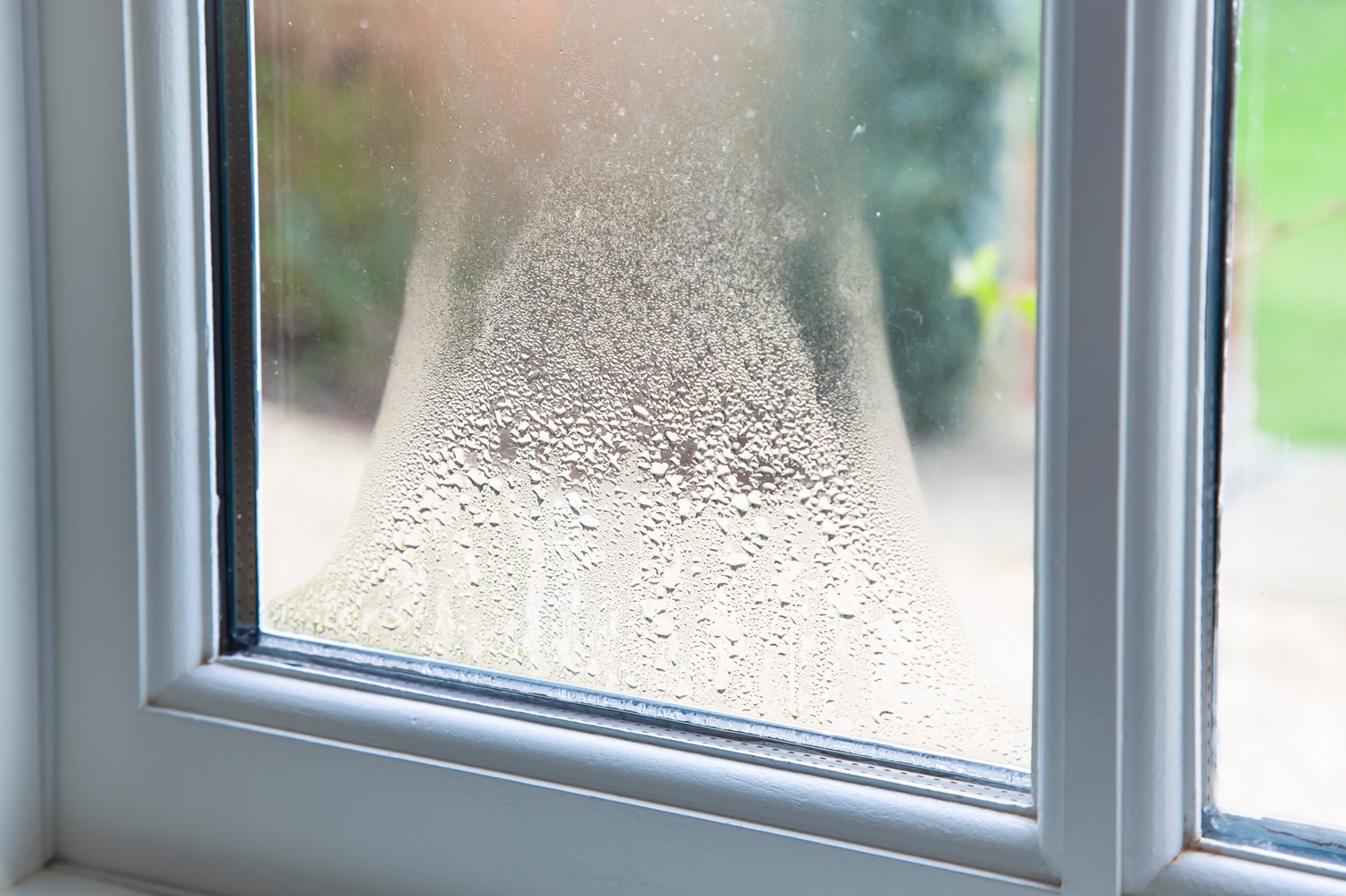
Window seal failure is the opposite of ostentatious. It doesn’t announce itself when it’s happening; you have to look for the warning signs and piece things together. Noticing some cloudy glass, faint rings inside the pane, or hazy patches that persist no matter how much you clean them is the first step, and from there you have to do some thinking, even though it’ll be years before the window leaks or falls apart.
The rubber gasket around the sash isn’t the issue. When a window seal fails, it’s usually the thinner seal between the two or three panes of glass. Once it lets go, the window changes in ways that are easy to misread.
What Window Seal Failure Really Is
Modern insulated windows are made up of two or three panes of glass with a sealed space between them. In that space, there’s usually argon or krypton gas, which are denser than ordinary air. Because they’re denser, these gases are better at insulating and resisting condensation.
The edge seal keeps that gas in and outside moisture out. It’s built from a spacer and sealant that wear down over time as the glass heats, cools, expands, and contracts with the seasons. Once the seal cracks, the insulating gas leaks out and humid air gets in.
Why Windows Fog Up Between the Panes
How the Seal Breaks Down
Seal failure happens gradually over time. For example, a hairline crack can let in a small amount of moist air on a humid day. Once that moisture gets in, it has nowhere to go because it’s trapped between the panes. When that happens, it condenses on the coldest surface it can find, usually the inside of the outer pane.
Summers in Baltimore, MD, can make this particularly worse. It gets very humid, which provides more moisture for failing seals to pull in. That is part of why rowhouses here often show foggy panes earlier than the same windows might elsewhere.
What the Fog Is Really Made Of
The haze is just water vapor condensing on glass. It’s the same physics as a cold drink sweating on a warm day. Where it happens is the real difference. It’s on the inside of the glass unit, where nobody can wipe it away.
The spacer between the panes exists to keep the argon or krypton fill in place and separate from outside moisture. Fogging between the panes means that separation is failing.
Building America Solution Center research ties this same spacer-and-gas system to ENERGY STAR window rules. Those rules call for that gas fill paired with a low-e coating to hit today’s target.
Window Seal Failure vs. Everyday Condensation
Condensation on the inside surface of a window, the side facing the room, is usually about indoor humidity. A steamy bathroom or a pot boiling nearby can fog glass for a while. It clears once the air dries out.
Fog trapped between the panes never clears on its own. Wiping either side of the glass does nothing, since the moisture sits where nobody can reach it. That’s usually how homeowners can tell the two problems apart.
Can a Foggy Window Be Repaired
When Repair Really Works
Some companies offer to defog a sealed unit. They drill a small hole, dry out the trapped moisture, and seal the hole shut. It can clear the haze for a while, but it doesn’t restore the argon fill or rebuild the seal.
Once a seal has truly failed, moving to vinyl replacement windows can change the repair-versus-replacement math. They often return a large share of their cost at resale, and they can also cut heating and cooling bills by up to 20 percent a month.
What Window Seal Failure Means for Replacement Timing
A single foggy pane doesn’t necessarily mean every window in the house needs to go. Seals fail at different rates depending on sun exposure. A south-facing window often shows problems years before the rest of the house because it gets the most sun.
What it does mean is that the glass unit itself has reached the end of its useful life. A sealed unit can’t be un-fogged for good. To confirm what’s failing, have the window checked during an in-person window assessment. Age and frame material both affect how a seal fails.
Choosing Replacement Windows for a Baltimore Rowhouse
Older Baltimore rowhomes often have narrow, non-standard window openings built well before modern sizing became standard. That’s part of why Baltimore window replacement often looks different from a typical suburban job, since stock sizes rarely fit without some extra work.
Anyone comparing the different types of residential windows should also think about how each style handles a rowhouse’s narrow lot and shared walls. Double-hung windows remain the most common swap for historic openings. They keep the original look while updating everything behind the glass.
A new window also brings double- or triple-pane construction with an inert gas fill that the original probably never had. That space is exactly what window seal failure eventually breaks down, so a new seal effectively resets the clock.
The National Fenestration Rating Council rates every certified window on a Condensation Resistance scale. That lets buyers compare performance before they buy, not after a seal fails a second time.
Window replacement often happens alongside other exterior work, like siding or paint. When windows are part of a larger project, getting the sequencing of exterior remodeling work right keeps a window crew from redoing trim another crew just finished.
A contractor with tens of thousands of installs across the region has seen nearly every version of window seal failure there is. That experience counts for something when the cause is truly ambiguous.
Common Questions About Window Seal Failure
Is a foggy window between the panes dangerous?
No, fogging by itself isn’t a safety issue. The bigger cost is often the energy loss, since a failed seal no longer insulates the way it did when new.
Can homeowners insurance cover a failed window seal?
Rarely. Most policies treat seal failure as normal wear and tear, not sudden damage, so it typically falls outside standard coverage.
Does every window in a house fail at the same time?
No. That’s part of why some homeowners still replace every window in one project anyway. A single new unit rarely matches twenty-year-old glass, and one project qualifies for a single warranty instead of several.
Living With Window Seal Failure
Fog between the panes means a sealed glass unit has reached the end of its life. It isn’t something a rag or a cleaner can fix.
Knowing that early gives a homeowner real options. Watch a single window for now, or start planning a fuller replacement before more panes follow the same pattern.
Sources
Building America Solution Center: High-Performance ENERGY STAR Windows