

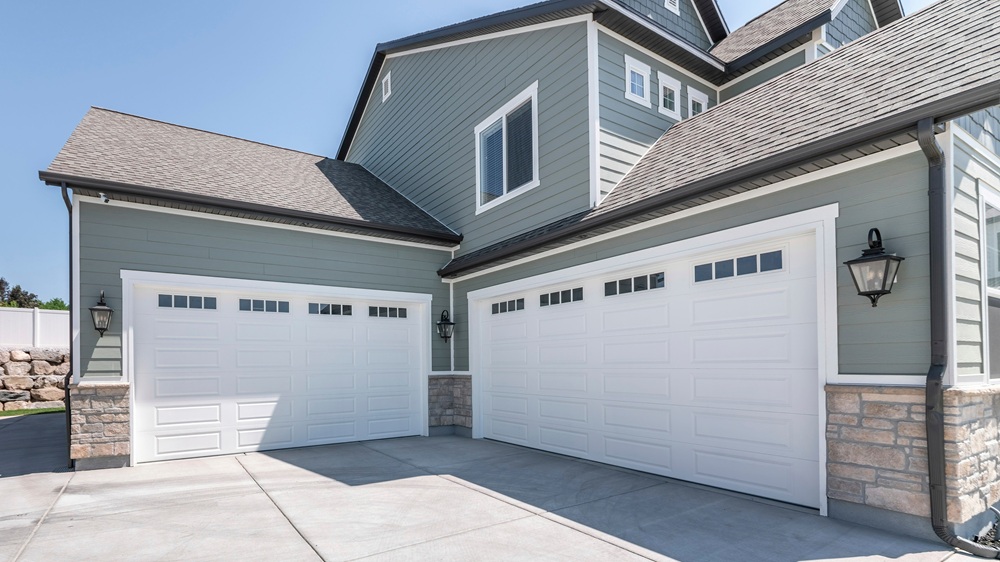
Garage door insulation sounds like one of those things with universal benefits. Most homeowners assume it’s worth the extra costs in all situations, but that’s not always the case. The practical value of insulating a garage door depends on several factors, like the local climate, and most importantly, whether the garage is attached or detached.
If a garage door is attached to the rest of the home, insulating it delivers value you’ll notice right away. If it’s detached, it’s harder to deliver meaningful value in a noticeable way.
Which garage door type fits the home depends on material, construction tier, and how the space is used. Getting that context right prevents overspending in garages that cannot benefit and underspending in situations where the upgrade clearly pays.
Exterior projects worth doing before winter are often planned in late summer and early fall, and the garage door decision is one of the higher-return items on that list for attached garages in cold-climate states.
What Makes Insulated Garage Doors Different
“Insulated” isn’t a binary term. Garage door construction runs in three tiers. Single-layer is a steel panel with no backing. Double-layer adds polystyrene or a cardboard backer bonded to the inside face. Triple-layer sandwiches insulation between two steel skins, creating a structurally distinct and thermally superior assembly that would also reduce needs for garage door repair in Rockville and Gaithersburg, MD.
When comparing doors on price alone, you’re comparing across these tiers without realizing it.
Polystyrene vs. Polyurethane: The Insulation Types That Actually Matter
The insulation material inside the door determines how well the rated R-value translates to real performance.
Polystyrene is the foam board version, made of pre-cut panels glued to the back of each door section. It fills most of the cavity but leaves gaps at the edges, is not bonded to the outer steel skin, and can rattle or separate over time. It’s an improvement over single-layer construction, but the unsealed edges can leak out some R-value in practice.
Polyurethane is injected into the cavity as a liquid that expands and bonds to both steel skins. The result is a fully sealed fill with no gaps, greater structural rigidity, and more consistent thermal resistance. Two doors rated at R-12 built differently will perform differently: the polyurethane door delivers that number more completely because the fill is bonded and continuous.
R-Value: What the Number Means for Garage Doors Specifically
R-value measures thermal resistance. For garage doors, common ratings run from R-6 on entry-level double-layer polystyrene to R-18 or higher on premium triple-layer polyurethane. The rating just represents the door itself, not the whole garage.
A door rated R-16 in a garage with uninsulated walls and an uninsulated ceiling contributes to the garage’s thermal performance, but heat’s still free to move to other surfaces. A homeowner who spends significantly on a premium door in an otherwise uninsulated detached garage is optimizing one component while the rest of the garage competes against it.
When Insulated Garage Doors Are Worth the Extra Cost
Attached Garages
Insulation most consistently delivers its practical value on attached garages.
The garage shares a wall with conditioned living space, usually with a bedroom, kitchen, or finished room on the other side. That shared wall pulls tons of thermal weight constantly. In winter, it’s resisting heat loss from the living space into the cold garage. In summer, it’s resisting heat gain from the hot garage into the home.
How hard that wall works is influenced by the garage temperature. A garage that holds 45 degrees on a 20-degree day places less thermal load on the shared wall than one that drops to 25. An insulated door reduces how far the garage temperature swings with outdoor conditions. It won’t warm up the garage on its own, but it does make the temperature gap smaller.
For garages used as finished or conditioned spaces, such as a home gym, workshop, office, or playroom, the argument is even clearer. Any heating or cooling equipment in the garage is directly affected by how much thermal work the door is generating.
Detached and Unconditioned Garages
The case for premium insulation weakens considerably in a detached garage with no living space overhead, no heating or cooling equipment inside, and no conditioned space sharing a wall. The door slows heat exchange with the outside, but without similarly insulated walls and ceilings, that won’t be enough to make a meaningful difference.
That’s why it’s hard to justify spending an extra few hundred dollars in that scenario. The structural and acoustic benefits of a triple-layer door may still apply, but the energy argument doesn’t hold in a genuinely unconditioned detached space.
How Insulated Garage Doors Affect Energy Bills and Noise
The energy savings from an insulated garage door in an attached garage are real but difficult to quantify in a specific dollar figure. They depend on climate, home orientation, how frequently the door cycles, and whether adjacent living spaces are regularly occupied. Cold-climate homes with attached garages see more measurable impact than mild-climate homes. Homes in Phoenix or San Diego will see less benefit than homes in Minnesota or Maine.
In most energy audits of existing homes, air sealing and attic insulation produce larger returns than garage door R-value improvements. As a result, most people see garage doors as one entry on a broader list of home energy efficiency upgrades. Among the components being replaced anyway, choosing a better-insulated door is still one of the easier gains.
The Noise Reduction Benefit
Polyurethane-filled doors are measurably quieter than polystyrene or single-layer doors. The bonded foam dampens panel vibration, and the triple-layer construction is heavier and less resonant. For a home with a bedroom above the garage, a home office next to the garage wall, or a garage used regularly as a workspace, the acoustic improvement is often more noticeable day-to-day than energy performance.
The noise benefit applies regardless of garage type. A detached workshop garage with no thermal argument still benefits from a quieter, heavier door. Higher-tier insulated doors also tend to come in more refined panel profiles and finish options, which means how garage doors affect curb appeal often overlaps with the chosen construction tier.
Cost and What Drives the Price Difference
Non-insulated single-layer steel doors start around $400 to $700 installed for a standard single-car opening. Double-layer insulated doors usually run $700 to $1,200. Triple-layer polyurethane doors run $1,000 to $2,000 or more depending on size, panel profile, and local market. The price gap comes from the second steel skin, the injected foam, and the heavier hardware required to hang and balance a heavier door.
The garage door installation timeline for most insulated door replacements runs two to four hours for a standard single-car opening. Heavier triple-layer doors occasionally require additional spring adjustment, which can expand the scope on the day of install.
Overhead garage door options vary in mechanism and track configuration, and heavier insulated doors sometimes require confirming the existing spring system is rated for the added weight before the door can be placed.
Homeowners thinking about the broader environmental footprint of their project may find eco-friendly garage door options relevant here because many higher-insulation doors are made using sustainable materials. Steel-and-foam construction can incorporate recycled content in ways that single-layer doors do not.
The garage door’s role in the exterior is large enough that the construction tier choice stretches across several factors like appearance, thermal performance, and structural durability. Treating R-value as the only variable is a reductive way of looking at this.
The Decision in Plain Terms
Attached garage with conditioned adjacent space, cold or hot climate: triple-layer polyurethane is the right default. The thermal and acoustic benefits both apply, the structural quality difference is real, and the premium over a double-layer door is modest.
Detached, unheated, unconditioned garages in mild climates are harder to justify using the energy argument. A mid-tier double-layer door delivers better construction than single-layer without the premium of a full polyurethane fill. It’s usually better to apply the extra budget somewhere else.
Garage used as finished or conditioned space regardless of attachment: insulate the door. Temperature and noise both affect how the space functions, and the door is the most cost-effective thermal and acoustic upgrade relative to its scope.
Frequently Asked Questions
Does an insulated garage door really save energy?
Yes, for attached garages in climates with significant winter cold or summer heat, but the savings are modest in isolation. The door’s insulation affects garage temperature, which in turn affects the thermal load on the shared wall between the garage and the living space. In detached, unheated garages, the savings are minimal because the rest of the building envelope still allows free heat exchange.
What R-value should I look for in a garage door?
For attached garages in cold-climate states, R-13 to R-18 is the practical target, with polyurethane construction preferred over polystyrene at similar ratings. For mild climates or detached garages, R-6 to R-10 is adequate and avoids paying for performance that can’t be used.
Can I add insulation to an existing garage door instead of replacing it?
Yes. Retrofit insulation kits attach polystyrene or reflective foil panels to the inside face of each door section and add roughly R-4 to R-8 at a fraction of replacement cost. The limitations are real: the R-value ceiling is lower than a factory-built insulated door, the added panels increase the door’s weight in ways the existing spring system may not be calibrated for, and the result is an interior surface treatment rather than a finished structural assembly.
What the Garage Is Determines What the Door Should Be
An insulated garage door is worth the extra cost when the garage is attached to the home and the temperature difference between inside and outside has somewhere to cause a problem: heat loss through the shared wall, discomfort in an adjacent room, or an unusable conditioned space. In those situations, the triple-layer polyurethane door is a clear choice. In a freestanding storage garage with no heating, no living space above it, and mild winters, the premium buys structural quality and quieter operation, not meaningful energy performance. Know which situation the garage is before comparing R-values on a specification sheet.