
Three marine contractors can look at the same dock and hand back three different prices. How do you, the homeowner, tell the difference between each quote? How do you determine which contractor is giving you a fair price, and which contractor is pulling a fast one on you? Simply asking “how much does a boat lift cost?” won’t really get you anywhere without knowing important variables like the boat’s weight, the lift’s build, and the site it’ll be built into.
The more useful question has nothing to do with how high you perceive a contractor’s quote to be. Focus more on the differences between the quotes: capacity, foundation work, lift type, permitting, or the conditions at the dock.
Boat Weight and Site Conditions Set the Starting Price
Weight capacity, frame material, power source, and how difficult the site is to work in all affect the number before anyone thinks about a brand.
Capacity usually moves the price more than anything else. Lifting a small PWC calls for a very different frame, motors, cables, and support than a 12,000-pound cruiser.
Some boats or sites do not fit a stock setup. In those cases, a contractor may size custom-built cradle and elevator systems around the boat and dock together. Aluminum framing usually costs more upfront than galvanized steel, but requires less upkeep over time.
Site conditions can move the number just as quickly. Shallow, calm water over a firm bottom is easier to work in. A soft bottom or wide tidal swing can require more foundation work.
Boat Lift Cost by Type: Why the Water Decides
Lift type is one of the biggest swings in boat lift cost. Each design handles the boat and changing water levels differently. Nailing down the site’s depth, tide, and dock configuration will narrow down the choices.
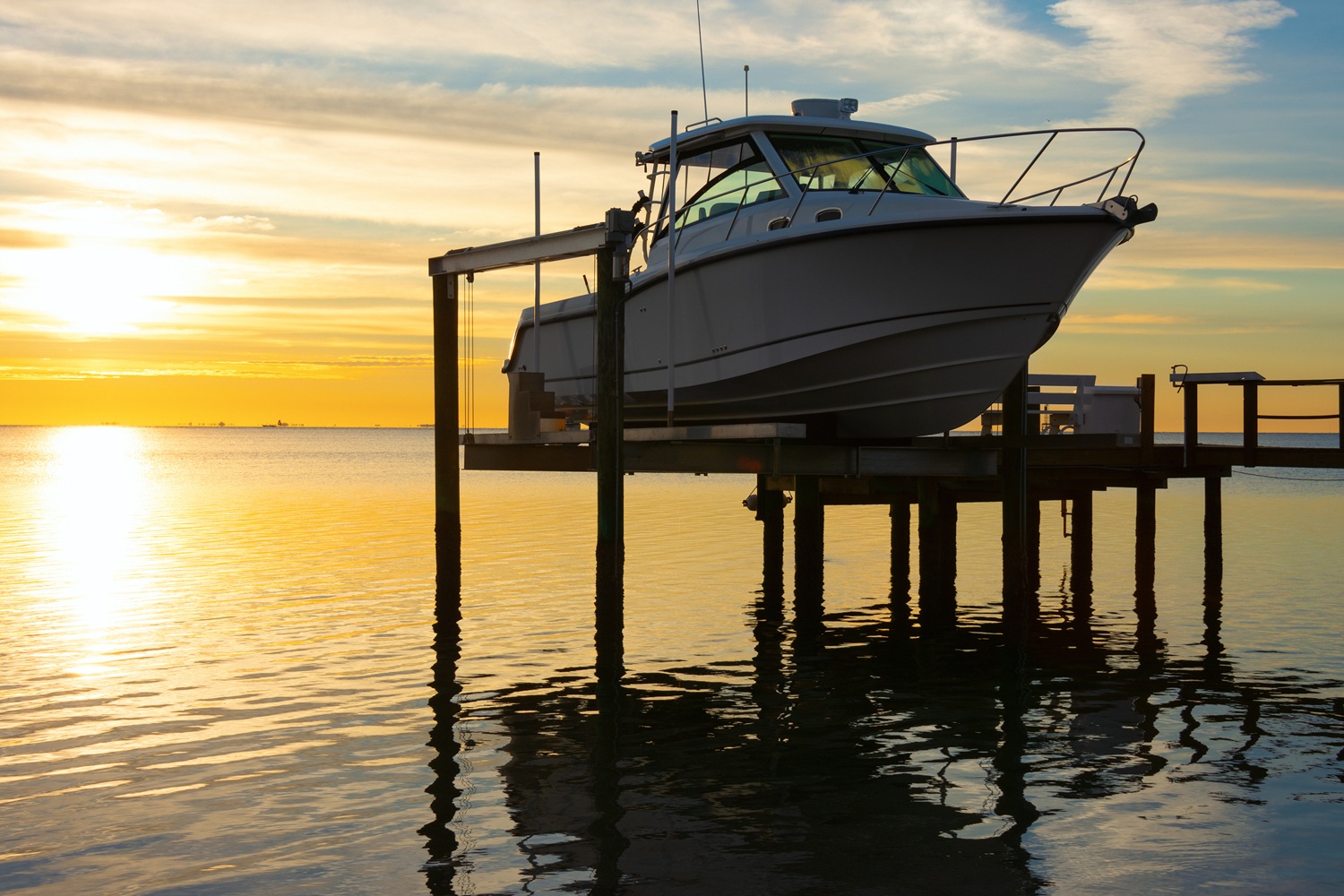
Cradle and Elevator Lifts for Fixed Docks
A cradle or elevator lift raises the boat vertically on an anchored frame tied into the dock or pilings. It works well with fixed docks where tidal movement is moderate. Prices typically start around $4,000 for a small runabout. They climb toward $15,000 or more for a larger cruiser rated above 10,000 pounds.
Floating Lifts for Tidal Water
A floating lift rises and falls with the water. The platform sits on sealed floats rather than a fixed frame. That extra engineering usually makes it more expensive than a comparable fixed lift. On shorelines with a wide tidal range, like much of the Wilmington area, a floating system can be much more practical.
That same tidal movement contributes to wear on a floating dock over its lifespan. Both the lift and the dock supporting it should be checked together. A smaller floating platform may start around $8,000, while systems built for larger boats can move well beyond $15,000.
Jet Ski and PWC Lifts
Jet ski and PWC lifts sit at the lower end of the range, usually around $1,500 to $4,000 installed. They still need correct sizing and stable support. But they weigh less than a traditional boat, which means they need less material and lighter installation work.
Boat Lift Cost by Size and Weight Capacity
Type explains how the lift works. Weight capacity usually determines where the project lands within that type’s price range. These are general market ranges, not figures tied to any single vendor or region.
- Under 3,000 lbs (PWC, small runabouts): roughly $1,500 to $4,000.
- 3,000 to 8,000 lbs (pontoons, mid-size runabouts): roughly $4,000 to $9,000.
- 8,000 to 12,000 lbs (larger runabouts, small cruisers): roughly $9,000 to $15,000.
- Over 12,000 lbs (larger cruisers, custom systems): $15,000 and up.
These ranges assume a standard installation. Site work and permitting can add a lot to the final number.
Why Boat Lift Cost Differs Between Two Nearby Docks
There can be a drastically different boat lift cost between two docks just a few hundred feet apart. Bottom type and tidal range can change over a surprisingly short distance.
A soft, silty bottom may need deeper or extra pilings to support a given load, while a firmer sandy bottom can carry that same load with less foundation work.
A lift’s frame depends on the driven pilings beneath it. That’s why crews check site conditions before anyone orders equipment. Open water adds another variable. A lift exposed to wakes and chop needs more substantial bracing than one tucked into a protected cove.
Storm exposure factors in too. On an exposed waterfront property, the same planning used for hurricane-proofing a waterfront home should include the lift and dock. Attached marine structures also have to handle severe wind and rough water.
Installation and Permitting Costs in Coastal NC
Coastal permitting can add both time and money before the work starts.
The North Carolina Division of Coastal Management maintains a General Permit for Piers and Docking Facilities under 15A NCAC 07H .1200, and it specifically caps the area a boat lift can enclose at 400 square feet. The state review fee for that permit is $200. Sites on federally maintained channels also have to meet Army Corps of Engineers requirements under the same rule.
That $200 covers the state’s own review. Engineering, surveys, and any added federal review can still add real cost on top of it, so it’s worth budgeting some cushion beyond that flat fee. A change order after permitting review begins is a worse surprise than a wider estimate up front.
What Ownership Costs After Installation
Installation is only the first part of boat lift cost. Periodic attention to the cables, motors, and canopy hardware that wear over time is part of the system’s upkeep too. All of it cycles with regular use.
Saltwater speeds up rust on cables and moving parts. A lift exposed to coastal water generally needs closer attention than one on a freshwater canal. Annual inspection and basic service may cost a few hundred dollars. A motor or cable replacement later can run into the thousands.
How to Compare Boat Lift Quotes
Ask for an itemized quote instead of one lump-sum number. Separating the lift itself, foundation work, permitting, delivery, and installation makes the difference visible, and shows exactly why one contractor landed higher than another.
That breakdown also shows whether two bids are actually pricing the same project. A cheaper quote that leaves out piling work or permit costs is not necessarily cheaper once the project is underway.
A fixed lift alone may not be enough on a shoreline with a wide tidal swing. Pairing it with a floating dock system built for that movement often solves the problem. That decision is easier to make during the site visit than after someone has already ordered equipment.
A crew can sometimes schedule other dock work during the same trip out. Adding a dock gazebo for shade and shelter while the crew is there avoids a second trip charge.
A short site visit before anyone places the order brings bottom conditions, tide, access, and dock structure together. Those details are what keep a reasonable quote from turning into a much larger bill halfway through construction.
Common Questions About Boat Lift Cost
Can a homeowner install a boat lift without a marine contractor?
Some lighter PWC lifts are sold as owner-installable kits. Once a lift needs piling work or coastal permitting, the project is no longer a basic kit installation. It shifts into contractor and permitting territory instead. Work completed without the required approval can also create problems later during an inspection or sale.
Can a floating lift work in a rented marina slip?
Sometimes, but the marina’s rules come first. Many marinas restrict which lift types or equipment they’ll allow on a rented slip. Check with the marina office before buying anything. That way you don’t end up with a lift the slip cannot handle.
How long does a boat lift installation usually take?
A standard installation on an existing dock often takes one to three days. That assumes permits are in hand and any required pilings are ready. New piling work or a dock rebuild adds several more weeks before the lift goes in.
What to Know Before the First Quote
Before calling contractors, know the boat’s weight and the basic conditions at the dock, especially water depth and tidal movement. Those two facts drive boat lift cost more than brand or model. They’re what a marine contractor needs to start discussing realistic capacity and installation options.
Then compare the quotes by what they include. A lift sized right for the boat, supported right for the site, and permitted as part of the original scope may cost more on paper. A stripped-down bid often leaves those things out. That number is still far more useful to compare against.