
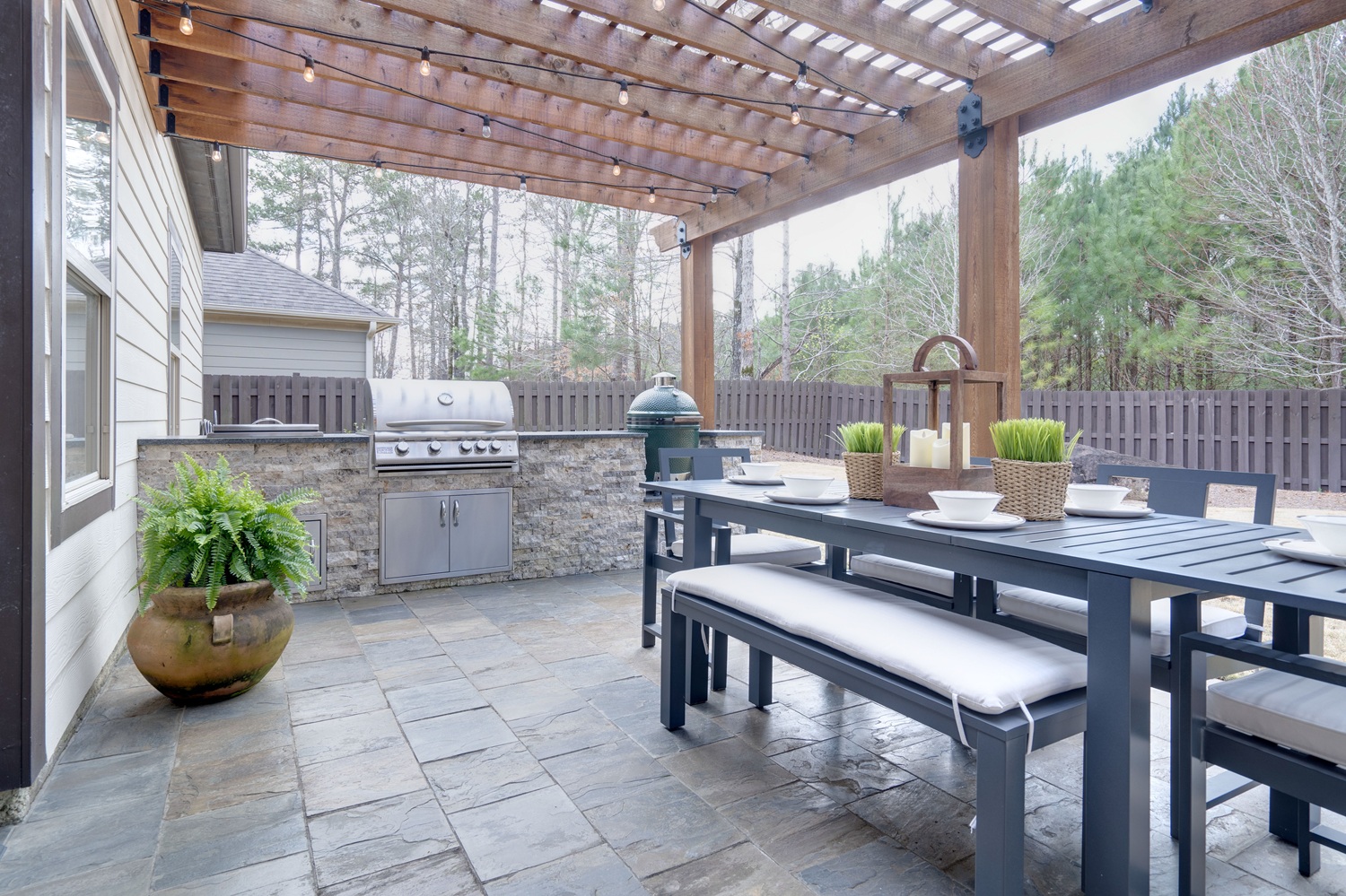
Everyone focuses on the fun part with outdoor kitchens: layouts, grills, maybe even a pizza oven. But when it comes to planning the rest of an outdoor kitchen, electrical outlet concessions might need to be made, because you can’t just run a cord out there and call it a day.
An outdoor kitchen electrical outlet is actually subject to several extra code rules that regular indoor outlets aren’t. And skipping those rules can have serious legal, financial, and safety consequences.
Why Indoor-Rated Parts Don’t Work Outside
Indoor spaces don’t experience rain, humidity, or temperature swings, so they’re not built with those things in mind. An outdoor space needs all that and more. Outdoor receptacles need weather-resistant devices and enclosures suited to whether the location is classified as damp or wet. In wet locations, the enclosure generally has to remain weatherproof even while a cord is plugged in.
A snap-shut indoor cover can’t do that. Getting this right starts with sourcing outdoor-rated GFCI receptacles and weatherproof boxes built for this exact purpose. Swapping in a cheaper indoor part and hoping the box compensates won’t work.
How Many Circuits an Outdoor Kitchen Really Needs
A mini fridge and a single burner might share a circuit without any problems. Add an ice maker or a second cooking appliance, though, and shared load becomes a real problem because each one draws power at unpredictable times.
Dedicated Circuits vs. Shared Load
The actual numbers explain why. A built-in outdoor refrigerator typically pulls only 3 to 6 amps while running.
Many refrigerators call for an individual or dedicated 15- or 20-amp circuit, so check the electrical requirements for the actual appliance before laying out the branch circuits
An ice maker adds another circuit’s worth of demand on top of that. A basic outdoor kitchen with a gas grill, a mini fridge, and some lighting might total 20 to 30 amps.
A fully equipped setup with an electric smoker, refrigerator, ice maker, and multiple lighting zones can climb to 80 or 100 amps if everything runs at the same time.
Circuit and service capacity should be based on the appliances’ nameplate requirements and the load calculation required by the electrical code adopted in your jurisdiction.
Refrigerators, in particular, do best on their own circuits. A compressor cycling on while a grill’s igniter draws power can trip a breaker mid-party with all your guests standing around.
GFCI Protection Isn’t Optional Here
This isn’t a preference. Section 210.8(F) of the National Electrical Code requires GFCI protection on outdoor outlets fed by qualifying branch circuits. That protection can live either at the breaker or at the outlet itself.
Either spot satisfies the code, but the parts have to actually be rated for it. The panels, breakers, and wiring supplies contractors choose for a job like this have to reflect that requirement too. GFCI protection can’t just be tacked on after the fact.
Does Your Panel Have Room for This?
An outdoor kitchen adds real load to a home’s electrical system. In some older homes with older panels, an 80- to 100-amp outdoor kitchen can take up almost the entire panel’s capacity by themselves.
A 100-amp service deserves a closer look before substantial new loads are added, but its rating alone does not prove an upgrade is necessary. The electrician needs to check both available breaker space and the home’s calculated electrical load.
Whether the panel has room for one more circuit is a separate question from the outdoor kitchen design itself. It decides whether the project can proceed as planned or needs a panel upgrade first.
An electrical load calculation can answer that capacity question instead of guessing from the panel’s age or main-breaker rating.
Outdoor Kitchen Electrical Outlet Cost Factors
If you’re planning on adding an outdoor kitchen electrical outlet or two or three, know that the main cost driver is circuit count. Each dedicated circuit requires running its own wire back to the panel and its own breaker, which adds labor and material costs.
A four-appliance layout with separate circuits for the fridge, ice maker, cooking appliance, and lighting costs more to wire than a two-appliance one. And that’s before factoring in the costs of the appliances themselves.
Device quality is the other real cost variable. A commercial-grade weatherproof GFCI outlet costs more upfront than a basic one, and you can’t cut corners here without exposing yourself to serious safety risks.
FAQ: Outdoor Kitchen Electrical Basics
Can I use a regular extension cord instead of a permanent outlet?
Not for anything that runs all the time. Extension cords aren’t rated for steady outdoor exposure. Running one across a patio creates both a trip hazard and a moisture risk.
Does an outdoor kitchen need its own sub-panel?
An outdoor kitchen does not automatically need its own subpanel. An electrician may recommend one when the project involves several circuits, a long run from the main panel, future expansion, or other design considerations
What happens if I skip GFCI protection?
Without GFCI protection, a dangerous ground-fault current can be too small to trip an ordinary overcurrent breaker while still posing a serious shock hazard to a person.
Sourcing the Right Parts vs. Hiring the Right Installer
None of this wiring should be a DIY project. Device ratings and breaker type have to be right, and so does the person pulling wire and making connections at the panel. The right questions before hiring an electrician cover licensing, permit handling, and experience with outdoor-rated work, which not every electrician handles often.
The load-planning question here isn’t unique to outdoor kitchens either. Adding a major new electrical load to a home raises the same panel questions, whether it’s an EV charger or an outdoor kitchen.