
Most New Jersey homes were built between 1950 and 1990, the same decades when the electrical panels with the worst safety records were being manufactured and installed across the country. The panel in the wall may appear to be working normally. But under the surface, it might not be protecting the house the way it should.
The signs you need an electrical panel upgrade fall into two groups. Panels that struggle under ordinary household use, and panels with known structural defects that make them unsafe. Defective panels belong in the second group and warrant more immediate action than a panel that’s just aging.
Quick Answer
The most common signs you need an electrical panel upgrade include frequent breaker trips that will not reset cleanly, a Federal Pacific panel still in service, a panel over 25 to 40 years old, lights that dim when large appliances start, and the home adding major new electrical load. New Jersey requires permits under NJAC 5:23 for all panel replacements, and full-service upgrades involving utility coordination add time no electrician can shorten.
Signs You Need an Electrical Panel Upgrade in Your NJ Home
Breakers That Trip Repeatedly or Won’t Reset
A breaker that trips once in a while is just doing its job. If it’s tripping consistently, that indicates a more specific problem. Some homeowners find their breakers trip every time two appliances, like the microwave and air conditioning, run at the same time. Once or twice is normal, but something like that is worth looking further into.
Repeated tripping on the same circuit usually means one of two things. Either the circuit is carrying more load than it can handle, or the breaker itself is wearing out. Breakers are mechanical devices with a lifespan of roughly 25 to 30 years. Past that point they lose sensitivity. They may trip too easily, or fail to trip when they should. A breaker that can’t cut power to an overloaded circuit leaves the wiring inside your walls without protection against overheating.
The panel door and the wall behind it should be room temperature to the touch. Warmth coming off the panel usually points to an internal connection problem. Visible scorch marks, discolored plastic around breakers, or a burning smell near the box are emergency conditions. Shut off the main breaker if it is safe to do so and call a licensed electrician immediately.
A Federal Pacific Panel Still in Service
This is the most urgent of all the signs you need an electrical panel upgrade, and it applies to a large number of NJ homes.
Tens of thousands of New Jersey homes had Federal Pacific Electric (FPE) Stab-Lok panels installed during the 1950s through the 1980s. In the 1980s, the Consumer Product Safety Commission hired Dr. Jesse Aronstein, an electrical engineer, to test Stab-Lok panels and breakers. His team found that 51 percent of the breakers failed to trip under overcurrent conditions. More testing conducted by the CPSC and independent engineers between 1979 and 1983 found failures to trip in 14 to 74 percent of tests.
FPE’s parent company, Reliance Electric, acknowledged “a possible defect” in a 1982 SEC filing and stated that FPE had obtained its Underwriters Laboratories approval “through the use of deceptive and improper practices.” UL revoked its listing for most FPE products. In 1983 the CPSC closed its investigation. In 2002, a New Jersey class action lawsuit resulted in a court ruling, finding the company “knowingly and purposefully distributed circuit breakers which were not tested to meet UL Standards as indicated on their label.” These panels remain in service across NJ today.
To check, open the panel door and look for the words “Federal Pacific Electric,” “FPE,” or “Stab-Lok” on the label. Red-tipped breaker handles are the clearest visual sign. Replacing individual breakers does not solve the underlying design defect in either panel. Full replacement is the only safe path forward.
Homes built during this period often have wiring issues as well. Why older NJ homes often need full electrical rewiring explains what electricians usually find once the walls are open, and why a panel replacement by itself may leave older vulnerabilities in place.
What Your Panel’s Age Tells You
Even without a defective brand, a panel has a limited functional life. The standard estimate is 25 to 40 years. If a home built in 1975 never had its panel replaced, it’s now over 50 years old. A panel replaced during a 1990 renovation is 35 years old. Either may be nearing or past the point where internal components begin to degrade.
After 25 to 40 Years, What Starts to Fail
Older panels were also sized for a different era of electrical load. Sixty-amp or 100-amp service was standard in homes built before the 1980s, designed for a household with lights, a refrigerator, and a television. Modern electrical demands like central air conditioning, home offices, large appliances, EV chargers, and heat pumps all add load those panels were never designed to carry.
Lights that dim or flicker when large appliances cycle on usually show up because the panel is struggling with the draw surge. If that flickering appears in many rooms instead of one, the issue points to the panel rather than wiring on a single circuit. Reliance on power strips and extension cords across several rooms suggests the same thing. Adding more outlets doesn’t fix this; the panel can’t support the circuits it needs to.
A panel with no open breaker slots can’t safely absorb new circuits no matter how well the existing ones seem to be holding up. On the insurance side, some carriers in NJ will not write or renew policies on homes with panels over a certain age or with known defective brands. Worth confirming before a home sale turns the issue up at the worst possible time.
Signs You Need an Electrical Panel Upgrade Before Adding New Load
Some of the clearest signs you need an electrical panel upgrade show up before there is an obvious failure. They’re often triggered by decisions being made about the house instead of anything the panel has done wrong yet.
EV Chargers, Generators, and Whole-Home Additions
A Level 2 home EV charger draws 30 to 50 amps on a dedicated 240V circuit and runs for several hours at a time. Before any EV charging equipment goes in, the panel needs to support that circuit without pushing total household load past safe operating capacity. A 100-amp panel serving a fully occupied home usually can’t absorb a Level 2 charger without tripping or overheating under normal use. Choosing the right home EV charger setup starts with confirming what the existing panel can actually carry.
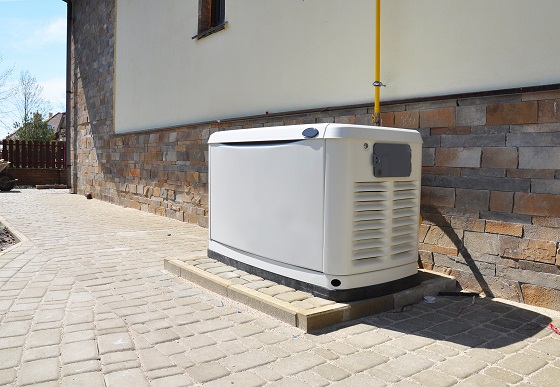
Standby generators need a transfer switch that isolates the home from the utility grid, as well as a dedicated circuit. Both need available breaker slots and capacity headroom. Backup generator equipment and the panel’s specifications need to match. Choosing the right backup generator for your home depends in part on whether the panel can support the transfer equipment and the expected load.
Home additions, heat pump installations, whole-house HVAC upgrades, and kitchen remodels all add new circuits. A panel assessment should happen before signing a remodel contract, not after the walls are open. The wiring and cable feeding those new installations also needs to meet current NEC standards alongside the panel itself. Modernizing older branch wiring becomes part of the conversation when a panel upgrade is being asked to support circuits tied into older cable.
What a Panel Upgrade Involves in NJ
Permits, Utility Coordination, and Installation Day
Panel replacements in New Jersey require a permit under NJAC 5:23. There are no exceptions. A licensed electrician should pull the permit as part of the job scope, not as an add-on and not as something the homeowner arranges separately. Work done without a permit creates problems when selling the house and leaves no documented record of code-compliant installation.
Most standard panel replacements take 6 to 8 hours of active work on installation day, with power off for 4 to 6 hours during that window. Full-service upgrades that need utility coordination, including meter work, service wire replacement, or transformer work, take 1 to 2 weeks total. PSE&G scheduling in northern and central NJ adds time no electrician can compress.
On cost, according to Caudill’s 2026 Electrical Panel Upgrade Cost Guide, basic panel replacements in the Northeast usually run $2,500 to $4,000. Panel-plus-service upgrades covering meter replacement and service wire work run $4,000 to $5,000. Full-service work involving utility coordination ranges from $8,000 to $30,000 depending on what the service entrance requires. Getting itemized quotes from several licensed NJ electricians is the only reliable way to understand where a specific project lands.
Before committing to anyone, confirm the electrician holds a current NJ electrical contractor license and will pull the permit as part of the job. Questions to ask an electrician before hiring covers what to pin down before signing anything.
NJ panel replacements need code-compliant load centers and panel components sized for the service and the expected future load, not just a like-for-like swap of whatever was there before. A 200-amp panel is the standard recommendation for most modern NJ homes and creates the headroom needed for improving energy efficiency around your home in ways older, undersized panels can’t.
FAQ: Signs You Need an Electrical Panel Upgrade
What are the first signs you need an electrical panel upgrade?
Frequent tripping on the same circuit, lights that dim when large appliances start, reliance on extension cords across many rooms, and a panel that feels warm to the touch. Burning smell or visible scorch marks near the panel are emergency conditions. Shut off the main breaker if it is safe to do so and call a licensed electrician immediately.
How do I know if I have a Federal Pacific panel?
Open the panel door and look for “Federal Pacific Electric,” “FPE,” or “Stab-Lok” on the label. Red-tipped breaker handles are the clearest visual indicator. If you have one, contact a licensed electrician rather than attempting individual breaker swaps.
How long does an electrical panel upgrade take in NJ?
Standard panel replacement runs 6 to 8 hours of active work, with power off for 4 to 6 hours during installation. Full-service upgrades requiring PSE&G coordination usually run 1 to 2 weeks from permit approval to final inspection.
Does a panel upgrade require a permit in New Jersey?
Yes. NJAC 5:23 requires a permit for all panel replacements. A licensed electrician should pull the permit as part of the job. Work without a permit creates complications at resale and leaves no record of code-compliant installation.
How much does an electrical panel upgrade cost in NJ?
According to Caudill’s 2026 analysis, basic panel replacements in the Northeast run $2,500 to $4,000. Panel-plus-service upgrades run $4,000 to $5,000. Full-service work with utility coordination ranges from $8,000 to $30,000. Get itemized quotes from a few licensed NJ electricians for a project-specific figure.
Know What’s in the Box Before It Becomes a Problem
The panels most likely to cause fires are often the ones that appear to be working. FPE Stab-Lok breakers pass overloads silently. An aging panel may handle routine loads for years before the safety margin runs out. Checking what panel you have, and when it was last upgraded, takes ten minutes and costs nothing.
If the panel is a known defective brand, the path forward is clear. If it’s approaching or past 30 to 40 years old and the household’s electrical load has grown since installation (a new AC system, a home office, an upcoming EV charger), a professional assessment before the next major circuit addition is the straightforward next step.
Electrical safety heading into summer becomes more relevant when AC startup load in July is the moment older panels, after quietly absorbing stress all year, tend to make themselves known.
Sources
Federal Pacific Stab-Lok Circuit Breakers and Panels — AmTrust Financial Safety Zone
Electrical Panel Upgrade Cost Guide 2026 — Caudill’s
Board of Examiners of Electrical Contractors — New Jersey Division of Consumer Affairs