
Coming home after dark can feel harder when a bright porch leaves the first driveway step difficult to see. Someone may have a cane in one hand and keys in the other while looking for the walkway edge. After sunset, a homeowner can check each step edge and turn while reviewing outdoor lighting for seniors.
A caregiver walking beside someone needs more room at a turn. An open car door can also throw a shadow across the first few feet of the route. A homeowner can run the check with the usual outdoor lights and parked car, with the same mobility aid nearby.
Quick Answer
A night check of outdoor lighting for seniors begins at the car door and ends at the unlocked entrance. Someone can walk at their normal pace, including any pause or turn they make on the way inside. Homeowners can mark a missing step edge or late sensor activation for repair. A second walk toward the car shows whether a fixture shines into someone’s eyes on the return trip.
Outdoor Lighting for Seniors Starts at the Car Door
Opening the car door first shows what someone sees before reaching the walkway. During a walk-through, a homeowner can ask a licensed electrician to review exterior lighting from the driveway and front step. A bright porch fixture may leave the driveway edge dim because the beam stops short of the parked car.
Walking at the pace someone uses at night can expose pauses that disappear during a quick inspection. The National Institute on Aging recommends lighting at stairs with switches nearby and motion-activated lights that illuminate pathways. Near the lock or rail, a caregiver can pause where someone normally slows down. During the pause, the caregiver can note whether the ground remains easy to see.
Two people also need more room at a turn than a solo walker. Through the narrowest section, a caregiver can stay beside someone and watch where both sets of feet go. Using a walker can change the route, so the check should include the mobility aid used at night.
Where the Beam Misses the Walking Surface
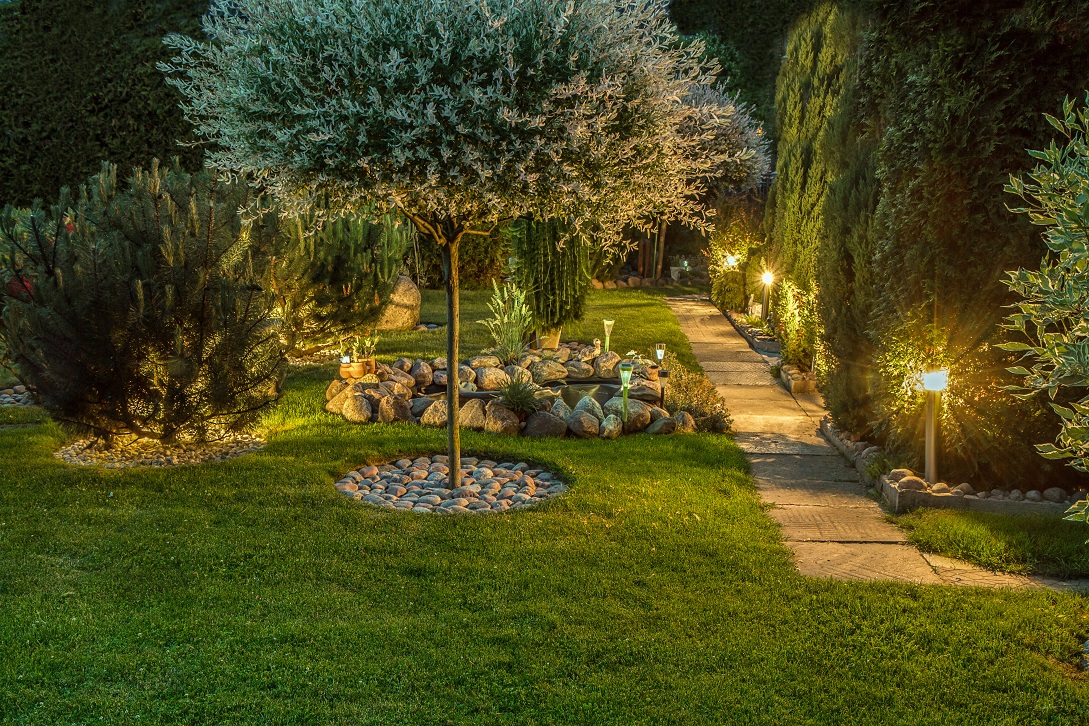
A dark strip can remain between the driveway and the first path light when nearby fixtures stop before the walkway. Nearby interior lights can stay off while a homeowner walks the usual approach with the outdoor lights running. Walking back from the front door toward the car may reveal glare that appears from only one direction.
A small route sketch marks the car and each change in height or direction. Painter’s tape placed beside the path marks a dark section and stays out of the walking line. After a bulb or fixture adjustment, a homeowner can compare the route marks.
Glare Can Hide the Step Edge
A bulb or LED source may sit directly in someone’s line of sight from the walkway. When someone squints at a step, a homeowner can point out the spot during an LED lighting evaluation. Light-level readings show whether the area is too bright or too dim.
On the walk back toward the car, someone may face the fixture directly at the step. CDC says one in four Americans over 65 has a fall each year and recommends accessible switches or motion-sensor lights. At an exterior step, someone checking the route can watch whether the tread edge stays visible on approach.
Motion Lights Should Come On Before the Dark Section
A sensor should switch the light on before someone enters a dark section. Sensor testing can start at the car door, then repeat from the sidewalk or garage entrance. If the light comes on after the first step, a homeowner can mark the activation spot for an electrician.
The timer needs to stay on while someone pauses at the door. Someone may stop to steady a walker or find a key. Homeowners planning electrical upgrades for aging homes can mark where the sensor first turns on. They can use the mark when discussing new wiring with an electrician.
The Front Door Adds a Pause to the Route
Near the entrance, someone may pause long enough for a short sensor timer to shut the light off. Unlocking the door can pull attention from the ground, so the threshold step needs light during the pause. Near a rail, a caregiver can stand beside someone and check whether two people have room.
A caregiver may notice rail movement when someone reaches for it at the porch step. A homeowner can ask a contractor about repair or outdoor handrail installation before the next night check. After rail or lighting work, another walk can check whether the step edge stays clear and the rail feels firm.
A Dirty Lens Can Leave a Dark Patch
Before moving fixtures, homeowners can clean dirty lenses and replace failed bulbs. After sunset, homeowners can also check whether plant growth blocks the beam. If cleaning restores light to the walking surface, the fixture may not need to move.
On a paper or phone note, a homeowner can record the fixture location and the date a bulb failed. If the same fixture fails again, the homeowner can show an electrician when earlier bulb changes happened. Maintenance notes also show whether a dark patch returned after plant growth reached the beam again.
Questions About Outdoor Lighting for Seniors
How Bright Should Outdoor Lighting for Seniors Be?
Homeowners can judge brightness by whether someone sees the step edge and door lock from a normal approach. From the driveway, reading the house number offers a second brightness check.
Do Motion-Sensor Lights Work Well for Older Adults?
Yes, when the sensor turns on before the dark section and stays on through a normal pause at the door. A passenger-side test shows whether the parked car blocks the sensor’s view of the route.
Where Should Path Lights Go Near Steps?
Path lights belong near changes in height or direction; a homeowner can check whether their shadow covers the step edge.
Recheck Outdoor Lighting for Seniors After a Bulb Change
A route that worked in spring may look different after a bulb change or a season of plant growth. Homeowners can note the fixture location and the spot where someone slowed down or looked away. After replacing a bulb or adjusting a sensor, homeowners can repeat the car-to-door walk after sunset. Homeowners can keep the note with the home maintenance record for the next check.
Sources
National Institute on Aging, Preventing Falls at Home: Room by Room
Centers for Disease Control and Prevention, About Vision Impairment and Falls Among Older Adults