
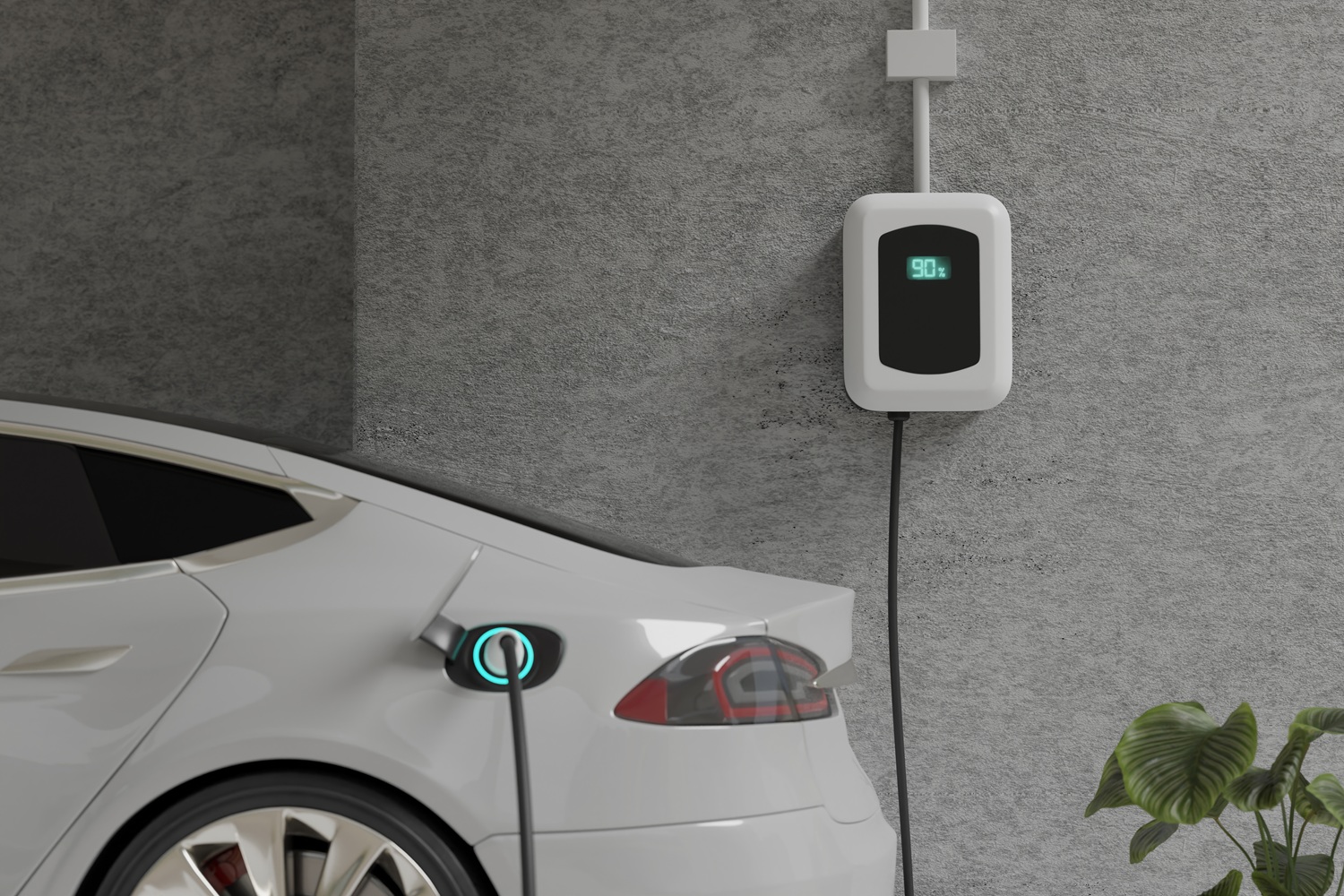
EV charger installations aren’t something to be taken lightly. They’re significant additions to any home, so their costs and your expectations should reflect that. Performing a home electric car charger installation properly has less to do with the hardware and more to do with what your home’s existing electrical setup can support.
The scope of an EV charger installation depends on whether the panel has capacity for a dedicated 240V circuit, how far the panel sits from where the charger needs to go, and what local permits require. Some jobs take an afternoon, while others need panel work that stretches the timeline by a week or more.
Electric Car Charger Installation: Level 1 vs. Level 2
What Level 1 Looks Like in Practice
Level 1 charges through a standard 120V outlet, the kind already in most garages. That doesn’t require any new electrical work. They charge at a rate of 3 to 5 miles of range per hour, depending on the vehicle. That’s enough for a plug-in hybrid with a small battery, or drivers with short daily commutes. But full-battery EVs usually require more powerful charging than Level 1 can offer to meet daily driving thresholds.
What Level 2 Adds
Level 2 runs on 240V, the same service that powers a clothes dryer. Charging rates vary by unit and vehicle, but 20 to 30 miles of range per hour is typical. That’s enough for most full battery EVs to recharge overnight. Level 2 requires a dedicated 240V circuit, a licensed electrician, and, depending on the municipality, a permit.
What the Installation Process Actually Involves
Opening and assessing the panel is the first thing an electrician will do.
Panel Capacity: What Gets Checked First
Before touching any wire, the electrician looks at the existing panel and determines whether it has an open breaker slot and enough capacity for a dedicated 240V circuit. Most homes built after 1980 with 200-amp service have that capacity. Older homes with 60- or 100-amp panels, or homes where the panel is already loaded close to its limit, may need a service upgrade.
Many homeowners are blindsided by the fact that their panel can look perfectly fine from the outside, but still lack the necessary capacity. Opening the panel and checking the load calculations is the only way to be certain.
Knowing the questions to ask before installing a home EV charger shortens that first conversation. Panel amperage and available slots are the first two things any electrician needs, and a homeowner who already has those answers gets right to the scope and price conversation.
If you’re opening a panel anyway, it’s logical to check for any other electrical work that may be necessary. Smaller items from the summer electrical safety guide, including outlet and breaker issues that are easy to overlook, cost less to fix during a planned panel visit than as separate callouts.
Permits and Inspections
Adding a 240V circuit requires an electrical permit in most states, followed by a local inspection. A reputable electrician will not skip this step. The permit documents the installation for insurance purposes and prevents the complications that stem from unpermitted electrical work.
Per the DOE’s Alternative Fuels Data Center, EV charger installations are treated as continuous loads under the National Electrical Code. NEC Article 625 sets the requirements for circuit sizing, supply equipment, and placement.
Electric Car Charger Installation Costs: What Drives the Number
A straightforward Level 2 installation with adequate panel capacity typically runs $400 to $1,200 in labor, plus $400 to $800 for the hardware. The range of residential EV chargers differs enough in amperage, smart-charging features, and weatherproofing to warrant serious consideration.
The main labor cost drivers are the distance from the panel to the charger location and whether conduit needs to pass through finished walls or ceilings. A garage next to the panel with an open conduit path is a fast job. A detached garage or a charger location on the far side of the house takes longer and costs more.
When a Panel Upgrade Is Required
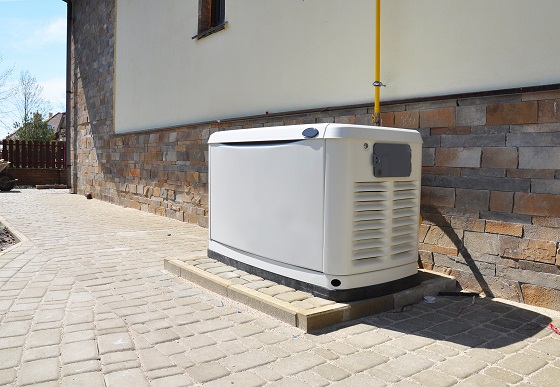
A service upgrade to 200-amp electrical service typically runs $1,500 to $3,500, depending on the home’s existing service entry and whether the utility needs to schedule their part separately. It is a separate project from the charger installation, with its own permit and inspection. Homeowners facing a panel upgrade sometimes add a backup generator transfer switch at the same time.
Some utilities offer rebates on Level 2 hardware and installation costs. The federal Section 30C tax credit covers 30% of residential installation costs up to $1,000. For homeowners already planning efficiency-related electrical upgrades, consolidating the work into a single visit often reduces total project cost.
Choosing the Right Charger and Where to Put It
Amperage is the main variable. Most full battery EVs need at least a 32-amp Level 2 unit. 48-amp units charge faster and better handle larger batteries. But many homeowners don’t realize the vehicle itself dictates the amperage ceiling. If your car’s onboard charger tops out at 32 amps, a 48-amp EVSE won’t change how fast it charges.
Smart charging features, including scheduling, energy monitoring, and Wi-Fi, add roughly $50 to $150 to the hardware cost. For homeowners on time-of-use electricity rates, overnight scheduling during off-peak hours returns that premium.
Most installations go in the garage near the panel to keep the conduit run short. For homes without garages, exterior installation is standard; outdoor units need a weatherproof enclosure rated NEMA 3R or NEMA 4. The best home EV charging stations in the 32- to 48-amp range suit most residential situations, though panel capacity and vehicle spec narrow the field.
If the garage is already being worked on for another project, coordinating the timing makes sense. Professional garage door installation and charger installation both need clear access to the same space, and stacking them into the same week cuts down on how long the garage stays a worksite.
Electric Car Charger Installation: What to Ask Before You Get a Quote
Five pieces of information produce the most accurate quotes:
- What amperage is the current electrical panel rated for, and how many open breaker slots does it have?
- How far is the panel from the intended charger location, and does the path go through finished walls or open framing?
- Does the local municipality need a permit for a new 240V circuit?
- Does the planned installation qualify for the Section 30C federal tax credit?
- What amperage does the vehicle’s onboard charger support?
An electrician who asks these before quoting tends to give a number that holds.
Frequently Asked Questions
Can I install a Level 2 charger myself?
In most states, adding a dedicated 240V circuit requires a licensed electrician under the National Electrical Code. Some jurisdictions do allow homeowner-pulled permits, but still require the inspection. More practically, an installation that fails inspection or causes a problem later creates insurance and liability complications that a professionally installed, permitted system does not.
How long does electric car charger installation take?
A straightforward job with adequate panel capacity runs two to four hours. Add roughly half a day if the panel needs reconfiguration but not a full upgrade. When a service upgrade is required and the utility needs to be involved, the work itself is still a day, but getting the utility scheduled can add several days to the front end.
Will a home EV charger affect my homeowner’s insurance?
Usually not. Permitted, professionally installed chargers are treated as standard home upgrades by most insurers. A quick call to your insurer before the project confirms how they handle it. Most will note it and move on. Unpermitted electrical work is the version that creates problems. If a claim ever involves the panel area and the investigation finds an unpermitted circuit, coverage can lapse.
Start the Assessment Before the Car Arrives
Most homeowners begin thinking about electric car charger installation after the vehicle is already on order, which leaves less room than the process sometimes needs. A straightforward panel-has-room situation moves quickly. When a service upgrade is involved and the utility needs to be coordinated, that window is hard to compress. Starting the conversation with an electrician before the car is finalized usually means fewer delays once the installation is underway.
Sources
U.S. Department of Energy — Alternative Fuels Data Center: Charging Electric Vehicles at Home
IRS: Alternative Fuel Vehicle Refueling Property Credit (Section 30C)