
Electrical surges can be the most frustrating part of those apocalyptic summer thunderstorms. Not because of outward-facing danger, but because they can mess with your home’s electrical systems without you noticing. Voltage spikes can harm the electronic controls in modern refrigerators, heating systems, and other household equipment. But a whole-house surge protector can prevent that by limiting those spikes at the electrical service. New Jersey, in particular, also requires them to be installed when replacing or upgrading a home’s service equipment.
Is a Whole-House Surge Protector Worth It?
For most homes with modern appliances, whole-house surge protection is helpful even when it’s not required by local codes. Protection at the panel provides more coverage than a simple plug-in strip.
For example, a central air conditioner has control boards in both its indoor and outdoor units. Hardwired equipment like a home EV charger connects straight to the home’s wiring rather than a protected outlet. Refrigerators, washers, furnaces, and smart-home equipment contain circuit boards too.
These are all expensive appliances, and many NJ homes have several of these. The expense of repairing or replacing one (or more) can drive you insane, which is why surge protection comes at a modest price comparatively. HomeGuide puts the national installed cost of a whole-house surge protector at about $200 to $800. An SPD reduces exposure to short voltage spikes, but it cannot guarantee that every appliance survives every electrical event. It also does not fix sustained overvoltage, low voltage, or a failing connection.
Power Surges Do Not Always Start With Lightning
Lightning is the obvious threat, especially when a storm knocks out power across a neighborhood. Utilities also switch equipment as they manage the grid, and disturbances can accompany outages and restoration.
Inside the house, motors in an air conditioner or well pump produce smaller switching transients during operation. Crazy spikes can damage components right off the bat, and smaller transients can wear down sensitive equipment over time.
Grounding and bonding may have been altered during earlier renovations, particularly in aging New Jersey homes that may have recieved piecemeal panel or wiring upgrades over the years. Surge protectors are certainly helpful, but they can’t compensate for missing or defective grounding and bonding connections.
What Happens When the Surge Reaches the Panel?
A whole-house surge protector doesn’t do much from day to day, only springing into action when the voltage rises sharply. When that happens, the device limits it and diverts surge current through its protective paths, which is called clamping. Surge current needs a low-impedance path to ground, so long or poorly connected conductors reduce how well the installation works. That’s why an electrician should examine the grounding electrode system and bonding connections before installing the device.
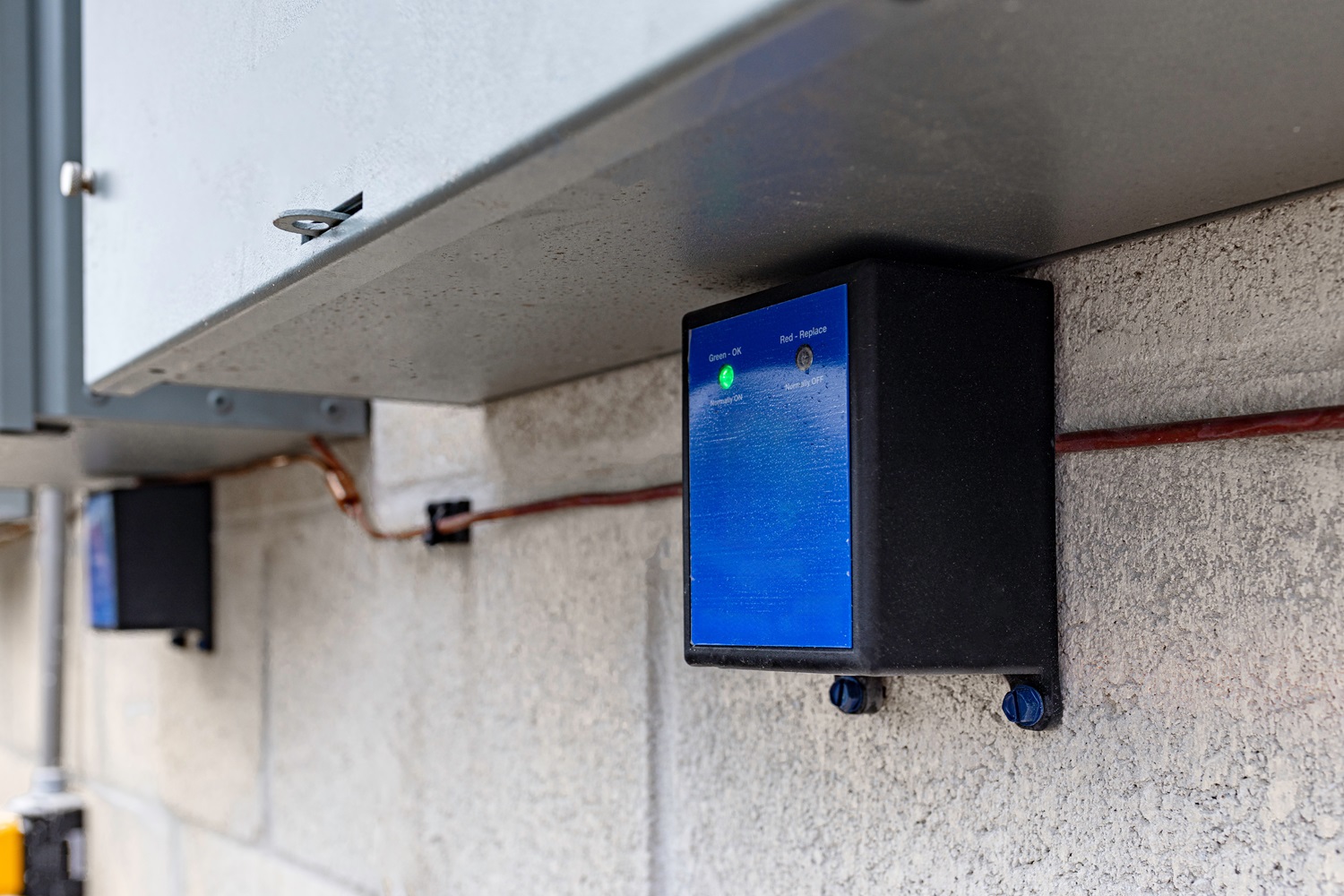
Many residential units include a small green indicator showing that protection is active. Depending on the model, that light turns off or changes color when the device reaches the end of its protective life. Breakers can still be on even when the SPD no longer protects anything, so check the indicator periodically.
Type 1 or Type 2?
A Type 1 SPD is built for service-entrance use and can go on the supply side of the main disconnect where the equipment allows. Some also work on the load side. Type 2 devices go downstream of the service disconnect, often in or beside the main panel. Either can provide whole-house protection when properly selected and installed.
Some breaker-style surge protectors fit directly into compatible panels and may take up two breaker positions. Other models mount in a separate enclosure beside the panel. An older electrical panel may have no spare positions, or its manufacturer may no longer offer a compatible breaker-style SPD. Electricians should choose a device listed for the equipment and installation method instead of picking one just because it fits the open space.
When New Jersey Requires a Whole-House Surge Protector
Section 230.67 of the National Electrical Code calls for a Type 1 or Type 2 SPD on services supplying dwelling units. In its Winter 2024 Construction Code Communicator, the New Jersey Department of Community Affairs clarified that upgrading or replacing an existing home’s service triggers the requirement. New Jersey has enforced it since adopting the 2020 edition of the code on September 6, 2022.
When a homeowner upgrades to 200-amp electrical service, the electrician has to account for surge protection as part of that work. Surge protection should appear in the project scope to begin with. Homes that keep their existing service equipment generally do not have to add one.
What Changed in August 2026?
New Jersey moved to the 2023 National Electrical Code in August 2026, and the surge requirement came with it. According to the Department of Community Affairs, the change took effect August 17. The 2023 edition also adds a minimum nominal discharge-current rating of 10 kA for the devices covered by Section 230.67. That rating should appear in the manufacturer’s specifications. It is a defined test rating, not a promise that the device survives every possible surge.
What a Whole-House Surge Protector Cannot Cover by Itself
A panel-mounted SPD protects against surges traveling through the electrical system, but not every connection enters the house through the main panel. Coaxial cable, telephone wiring, and network lines can bring transient voltages straight to a television or modem while bypassing the main SPD. Those incoming systems need proper bonding and, where applicable, surge protection of their own.
Plug-in surge protectors still help at a computer desk or entertainment center, adding a layer closer to sensitive equipment. A basic power strip is not necessarily a surge protector, so look for one identified and listed for surge protection. No device can be relied on to protect equipment from a direct lightning strike.
How Much Does a Whole-House Surge Protector Cost?
HomeGuide’s April 2024 cost guide lists these national ranges:
Installation or equipment Estimated cost
Surge protector unit only $60 to $500+
Type 1 SPD, professionally installed $250 to $800
Type 2 SPD, professionally installed $200 to $450
General whole-house installation range $200 to $800
Those are planning estimates, not current New Jersey contractor quotes. Installation labor, which the guide puts at $140 to $300, is already included in the installed ranges and should not be added again.
During a service replacement, some of the setup overlaps with installing the SPD. On an existing panel, an external enclosure, extra wiring, or grounding repairs can widen the job. A separate visit may also come with a minimum service charge. If the house has subpanels, ask whether protection at the main service covers them or whether they need devices of their own.
Questions Homeowners Ask Before Installing One
Do you need surge protection with a whole-house generator?
Yes. Homeowners planning a whole-house generator installation still need surge protection, since the generator only supplies power during an outage. In its Winter 2024 guidance, the Department of Community Affairs said a new automatic transfer switch installed as service equipment triggers the surge requirement. Your electrician should identify where the SPD belongs relative to the service equipment and transfer switch.
How long does a whole-house surge protector last?
Many units protect for years, but their service life depends on the surges they absorb and the device’s design. A strong electrical event can damage an SPD or wear out its protective components in one hit. Check the status indicator after significant storms, and follow the manufacturer’s replacement instructions if it shows a fault. Some models also have a separate alarm or replaceable module, which the product manual explains.
Can I install a whole-house surge protector myself?
This is work for a licensed electrician. Installing an SPD means opening the service panel and working around parts that stay energized even with the main breaker off. Turning off the main breaker does not make every conductor in the enclosure safe. New Jersey’s permit and inspection requirements are part of that job too.
Get the Surge Device Details on the Estimate
If your panel already shows warning signs of electrical trouble, have the electrician evaluate those problems separately. Surge protection does not repair overloaded circuits, damaged breakers, or failing connections.
Before any service work begins, ask which SPD will be installed and where it will connect. Each written estimate should list the manufacturer and model and confirm compatibility with the panel. It should also cover the grounding and bonding inspection and show that the device meets the 2023 code’s 10 kA minimum. When you interview electricians for the job, also ask about replacement indicators and warranty terms.
For a house keeping its existing panel, a separate estimate shows whether adding protection is a quick installation or whether the electrical equipment needs attention first.
Sources
HomeGuide, How Much Does a Whole-House Surge Protector Cost?