
New Jersey’s coming out of an exceptional summer; torrential downpours every few days mixed with blaring sunlight in between. It’s not the temperatures that take a toll on exterior paint, but the swings from one extreme to the next. That’s why the question “how long does exterior paint last” has a more complex answer than you might expect.
The lifespan of exterior paint in New Jersey and similar regions that experience the full spectrum of seasons depends of several factors: the quality of the paint itself, the surface underneath, which direction the wall faces, and how well the crew prepared the surface.
How Long Does Exterior Paint Last, Really?
In a moderate climate, most quality exterior paint jobs last seven to ten years. That’s a general range that New Jersey’s specific quirks can narrow. Five to eight years is a more realistic window on a wall that takes full sun or sits near the coast.
A cheap paint job can fail in two or three years. A well-prepped job with a good paint can stretch past ten. There are two P’s that impact those numbers: prep and product.
What Determines Paint’s Lifespan?
The first P: prep refers to how well the underlying surface was prepared for the paint. The second, product, has to do with the quality of the paint itself. Exposure to the sun and other elements also has a hand in deciding the lifespan of a coat of paint.
Surface Prep Before the First Coat
Paint bonds to a clean, sound surface. It bonds poorly to dirt, old chalking paint, or wood that’s still damp underneath.
GSA historic preservation guidelines name poor surface preparation and trapped moisture as two of the most common causes of early paint failure.
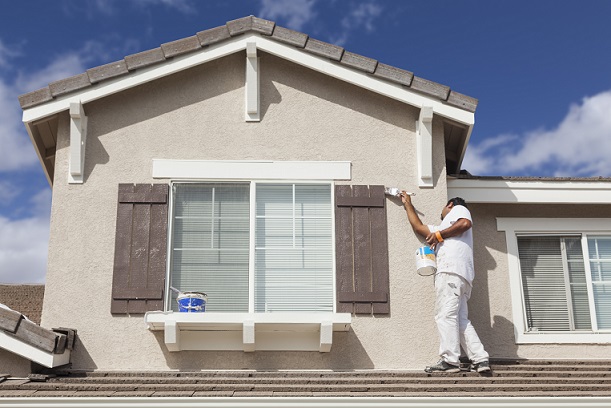
Reputable painters should always have a documented prep process built into every residential house painting job. This catches problems like these before the first coat goes on, not after it starts peeling.
Paint Quality and Type
Higher-grade acrylic paints hold color and flexibility longer than budget lines. They resist cracking as wood and siding expand and contract with the seasons. Spending more upfront can cost less than repainting three years early.
Sun, Moisture, and Siding Material
A south-facing wall takes far more UV exposure than one facing north. That exposure breaks down pigment and binder over time, a process painters call chalking.
Walls near sprinklers or a gutter that overflows also pit paint against a second opponent: near-constant moisture.
Siding material changes that moisture problem too. Porous and non-porous surfaces absorb, hold, and release moisture at different rates, so the prep has to match the substrate. A crew handling exterior home painting on stucco, stone, or wood adjusts the process to the material.
How Long Does Exterior Paint Last in a New Jersey Summer?
New Jersey doesn’t really have one climate. It has several packed into one state.
The Office of the New Jersey State Climatologist puts the state’s average annual precipitation between 40 and 51 inches depending on the region, with measurable rain falling on roughly 120 days a year.
It’s definitely uncomfortable, but that much moisture in the air also affects curing. Paint applied during a humid stretch can take longer to cure fully, leaving the finished coat more vulnerable to early failure.
In Fair Lawn, the schedule has to account for humid or rainy stretches too. Homeowners should expect curing time and weather windows to come up when getting estimates from Fair Lawn exterior painters.
Signs Your Paint Is Failing Early
Chalking, cracking, and peeling are the three big warning signs. An inspection from exterior home painters can catch these early, before a wall looks visibly bad, especially on the side that gets the most sun.
Bubbling or blistering paint usually points to moisture trapped underneath, which has little to do with the paint itself. Painting over that without fixing the moisture source buys a year or two before it comes back.
Best Time of Year to Paint in New Jersey
Spring and fall are often the best windows in New Jersey. Temperatures sit in the range most paints are formulated for, and humidity generally runs lower than during peak summer.
Choosing the right paint color plays a smaller role than timing the job to avoid a heat wave or a stretch of rain right after the coat goes on.
Repainting also gets bundled with other spring exterior design projects, from new colors to a refreshed front door. The painting date still needs to follow the weather rather than the rest of the project calendar.
What a Five-Year Warranty Tells You
While usually just a ploy to get you to sign with them, a contractor’s warranty can be a useful signal. It depends on the quality of the guarantee. For example, five years of coverage on both labor and materials gives you a concrete benchmark for what the contractor stands behind.
If you’re wondering “how long does exterior paint last?” You also need to consider what’s underneath it. Paint applied over unfinished repairs rarely lasts as long as it should, so if siding work is part of the same project, finish those repairs before repainting.
Protecting that fresh coat comes down to what to do first in exterior remodeling projects: finish siding before paint, not after.
How Long Does Exterior Paint Last: Common Questions
How long does exterior paint last on vinyl siding?
Expect roughly five to seven years in many cases, which is often less than paint lasts on wood. Vinyl expands and contracts with temperature swings, putting extra stress on the paint film.
Does painting a house exterior increase its value?
Yes, in many cases. The return usually comes more from avoiding a dated or damaged appearance than from the paint job adding value on its own.
Is three coats of exterior paint too much?
Not necessarily. Two coats over a properly primed surface is standard, but a third coat on bare wood or during a major color change can be worth the extra cost.
How Long Does Exterior Paint Last: The Number to Plan Around
Use seven to ten years as a starting point, not a promise. New Jersey weather and the conditions at the individual house can shorten that lifespan considerably.
A useful estimate should account for the home’s exposure, surface condition, moisture risk, and prep quality. Those details tell you more about how long the paint will last than a national average by itself.
Sources
Office of the New Jersey State Climatologist, New Jersey Climate Overview
GSA: Supplemental Guidelines for Removing Paint from Interior and Exterior Wood Surfaces