
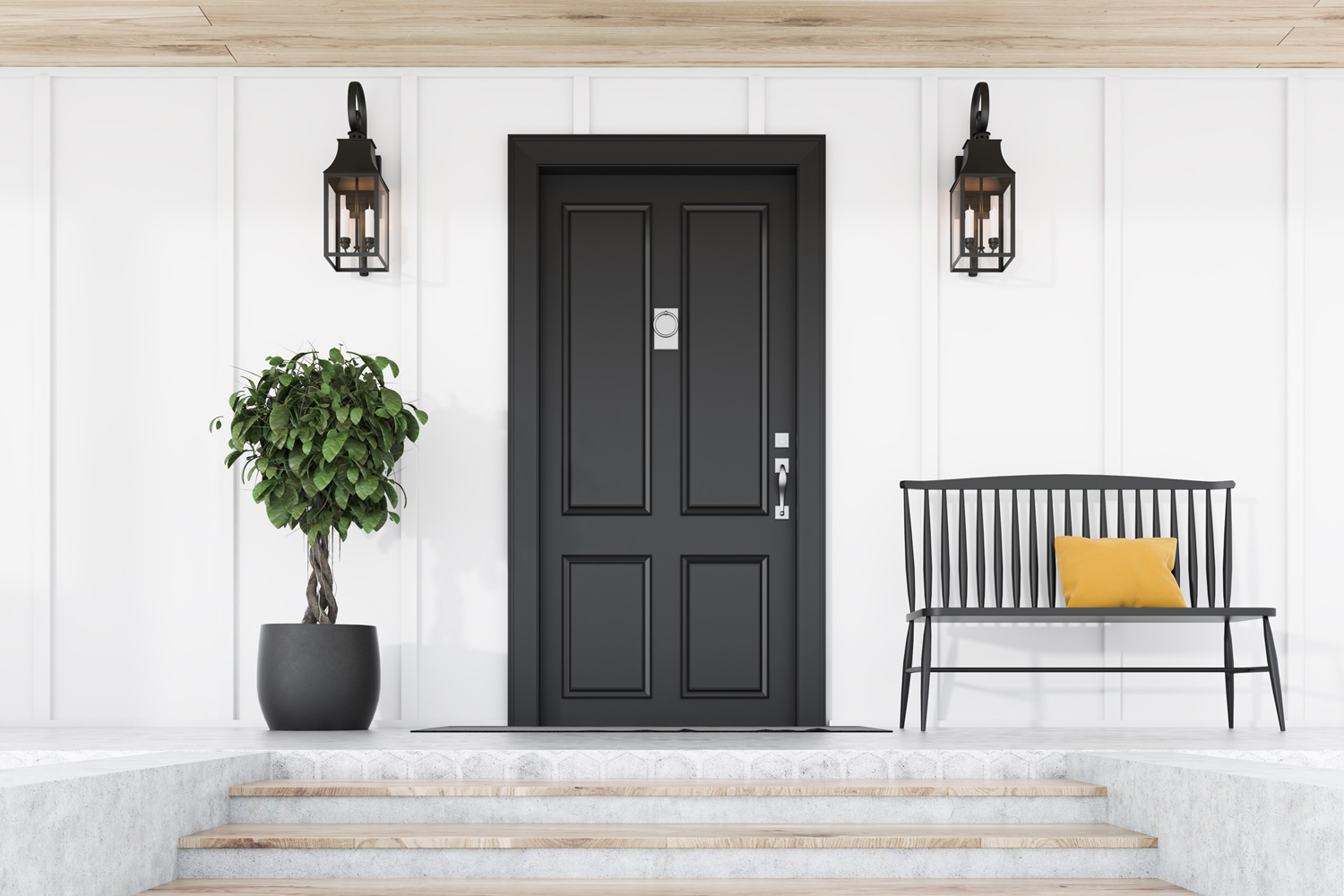
It’s almost too easy to find yourself at a crossroads in the middle of a door showroom. You’re being pulled in two directions when comparing a fiberglass vs steel door. But you can center yourself when you think things through. Stop thinking about the finish, and start thinking about how the door will behave and hold up to years of use.
Of course, that’s easier said than done when you have a salesperson creeping you out and pushing a single material. Homeowners comparing both usually get a cleaner answer from a company that handles door installation in Baltimore.
Fiberglass vs. Steel Doors: What Each Material Is Made Of
Neither material is one thing all the way through. Both are a skin wrapped around an insulated core, and that’s where the differences come into play.
Steel Entry Door Construction and Gauge
Steel doors sold at large retailers commonly use 24 to 26 gauge steel, roughly the thickness of a soda can. Premium residential lines use heavier 20 gauge steel instead, closer to the thickness of a quarter.
That gauge difference decides how easily the door dents, so two “steel doors” can perform very differently even at a similar price.
Fiberglass Entry Door Construction and Core
Fiberglass doors use a molded composite skin over a foam core, and manufacturers can press wood grain texture directly into that skin. Higher end fiberglass doors mimic oak or mahogany closely enough that most people can’t tell the difference without touching it.
For homeowners weighing the tradeoffs between steel, fiberglass, and wood, fiberglass stands out for resisting dents and moisture while still offering the visual appeal of wood.
How Each Material Holds Up in Baltimore’s Climate
Baltimore experiences the full spectrum of weather, with humid summers and brutal winters. This means the door materials in the area experience every kind of wear and tear nature has to offer, including moisture, wind, and temperature fluctuations.
The local housing stock adds another consideration. On a Baltimore rowhouse, especially in a historic district, the front door may also need to fit the home’s original character. How the replacement looks with the rest of the house has to remain coupled with the door’s function.
Humidity, Freeze-Thaw Cycles, and Warping
Fiberglass doesn’t absorb moisture the same way wood does, so it won’t swell or stick during a humid Baltimore summer.
Steel won’t warp, swell, or stick either, but it is a better conductor of temperature. A steel door in full sun during a July afternoon can feel pretty hot to the touch, and the same door in January can feel just as cold.
Neither issue affects the door’s function, but it does affect comfort right at the handle.
Security and Durability Compared
The material can only do so much if there are issues with the opening itself. The fiberglass vs steel door debate doesn’t matter as much from a home security standpoint, because your door is your home’s security weak point regardless of material. A misaligned or poorly installed door undercuts even a high end lock.
Denting, Rust, and Long-Term Wear
Steel resists forced entry well, but a stray baseball or a dragged ladder can leave a dent that fiberglass would not show.
If the galvanized coating breaks at the dent, rust can follow within a season or two if it’s not caught and touched up. Fiberglass rarely dents at all, and it will not rust, though a hard enough impact can crack the composite skin rather than just denting it.
Energy Efficiency and Your Baltimore Utility Bill
Both materials outperform a standard wood door on insulation, since the foam core inside either skin does most of the work.
Fiberglass doors typically hold a slight edge here because the skin itself adds a small amount of additional insulating value on top of the core, while steel’s higher conductivity lets a little more temperature move through the door itself.
For most Baltimore homes, the difference shows up as a small change in comfort right at the door, not a dramatic swing on the utility bill.
Fiberglass vs. Steel Door: What Drives the Price Difference
Steel doors typically cost less upfront, while fiberglass runs higher due to a more involved manufacturing process. Over time, fiberglass often narrows that price difference through lower touch up and repair needs.
A steel door in good condition can still be the more practical pick for a budget focused project, especially as part of a broader exterior remodeling project where the door is one line item among several. The timing of that bundling counts too, since where a door replacement fits in a larger project’s order of operations can affect both the final cost and how much rework happens along the way.
Curb appeal can pull the decision in another direction. Either material also plays into curb appeal ideas before listing a home, since a fresh, well fitted front door is one of the first things a buyer notices walking up.
FAQ: Fiberglass vs. Steel Entry Doors
Does fiberglass or steel add more resale value?
Both add value over an old or damaged door, but fiberglass often edges ahead in listings, since its wood grain finish photographs well and gives a higher end impression. It fits a broader pattern too: a new front door typically returns more than its own installation cost at resale, regardless of material.
Can a damaged steel door be repaired instead of replaced?
Small dents can often be pulled and filled with an auto body style repair kit, and light rust can be sanded and repainted. A deep dent through the coating usually calls for replacement.
Which material is better for a historic Baltimore rowhouse?
Fiberglass’s ability to mimic traditional wood grain makes it a common pick for historic districts, where the door needs to match the home’s original character without the upkeep of real wood.
A Practical Way to Settle the Fiberglass vs Steel Door Debate
Start with the problem you would rather not manage later.
Homeowners who want to avoid dents and rust have a clear reason to lean toward fiberglass. Those who put more weight on a lower upfront price and resistance to forced entry still have a strong reason to consider steel.
For a historic Baltimore rowhouse, appearance can break the tie. Fiberglass can provide the traditional wood-grain look without bringing back the upkeep of real wood.
Sources
U.S. Department of Energy: Update or Replace Windows and Doors
Insurance Information Institute: Protect Your Home from Burglary