
What is a bulkhead? What is a seawall? Are they the same thing? Can they be used interchangeably in a conversation? These are some thoughts that flow through a new waterfront property owner’s head. The answers to them are quite simple, but the bulkhead vs. seawall comparison gets more complicated.
They might sound similar, but these are two different waterfront structures. A bulkhead retains soil and keeps the shoreline behind it stable. A seawall is a heavier structure built to protect what’s behind it from wave action, storm surge, and erosion. The right one for your needs depends on what the water does at your property, specifically.
Bulkhead construction is usually where the conversation starts, whether it should or not. They tend to be more common, but preliminary knowledge of what your property needs can save you from a conversation that didn’t need to start in the first place.
Bulkhead vs. Seawall: What Each Structure Does
How a Bulkhead Works
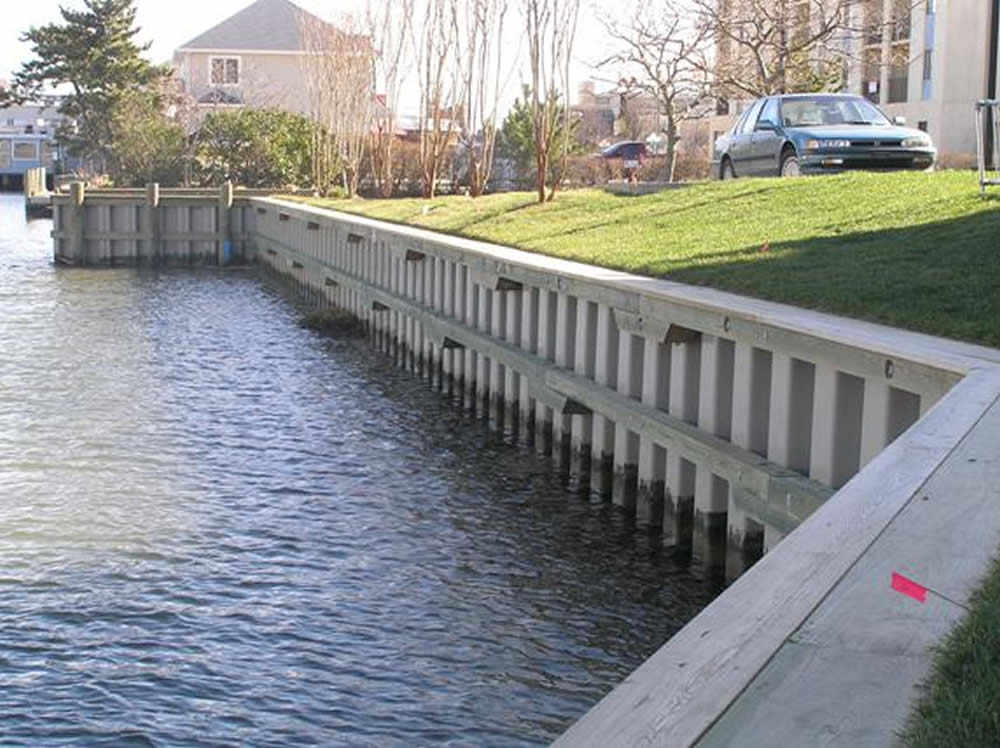
A bulkhead functions primarily as a soil-retaining wall at the water’s edge. It keeps the land behind it in place, which prevents your yard, dock area, or developed property from a slow descent into the water. They’re usually made from vinyl, timber, steel, or concrete, and are commonly used along canals, rivers, lakes, marinas, and other sheltered waterfronts with low to moderate wave energy.
Bulkheads aren’t always the right choice for open-ocean conditions. Open ocean brings tons of wave energy and storm surge that a regular bulkhead probably can’t handle.
How a Seawall Works
A seawall is a much heavier structure that has to absorb and resist wave force while protecting the land behind it. The U.S. Army Corps of Engineers states that seawalls use their mass to keep the sliding and overturning forces of direct wave impact at bay. They’re usually built from reinforced concrete, stone, steel, or larger engineered systems, and they show up most often on oceanfronts, bays, and beaches with significant wave exposure.
Bulkhead vs. Seawall: Which Waterfront Conditions Call for Which
Wave Energy and Exposure
The bulkhead vs. seawall decision boils down to the level of water exposure at your property. If it sits on a protected canal or calm lake, it’s better suited to a bulkhead, while open water and repeated wave overtopping make it more suited to a seawall. Don’t just copy the same structure your neighbors have. Genuinely consider how the water interacts with your property. Even if they’re a few dozen feet apart, two properties can have vastly different relationships with the water around them.
Soil Type and Erosion Behavior
Bulkheads are built to manage soil erosion on a stable shoreline where it’s gradual and predictable. But when there’s too much active erosion, bulkheads lack the mass to meaningfully stop it, which is where a seawall makes more sense.
Materials: Timber, Vinyl, and Concrete
Material choice depends on the structure the site needs. Timber bulkheads are enough for sheltered, lower-energy sites. If soil retention is a main concern, vinyl sheet piling is becoming a popular alternative because it doesn’t rot as easily and requires less maintenance than timber. Larger bulkheads can be made from concrete or steel sheet piling, and virtually all seawalls are made from these materials due to their higher mass.
The material decision also affects anything built directly off the shoreline. Docking facilities depend on the wall, piles, and shoreline edge staying stable under the same site conditions.
What Hard Armoring Does to the Shoreline Around It
NOAA designates both bulkheads and seawalls as “hard” shoreline stabilizers. That means they’re rigid enough for wave energy to bounce off of and go back into the system. This can actually increase erosion or scouring at the base and ends of the structure, interrupt natural sediment movement, and reduce natural habitat value.
Most agencies recommend living shorelines, which involve using vegetation-based stabilization where appropriate instead of keeping a continuous hard wall. It may sound like a man vs. nature conflict you’d see in Avatar or Princess Mononoke, but incorporating these natural elements alongside your bulkhead or seawall can help preserve your property.
Permitting for Waterfront Structures
Both bulkheads and seawalls typically require permitting because they have a direct impact on the shoreline and adjacent waterway. The specific process depends on the structure, jurisdiction, and whether there are protected habitats nearby.
Handling this on your own without knowing what you’re doing can be a headache, which is why waterfront construction services can lift a lot of weight off your shoulders. On sites where county, state, and federal review can all apply to the same job, permit sequencing can affect the project timeline as much as the construction itself.
If the plan also includes pier and gazebo construction, permitting usually needs to account for the whole waterfront layout. A pier, gazebo, dock, or lift can change access, waterway impact, and construction sequencing, so discuss those pieces before finalizing your plans.
Bulkhead vs. Seawall: Choosing the Right One for Your Property
The single biggest factor in the bulkhead vs. seawall decision is the relationship your site has with the water. If the property has sheltered water and a soil-retention concern, a bulkhead is the fit. Direct wave exposure, storm surge risk, or active erosion threatening a structure calls for a seawall instead.
A dock gazebo or other waterfront structure built on top of an undersized bulkhead inherits that same underlying risk. The shoreline structure question usually needs to be settled before any other waterfront project moves forward.
Getting this right also factors into broader exterior renovation planning. A stable, correctly engineered shoreline is what everything else on a waterfront property ultimately sits behind.
Frequently Asked Questions
How long do bulkheads and seawalls typically last?
As a general estimate, a well-built timber bulkhead in sheltered water often lasts 20 to 30 years. Seawalls, built from concrete or steel and engineered for a harsher environment, often have a longer service life than timber bulkheads. These ranges vary by material, installation quality, and local conditions, so a site-specific assessment from a marine contractor is the more reliable answer. Regular inspection counts for more than material choice alone in either case, since minor issues caught early are far less expensive than a full structural failure.
Can a property have both a bulkhead and a seawall?
Yes, on properties with varying exposure along their waterfront. A section facing a protected cove might reasonably use a bulkhead while a section facing open water on the same property uses a seawall, since wave exposure can differ across a single piece of waterfront, particularly on points, bends, or irregular shorelines.
What happens if the wrong structure is installed for a site’s actual exposure?
An undersized bulkhead installed where a seawall should go instead is at real risk of failure during a significant storm. It was never engineered to resist direct wave force or overtopping. The failure can happen suddenly, during a single severe weather event, instead of building up gradually. That is why an accurate site assessment before construction is the safer starting point, not whatever structure happens to be common in the area.
Match the Structure to the Water
A bulkhead and a seawall are answers to two different questions. One holds back soil on a relatively calm waterfront. The other resists the direct force of waves and storm surge on a more exposed one.
Getting the distinction right before construction starts is what determines whether the structure holds up under the storm conditions it will eventually face. A shoreline wall should be designed for the roughest water the property has to withstand, not just the calm day when the project was planned.