
Vinyl siding is a great protectant for your home’s exterior walls, but sometimes the color fades into something unrecognizable. But fully replacing vinyl siding under that circumstance requires tearing off panels that are perfectly good; just a little worn. So can you paint vinyl siding instead? In most cases, yes. The paint color then decides whether the panels stay flat or warp after a hot summer.
Quick Answer
You can paint vinyl siding if the panels are sound, clean, and coated with an exterior acrylic made for vinyl. Stay with the original color or a lighter shade unless the paint maker approves a darker color for vinyl. Painting can affect the siding warranty. Aluminum siding takes paint too, once it’s cleaned and prepped.
When Painting Vinyl Siding Makes More Sense Than Replacing It
Just because the color on it fades doesn’t mean the siding needs to be replaced. Vinyl as a material often outlasts its factory color by many years. A house with siding from the 90s likely still has perfectly sound panels. But if the panels are in fact warped or brittle, painting won’t solve that issue.
Pay the closest attention around the windows and doors. An exterior house painter who works on vinyl will check the trim channels there. Stains or loose panels can mean water is getting behind the siding, and painting over that only hides it. That repair comes before any paint.
There’s also the warranty. Some siding makers exclude painted siding from coverage or limit repainting. Check the terms for your siding before spending money on a color change.
Why Darker Paint Can Warp Vinyl Siding
A pale vinyl panel can only handle the heat its original color absorbs. So if you paint it charcoal or dark brown, it can absorb too much sunlight in the summertime and buckle. Reflected sunlight from nearby low-E windows can have the same distorted effect, painted or not.
Paint makers rate colors by light reflectance value, or LRV, on a scale from 0 to 100. Lower numbers reflect less light and usually absorb more heat, though LRV doesn’t capture every factor in solar heating. Benjamin Moore’s REVIVE data sheet, for instance, rules out colors darker than the original or below an LRV of 55 unless the shade is on its approved vinyl palette. Other paint lines set their own limits, and some offer darker colors tested for vinyl.
For more contrast without that risk, keep the siding light and put the darker color on shutters, trim, or the entry door. Those details can change an exterior color scheme without making every panel absorb more heat.
How to Paint Vinyl Siding Without Ruining the Finish
Start by fixing warped panels, loose sections, and any spot where moisture gets behind the siding. Vinyl needs room to expand and contract. Don’t caulk panel overlaps shut or paint parts together in ways that stop that movement.
Mildew, pollen, and weathered residue can all block adhesion. Wash the siding with a cleaner made for it, rinse well, and let it dry. A pressure washer can help if the nozzle points downward, because spraying upward into the overlaps forces water behind the siding.
Once the surface is dry, cover nearby windows, fixtures, and plants. Use an exterior acrylic made for vinyl. Many are self-priming on sound siding, while pitted or porous areas may need a compatible primer first. Two even coats at the thickness the can specifies beat one overloaded pass, and the REVIVE data sheet calls for two.
In northern New Jersey, the best window for this usually runs from late May through early October. Fall jobs get tricky once nights drop into the 30s. Dew lingers on shaded walls into late morning, and paint can’t go on wet siding.
REVIVE needs air and surface temperatures of at least 40°F, and other paints set their own minimums. If the job waits for spring, winter still works for exterior projects that don’t need paint to cure, like securing loose panels.
Can You Paint Vinyl Siding Yourself?
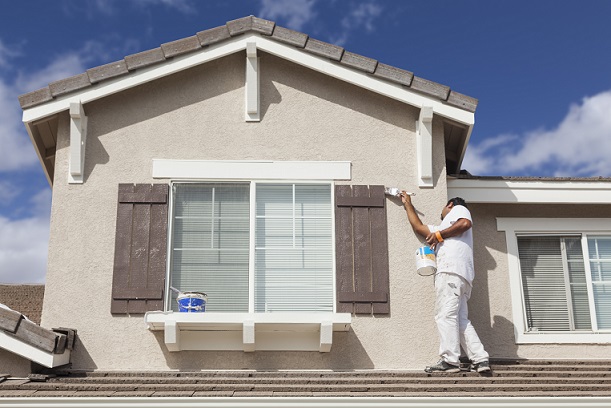
A homeowner can handle a small, reachable section with the right paint and prep. Brushes work around trim, rollers cover larger runs, and an airless sprayer gives the most even finish across broad walls. Use your self control skills to avoid overspraying and keep the film even. Be sure to protect all the windows, plants, cars, and your neighbor’s house.
A two-story house presents a different challenge. Someone has to safely reach upper walls while cleaning, masking, and painting. If you hire a crew, the exterior painting estimate should list the paint system, prep work, and number of coats. Trim or gutter work should be priced separately. Ask whether the quote includes washing and panel repairs, since those vary most from bid to bid.
What Painting Vinyl Siding Costs
Painting is usually much cheaper than replacing the siding. HomeGuide estimates that painting vinyl siding runs about $1 to $3 per square foot of siding, with a national average near $3,300. Replacing it costs about $3 to $11 per square foot.
| Project | Estimated cost per sq. ft. of siding |
|---|---|
| Painting existing vinyl siding | $1 to $3 |
| Replacing vinyl siding | $3 to $11 |
Paint needs refreshing over time, while sound vinyl stays in service much longer. The savings work best on siding that still has some service life left. Washing, minor repairs, trim, the number of coats, and access to upper stories all move the final price.
Also ask what the painter’s workmanship guarantee covers. A written guarantee should state how long it lasts, whether it includes labor and materials, and how peeling gets handled.
Key Takeaways
- Vinyl siding can be painted when the panels are sound and clean.
- LRV helps compare colors, but darker shades should come from a paint maker’s approved vinyl palette.
- Point the pressure washer down and let the siding dry fully before painting.
- DIY works on reachable areas, while second stories and spraying often call for a crew.
- HomeGuide puts the life of paint on vinyl siding at about 5 to 10 years.
Questions About Painting Vinyl Siding
How long does paint last on vinyl siding?
HomeGuide estimates about 5 to 10 years for properly prepared and painted vinyl siding. Sun exposure makes the biggest difference, so a south-facing wall may fade sooner than a shaded one. Freeze-thaw winters and humid summers also take a toll. That’s part of why exterior paint in New Jersey needs a look every few years.
Can you paint vinyl siding a darker color?
Yes, if the shade is approved for that vinyl paint and the siding maker’s terms allow it.
Do you need to prime vinyl siding before painting?
Usually not when the siding is clean, sound, and getting a self-priming vinyl paint. Pitted or porous spots may need a bonding primer, but there’s rarely a reason to prime the whole house.
Start With a Clean Test Patch
Before choosing a color, wash a small section of siding. Faded almond panels sometimes look noticeably different once years of dirt are gone. Check the clean area for cracks or warping. If the panels are sound, bring a few approved color samples to a consultation with painters experienced with vinyl siding. A small sample also lets you see the new color in morning sun and afternoon shade before committing to the whole house.
Sources
Benjamin Moore, Regal Select Exterior Paint REVIVE for Vinyl Siding, Technical Data Sheet