
That dreaded government notice is never a good sign. A compliance notice from the water authority governing your commercial property can demolish your day. The vast majority of these notices involve backflow testing in some shape or form, especially in Essex County. The state of New Jersey takes backflow testing requirements more seriously than others.
The NJDEP requirements discussed below apply statewide. Essex County matters because local municipalities and water suppliers may add their own cross-connection procedures on top of the state framework
What Backflow Is and Why NJDEP Regulates It
Backflow is what happens when water moves backwards through a connection, usually caused by drops or reversals in water pressure. When backflow occurs, water travels the opposite direction than it’s supposed to. That means polluted, contaminated water can leach into clean water supplies. Backflow occurrences cause water that should be separate to mix together.
New Jersey’s Department of Environmental Protection, or NJDEP, oversees New Jersey’s backflow testing rules under the state’s Safe Drinking Water Act. A failed backflow preventer opens a direct path for polluted water to reach the public supply.
That’s the kicker: the public supply. It’s beyond the one property with a backflow issue and now affects the general public. NJDEP cares less about the backflow prevention device itself and more about proving, on a schedule, that it still works because that protects the public.
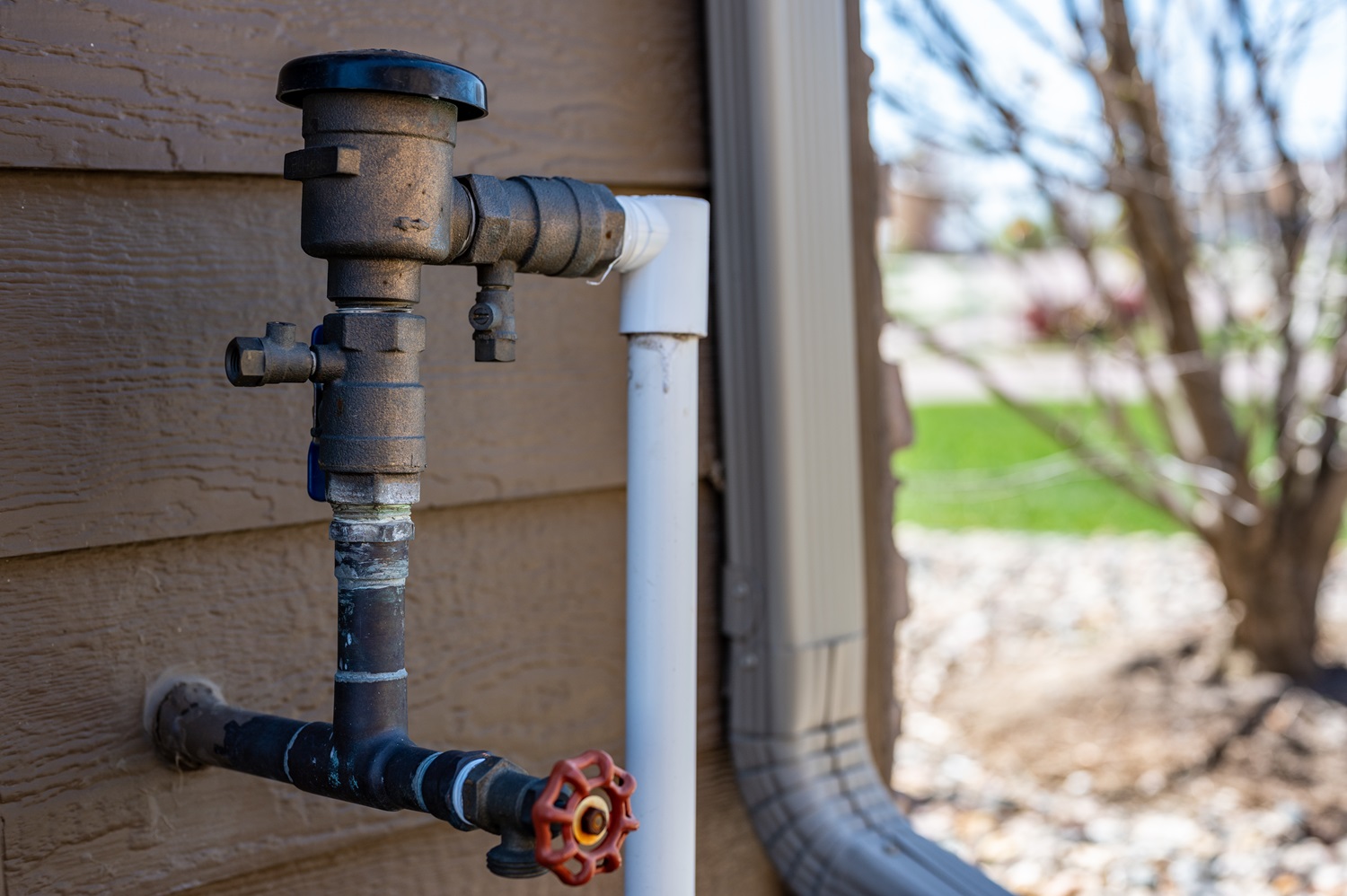
Choosing between a reduced pressure zone (RPZ) and a double check valve assembly (DCVA) happens before it’s installed, not during a compliance check.
The NJDEP Physical Connection Permit, Explained
NJDEP’s Physical Connection Permit and a water supplier’s containment requirements are related, but they are not identical. The state permit generally applies where a public community water supply and an unapproved water supply exist at the same facility. Separately, a water supplier may require backflow protection at facilities that create cross-connection hazards.
Annual Permit Renewal and Quarterly Device Testing
The permit renews every year, but every backflow device covered under it needs testing quarterly. Most property managers from other states are used to testing annually, and that’s a huge jump in frequency and expectations.
It’s also one of the most common ways NJDEP finds a building out of compliance.
The Six-Month Internal Inspection Requirement
New Jersey adds a second layer most states skip: an internal inspection. A tester takes the device apart to check the clappers, discs, and seating surfaces.
For devices subject to the internal-inspection rule, that inspection must occur within the six months before the permit-renewal application is submitted. The inspection involves dismantling the assembly to examine components such as clappers, discs, and facing rings. RPZ assemblies are generally exempt from this particular internal-inspection requirement except for specified maintenance, malfunction investigations, or requirements imposed by the water supplier.
Which Essex County Properties Actually Need This
NJDEP identifies many commercial and institutional properties as possible cross-connection hazards, including:
- Restaurants
- Schools
- Medical facilities
- Dental offices
- Certain industrial facilities
- Buildings with fire service
Whether a particular property needs an NJDEP Physical Connection Permit or supplier-required containment protection depends on its water sources, plumbing configuration, uses, and the water supplier’s determination.
What Happens During a Backflow Test
Backflow testing itself starts when a tester shuts off water flow to the device. The certified tester uses the assembly’s test cocks and a differential-pressure gauge to verify that the check valves hold the required pressure. On an RPZ assembly, the relief valve is tested as well.
Most visits run under 30 minutes per device when nothing has failed. A tester logs the results on their form, and the property owner keeps that paperwork on file for at least five years.
What Happens If You Miss a Test or Fail Compliance
A device that fails its test or check gives the property owner 30 days to fix it and retest. For an approved physical connection installation subject to these NJDEP rules, the owner must repair and retest a failed device within 30 days.
NJDEP treats a missed deadline differently than a failed test, though. Missing required testing or repair deadlines can lead to NJDEP or water-supplier enforcement, including notices of violation and potentially additional enforcement action if compliance is not achieved.
Some towns add a local Certificate of Compliance on top of the state permit, so a property manager checking Essex County’s town rules shouldn’t stop at the NJDEP paperwork alone.
Backflow Testing Cost for Essex County, NJ Commercial Properties
Cost depends on how many devices a building has and what type each one is. An RPZ assembly has more parts to check than a simpler double check valve, which usually makes it cost more to test.
Backflow testing itself usually sits toward the low end of what a plumber typically charges for a single visit. But buildings with several devices that need to be tested can add up quickly.
Property managers who need backflow testing across Essex County can often fold it into a broader plumbing visit. A tech is already checking pressure and valves once on site anyway.
FAQ: Backflow Testing Compliance in NJ
Does a single-family home need backflow testing in NJ?
NJDEP’s Physical Connection Permit requirements do not apply to private residences. However, a water supplier or plumbing code may still require backflow protection for residential systems such as irrigation or certain configurations involving another water source.
What’s the difference between a DCVA and an RPZ device?
Both assemblies use check valves to prevent reverse flow, while an RPZ adds a relief zone between its checks. Under NJDEP’s Physical Connection rules, an RPZ is required in certain higher-hazard situations, including when the unapproved water source is non-potable or exceeds applicable contaminant limits.
How long do I have to fix a failed backflow test in New Jersey?
30 days from the failed test or check, statewide. If the retest fails too, or the 30 days pass with no action, NJDEP treats it the same as a missed deadline. That means a notice first, then fines, then a possible water shut-off if it drags on.
Staying Ahead of Essex County’s Compliance Calendar
Most property managers that aren’t used to NJ-specific rules are caught off-guard by the quarterly schedule because they assume NJ is the same as other states. But that’s not the case, and it can cause difficulties for out-of-state property managers.
Quarterly tests, the six-month check, and annual renewal add up to one more item on a property manager’s list that already includes rent, tenants, and repairs.
A backflow test rarely happens as its own isolated visit, since a technician already has to be on site to run it. Most managers end up handling other Essex County plumbing work around the same time.
Setting the test schedule around the permit renewal date works better than reacting to each notice as it arrives. That’s what keeps a building off NJDEP’s radar in the first place.