
Most people see outdoor spigots and oversimplify the process. You mount a faucet on the wall, connect it to a pipe, and call it a day. But that’s a reductive way of looking at it due to the variables involved. One such variable is the hose bib installation, a plumbing fixture that penetrates an exterior wall. Its presence affects the scope of any residential plumbing services because it involves supply lines, pipe material, and checking wall assemblies for insulation or vapor barriers.
Exterior remodeling projects that add outdoor living space often reveal the need for more outdoor water access, and the spigot installation ends up on the project list alongside more visible work.
What a Hose Bib Actually Is and What It Does
A hose bib is an outdoor faucet mounted on the exterior wall of a home, connected to the interior water supply. It has a threaded outlet sized to accept a standard garden hose. The mechanism that makes it function safely in cold climates is more specific than most homeowners realize before they request one.
The Different Names for the Same Fixture
The same fixture comes with many names: hose bib, sillcock, spigot, outdoor faucet, hose cock. Different regions and trades use different terminology. For example, “Sillcock” is a common term in the northeast United States. The name matters much less than the internal mechanism: whether the shutoff is at the face of the wall or set back inside it.
Frost-Free vs. Standard Hose Bibs
Climate is the main driver of the first real decision in any outdoor faucet project, because it determines which type of fixture to put in.
How the Frost-Free Mechanism Works
A frost-free hose bib, also called a frost-proof sillcock or anti-siphon sillcock, has its shutoff valve located 4 to 12 inches inside the wall. When the faucet is turned off, the section of pipe that extends through the wall and out to the exterior drains back into the interior. The pipes can’t freeze because there’s no standing water inside them to freeze.
The stem must be installed with a slight downward pitch toward the outside, typically a quarter inch per foot, to allow that drainage to happen completely. Any deviation from this pitch means the fixture won’t drain properly. The mechanism is there, but the installation isn’t, and the pipe will still freeze.
Different outdoor faucets have different effects when winterizing the exterior of a home. A standard hose bib requires shutting the interior supply valve and draining the line before any freeze. A properly installed frost-free bib does that automatically when the faucet is turned off, as long as the hose is disconnected first.
When a Standard Fixture Is Appropriate
A standard hose bib is appropriate in climates that do not freeze, such as much of the South and coastal California, and for homeowners who are disciplined about shutting the interior supply valve and draining the line before any freezing occurs. In most of the northern U.S., frost-free is the correct default. In climates where nighttime temperatures regularly fall below 28 degrees Fahrenheit, a standard hose bib risks freezing the involved pipes. That can lead to a huge repair bill that’s much higher than installing the right fixture in the first place.
Where to Tap In and What the Plumber Looks For
The location of the new spigot on the exterior wall is constrained by the interior plumbing layout. A plumber adding a new outdoor faucet needs to find a supply line close enough to the desired exterior location to make running a branch practical.
The most common driver is a homeowner who wants water access near a garden area, an outdoor kitchen setup, a detached garage, or a side yard where no spigot currently exists. The plumber’s first step is identifying which supply line is closest to that target location, confirming there is adequate pressure at the tap point, and checking whether the wall assembly between the interior pipe and the exterior mount has insulation, vapor barriers, or structural members.
Pipe Material and How It Affects the Connection
Copper, CPVC, and PEX are the three common supply line materials in residential homes. Each requires a different connection method for a new branch. Copper gets soldered fittings, which requires a torch and means the water supply to that line must be off and the pipe fully dry before work begins. CPVC uses solvent cement. PEX accepts push-fit or crimp fittings, which are faster and do not require heat.
Plumbers identify pipe materials while scoping the job, before quoting. Copper piping involves torch work and wall clearance that add time and labor, while the other materials don’t have such requirements. The plumber also checks whether the pressure at the intended tap point is adequate for the planned use. Distance from the main, pipe diameter, and any existing restrictions in the line affect flow rate at the new spigot. This is worth knowing before planning an outdoor shower or irrigation system around a specific flow expectation.
Plumbing services in Essex County regularly encounter older residential construction that surprises once wall access is opened: corroded fittings, undersized supply lines, and outdated pipe materials all affect how any new connection gets made. These are among the common plumbing issues in Essex County homes that surface most often during any outdoor plumbing addition.
Hose Bib Installation
Most municipalities require a permit for new plumbing penetrations through exterior walls. The permit triggers an inspection, typically a rough-in inspection before the wall is closed and a final inspection after the fixture is operational. Skipping the permit creates the same problems it creates in any trade. Unpermitted work complicates home sales, can affect homeowner’s insurance coverage if a water damage claim traces back to an unlicensed modification, and is difficult to retroactively document.
Why Backflow Preventers Are Not Optional
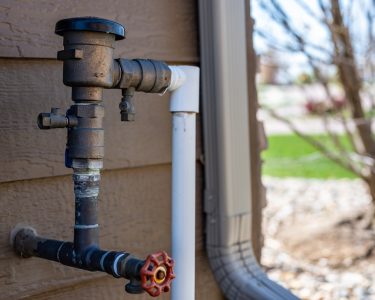
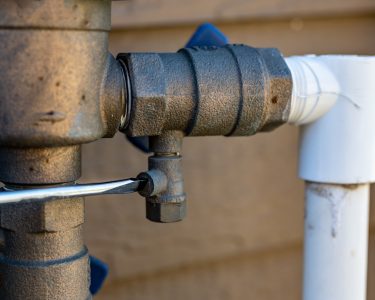
A backflow preventer, also called a vacuum breaker, stops contaminated water from being siphoned back into the household supply line. That happens more often than you might realize. Even a hose submerged in a bucket of fertilizer or pool chemicals can back up into the supply line if the pressure drops, which can happen if there’s a main break or firefighting activity nearby.
ASSE 1011 is the standard governing atmospheric vacuum breakers on hose connections, and most local codes require a listed vacuum breaker on every outdoor hose bib. Some frost-free hose bibs have built-in anti-siphon protection, but that protection only applies when the hose is disconnected and the faucet is off. A hose left connected to a closed frost-free faucet bypasses the internal anti-siphon mechanism entirely.
Backflow testing is a maintenance requirement separate from installation. Backflow prevention devices need to be verified as functional over time. Understanding backflow prevention requirements in Essex County before installation avoids the most common inspection failure on new outdoor faucet work in the area.
Cost and What Drives the Price
A straightforward installation, meaning a frost-free sillcock, accessible supply line, standard pipe material, and no structural obstruction, typically runs $150 to $400 in labor. The fixture itself costs $20 to $80 for a quality frost-free sillcock with built-in anti-siphon protection.
Cost increases when the supply line is far from the desired exterior location and requires extra pipe. Copper supply lines add torch work and preparation time. Wall assemblies with rigid foam insulation or vapor barriers require more care during penetration. Permits add fees and inspection scheduling time.
What does not change the price much is the specific location on the exterior wall, as long as the interior layout supports it. The wall is just where the pipe comes through. The scope is what determines the price.
Frequently Asked Questions
Can I install a hose bib myself?
Replacing an existing outdoor faucet with a like-for-like fixture is within reach for a homeowner with basic plumbing experience. Adding a new hose bib where none previously existed is a different project. It requires tapping into an existing supply line, making a new penetration through the exterior wall, and in most jurisdictions, pulling a plumbing permit. Most local codes require a licensed plumber for new supply line connections, and unpermitted work on a new connection creates the same documentation and liability issues at the time of a home sale as any other unpermitted plumbing modification.
How many outdoor hose bibs does a house typically need?
Most single-family homes have one or two: one on the front and one on the rear, as a baseline for a standard lot. Larger properties with gardens, detached garages, or outdoor entertaining areas often benefit from three or four. The practical consideration is having water access within a manageable hose run from each area that regularly needs it, rather than pulling a hundred-foot hose across the yard for routine tasks.
How do I know if my existing hose bib is frost-free?
Disconnect the hose, turn off the faucet, and listen. A frost-free hose bib produces a brief draining sound through the stem for a second or two after the handle closes as the water drains back into the interior. A standard hose bib goes silent immediately. Visually, frost-free fixtures have a longer stem extending back through the wall, typically 4 to 12 inches visible from the interior side. A standard faucet body is much shorter and sits closer to the wall surface.
Know What the Job Involves Before Calling for a Quote
A hose bib installation is straightforward when the supply line is accessible, the pipe material cooperates, and the wall assembly does not complicate the penetration. The quote should reflect those conditions. A low number is not automatically a good number if it ignores permit requirements, backflow protection, wall access, pipe material, or the distance from the nearest viable supply line. A useful quote explains what the plumber found behind the wall, what type of fixture the climate requires, and what inspection or code requirements apply before the faucet is put into service. That’s the difference between a simple outdoor faucet replacement and a new hose bib installation with real plumbing scope.