
New Jersey’s 2021 Lead Service Line Replacement Law requires community water systems to identify and replace service lines containing lead and galvanized pipes by 2031. It’s no secret that lead has plenty of adverse health effects on the human body, so the state’s public services are replacing these service lines free of charge. Service lines made of lead obviously need to go, but galvanized pipes do too because they can attract lead particles.
The replacement program covers the connection between the water main and the house, including the required section inside the building. Key word: connection. Crews won’t replace all the galvanized pipes in your home, just the ones connected to the water main.
New Jersey’s Replacement Program
New Jersey’s Replacement Program stems from a law signed by then Governor Phil Murphy in 2021, requiring all public water systems in the state to upgrade from lead, brass, and galvanized service lines within 10 years. Service lines are what connect a home’s plumbing to the water main beneath the street.
Galvanized pipe is steel or iron coated with zinc to slow rust and corrosion, and older lines can accumulate lead from water that passed through upstream lead plumbing.
The law mandates that all lead portions of a service line be removed. The replacement can extend several feet into the building. When the water meter is farther inside, the required work may continue past the meter to the shutoff valve.
The utility’s work ends at the meter or shutoff valve inside the house. Pipes branching away to sinks, showers, and upstairs bathrooms are part of the home’s interior distribution system, which is generally the homeowner’s responsibility.
What Montclair Is Asking Residents to Do in 2026
Montclair’s Water Bureau has published an address-based inventory identifying service lines as lead, galvanized, brass, copper, or unknown. Properties marked L, G, or B qualify for the township’s replacement program. An unknown designation means the pipe needs to be checked before the township can determine eligibility.
Montclair asks affected residents to photograph the service pipe where it enters the house and email the picture with their contact information to DoIhavelead@montclairnjusa.org. A visit cannot be scheduled without this information.
The bureau may also inspect the property or dig small test holes to identify the material. Its 2026 program is expected to replace eligible lines without a direct charge to the homeowner.
How Companies Are Replacing Service Lines
No replacement can take place without identifying the existing pipe first. If the pipe needs to be replaced, a separate crew schedules the installation, which may involve bringing the new pipe through the foundation into the basement or crawlspace.
It’s not uncommon for replacements to take one day, with the water interrupted for approximately four hours. The homeowner must allow access to the property because the connection is made indoors. Utilities might also install outdoor meter pits as part of the job. A trench can be filled and made safe when the pipe work is finished, while permanent lawn, sidewalk, or driveway restoration may wait for suitable weather.
The interval between inspection and installation gives you time to look at the plumbing beyond the new connection. If the basement still has old steel supply pipes, you can identify them before the replacement crew arrives.
Why Galvanized Pipes Can Still Hold Lead
The protective zinc coating inside a galvanized pipe can wear down, allowing rust to build along the inner wall. Over time, that rough surface can collect deposits and narrow the opening through which water flows.
NJDEP explains that galvanized piping located downstream of lead plumbing can collect lead particles. Those particles may remain in the pipe and later enter drinking water when the plumbing is disturbed or water conditions change.
Replacing the lead service line eliminates a huge source of lead exposure. If any lead escaped the confines of that source, that’s a different problem. Lead deposits inside the home’s deeper galvanized pipes can still contribute to lead in the drinking water. Old faucets, fittings, and solder can as well. A newly installed service line therefore does not establish that every tap in the house is free of lead.
Follow the Water Company’s Instructions After Replacement
Service-line work can temporarily disturb deposits and increase lead levels in tap water. New Jersey American Water began distributing pitcher filters after lead and galvanized service-line replacements in Maplewood in May 2024. Customers are asked to use the supplied lead-reduction filter for six months following replacement. Maplewood customers also receive information about arranging a free lead test approximately three to four months after the work.
Always follow your water provider’s flushing instructions. NJDEP also recommends cleaning faucet aerators, using cold water for drinking and cooking, and using a filter certified to reduce lead when lead-containing plumbing is present or suspected.
If you need to check water quality independently, use a New Jersey-certified drinking-water laboratory. It’s not possible to detect lead just by eyeballing it.
Check the Pipe Entering the House First
You can make an initial check of an exposed metal service line with a coin or key and a refrigerator magnet. Find the pipe coming through the foundation near the water meter or main shutoff. The goal is to examine the service pipe entering the building.
NJDEP recommends gently scratching a small area of exposed metal and checking whether a magnet sticks.
- Galvanized steel appears silver or dull gray beneath the surface, and a magnet sticks to it.
- Copper reveals a penny-colored surface and is not magnetic.
- Lead exposes a shiny silver surface when gently scratched, but a magnet will not stick.
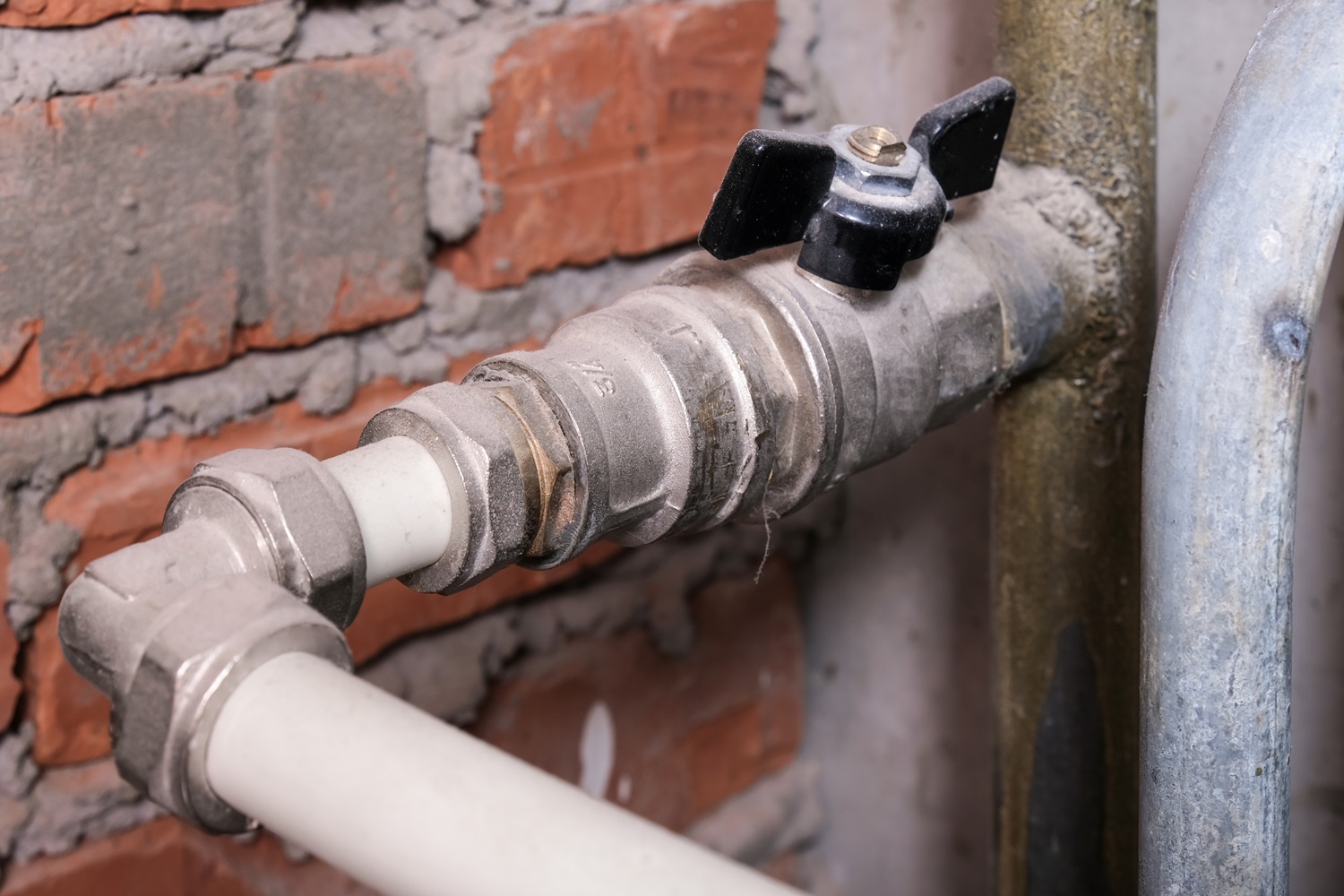
Threaded fittings are another clue. Galvanized steel supply pipes commonly use threaded connections, while older copper systems frequently have soldered joints.
If the entry pipe is hidden behind finished material or the meter and fittings make identification difficult, ask an Essex County plumber to identify the exposed material and determine which section belongs to the service line. The scratch-and-magnet check can identify the pipe material, but it can’t determine if there’s lead in the water.
One Copper Pipe Does Not Mean the Whole House Was Repiped
A shiny copper pipe beside the water meter only tells you about the section you can see. Older homes, in particular, may have received piecemeal plumbing upgrades of the years. For example, a previous owner might have replaced the basement supply lines with copper while leaving galvanized steel inside the walls serving the second-floor bathroom. It’s possible for newer pipes to look perfect, but the pipes further along might have decades of rust inside.
Tracing the existing water supply lines from the water heater and basement branches toward the upstairs fixtures gives a better picture than examining one exposed copper connection.
This also explains why an older house can have good pressure at the kitchen sink and weak flow in an upstairs bathroom. The restriction may be isolated to one corroded branch.
The Signs Old Galvanized Pipes Are Wearing Out
Galvanized supply pipes were widely used in homes built before 1960. Their service life is commonly estimated at around 40 to 50 years, although water chemistry and maintenance can change how long they remain usable.
Low flow at an upstairs shower is one warning, especially when opening another faucet makes it worse. Rust-colored water after a weekend away can also point to corrosion.
Leaks may begin as a slow drip around a threaded fitting, sometimes overhead where the pipe crosses the basement ceiling. A water leak detector placed beneath an exposed joint can provide an early warning before a leak damages the floor above.
Neither low pressure nor discolored water proves that galvanized pipe is the cause. A partially closed main valve, clogged faucet aerator, or failing pressure-reducing valve can produce similar symptoms. Checking those possibilities before opening walls may prevent an unnecessary replacement.
Should You Repipe While the Utility Is Already Working?
The utility’s replacement and an interior repipe are separate projects, but they meet near the same point in the basement. Once the service-line inspection is complete, you have a clearer idea of where the new connection will enter and which old pipes will remain.
If you’re considering a full or partial interior repipe, arrange a plumbing walkthrough before the service-line replacement date. The contractor can trace the old branches, identify any galvanized pipes that might need attention, and plan a new connection near the service entry, usually in copper or PEX.
The interior work does not necessarily have to happen on the same day as the utility installation. Coordinating the two jobs can still prevent unnecessary duplicate work around the meter and shutoff.
Ask Where the New Pipes Will Run
Two repipe quotes may describe similar materials and very different amounts of wall repair. One crew might plan to open a finished hallway ceiling. Another may be able to run the new supply lines through a closet, basement ceiling, or another accessible route.
Before comparing prices, ask each plumbing contractor to show the route on a walkthrough. Find out which walls and ceilings must be opened, what the plumbing price includes, and who is responsible for patching and painting afterward.
If the work involves an exterior wall, the timing matters too. Opening an insulated wall during freezing weather adds complications that a spring or early-fall project may not.
Questions About Galvanized Pipes and Lead Service Lines
Do galvanized pipes contain lead?
They can contribute lead to drinking water, particularly when they are or were connected downstream of lead plumbing.
Galvanized steel is not the same material as a solid lead pipe. However, corrosion deposits inside older galvanized pipes can trap lead from an upstream source and release it later.
A water test from a certified laboratory is the appropriate way to determine whether lead is present at the tap. Pipe color, rust, and water pressure cannot establish lead concentration.
What does “galvanized requiring replacement” mean?
This inventory label refers to galvanized service piping that is considered a potential lead source because it is, or historically was, downstream of lead plumbing, or because the upstream material history is unknown.
Federal rules use the term “galvanized requiring replacement” to identify certain service lines that must be removed.
New Jersey’s replacement law is broader in its treatment of galvanized service lines. Under state law, galvanized service lines are included in the replacement program.
The label concerns the service line supplying the building. It does not mean the utility will automatically replace every galvanized branch inside the house.
Who pays to replace the service line?
The water system coordinates replacement, but the funding arrangement depends on the utility and municipality.
Montclair’s 2026 program is expected to provide replacement at no direct cost to eligible homeowners.
In Maplewood and South Orange, New Jersey American Water performs eligible replacements without a separate upfront payment from the property owner. The company recovers program costs through a Lead Service Line Replacement Charge on customer bills.
If you are considering paying for an early replacement yourself, contact the water system first so the work can be coordinated and you understand whether assistance is available.
Keep the Record of What the Utility Replaced
Before the replacement crew leaves, ask for a written record showing the material installed and where the new service line ends inside the house.
Save the completion date, the flushing and filter instructions, and any follow-up water-test results.
If you later replace galvanized branches in the basement or upstairs walls, that record gives your plumber a reliable starting point. It can also answer questions from a future buyer or home inspector without having to reopen a wall or guess from the pipe visible beside the meter.
Sources
New Jersey Department of Environmental Protection, Lead Service Line Public FAQ
Township of Montclair, 2026 Lead Service Line Replacement Program