
The front steps are one of those things that never seems urgent until it is. For older adults in Woodbridge, NJ, exterior stairs are among the most common spots for serious outdoor falls. Homes built in the 1960s and 1970s often have the exact conditions that make this worse.
Wooden treads have softened over the decades. Original iron railings were never reinforced after the anchor bolts worked loose. Outdoor handrail installation is one of the most cost-effective safety upgrades a homeowner can make, but most families do not think about it until someone has slipped.
Why Exterior Stairs Are a Top Fall Risk for Older Adults
Falls on exterior stairs differ from indoor falls in a few important ways. Surfaces change with weather. Lighting is lower at certain hours. Physical movement from flat ground to a step requires a balance adjustment that becomes less reliable as people age.
The CDC identifies falls as the leading cause of injury death for adults 65 and older, and outdoor surfaces account for a significant share of those incidents. For adults over 65, the grip on a handrail is often the main thing keeping them upright during that transition.
Outdoor stairs also age in ways that are easy to miss on a casual visit. A slightly loose railing does not look dangerous. A waterlogged tread looks solid until someone puts weight on the wrong corner.
The Specific Problems That Make Outdoor Stairs Dangerous
Most exterior stair hazards fall into one of these categories:
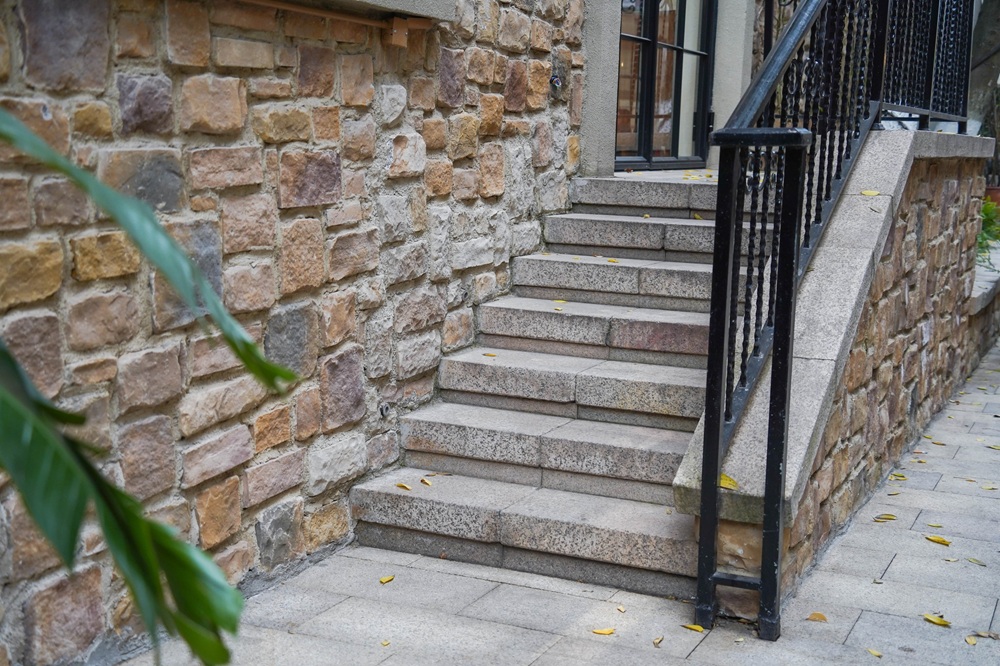
- Cracked or heaved concrete treads, which create uneven footing
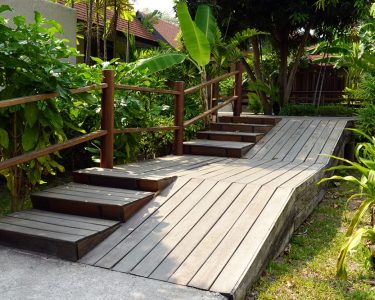
- Soft or rotting wood treads that flex underfoot or splinter at the edge
- Handrails pulled away from the anchor point that move when pushed
- Rails that sit below current code height (34 to 38 inches)
- No handrail on one or both sides of a staircase with three or more steps
- Tread surfaces with no grip treatment left after years of wear
What Outdoor Handrail Installation Involves
Outdoor handrail installation is not the same job as putting up an interior banister. Railing posts have to hold under real load, in all weather, and have to be anchored into the substrate below. For a Woodbridge home with a concrete front stoop, that means drilling into the slab and setting posts with anchor bolts. For a wood-frame porch, contractors secure posts through the decking into the structural framing.
Height requirements apply too. So do the return ends, which are the curved pieces at the top and bottom of a rail that turn the end back toward the wall or post. Without return ends, a hand or sleeve can slide off the rail while stepping onto the landing, which is when the grip is needed most. A contractor who does not mention return ends is not thinking about the person using the rail.
Permits may be required in Woodbridge for structural work on exterior stairs. A reputable contractor will confirm whether a permit is needed before work begins.
Caregivers who come to the house several times a week are the first to notice when a railing has worked loose. They are there at different times of day and in different weather. Families with in-home care in Woodbridge hear about stair problems from caregivers before they notice them on their own.
What New Jersey Weather Does to Outdoor Handrails
Most Woodbridge homeowners stop noticing their handrail in October and discover it has moved by March, after the freeze-thaw cycle works on the anchor posts all winter.
Aluminum is the default for most Woodbridge stoops. Aluminum does not rust, and the powder coat finish lasts through freeze-thaw cycles better than any painted surface. Wrought iron is traditional and durable but needs maintenance every few years against rust. Wood railings are the most affordable upfront but require the most care over time.
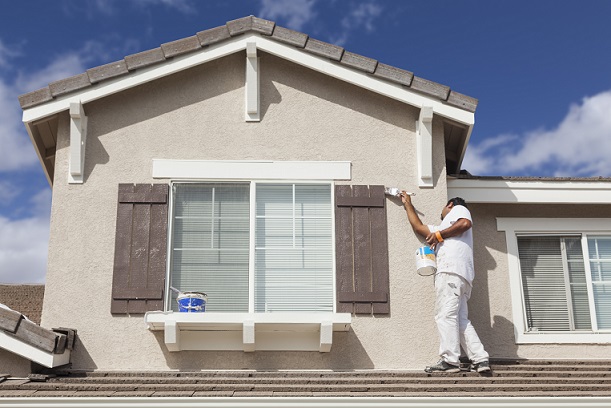
After step repair and railing installation, exposed wood surfaces need sealing before the first hard freeze. A crew of exterior home painters can seal the wood and protect the metal brackets after the structural work is done.
How to Spot Step Damage Before It Causes an Injury
A walk-around inspection takes about five minutes and requires no tools. Start at the bottom and look up. Check whether the concrete has separated from the riser at any edge. A gap along the nose of a step means the concrete has moved. Someone who catches a toe in that gap can trip before the railing has any chance to help.
Cracked concrete on steps is the same problem that shows up on walkways. If the path from the car to the door has started to crack, reading up on walkway resurfacing for senior safety can bring in some new ideas.
Wood Rot, Concrete Cracks, and Loose Fasteners
Press on the center of each wood tread. If it flexes or feels soft, the wood has taken on moisture and is no longer structurally sound.
Look for spider cracks at the corners of concrete steps. These are hairline fractures that radiate from the corner edge. When they reach a size where you can see a visible gap, water enters and the damage accelerates through winter.
Push the railing side to side with one hand. Any movement greater than a quarter inch means the anchor is failing. A railing that moves at the anchor point should not be used as support until a contractor re-anchors it.
Outdoor Handrail Installation Costs in New Jersey
The cost of outdoor handrail installation depends on material, stoop size, and whether step repairs happen at the same visit. For a standard Woodbridge front stoop with four to six steps, aluminum or powder-coated steel typically runs $400 to $900. Wrought iron and custom fabrications run $900 to $1,500 or more depending on length and design.
Replacing a single wood tread runs $100 to $400. Repairing cracked concrete on a standard four-step stoop costs $200 to $800. Permit fees in NJ municipalities generally run $50 to $150.
A contractor anchoring posts into a concrete slab is responsible for a railing that must hold 200 pounds of lateral force. A job done without proper anchoring costs far more to fix the second time.
Why a Caregiver Catches These Problems When Families Miss Them
Most families visit on weekends, in good weather, during daylight. Exterior stairs look different at 7am in November than they do on a Sunday afternoon in June. Loose railing after a hard rain, an icy morning tread, the step edge that has crumbled a little since last month. A caregiver who visits regularly notices all three. A family member who visits monthly may catch none of them.
Caregivers who provide personal care services are at the house often enough to see stair conditions change across seasons. When a tread starts to separate or an anchor begins to work loose, a caregiver is more likely to catch it early.
Seniors who live alone and have 24-hour care at home are also less exposed during the hours when outdoor stairs are most hazardous. Early mornings, evening returns, any time overnight weather has changed. These are the moments when a bad step or a loose rail becomes a fall.
Outdoor Handrail Installation: Questions From Woodbridge Homeowners
Do I need a permit to install a handrail on my front steps in Woodbridge, NJ?
Yes, in most cases. Structural work on exterior stairs in New Jersey requires a permit under the NJ Uniform Construction Code. Woodbridge Township enforces this code, and a contractor who skips the permit is leaving you exposed. If you sell the home or file an insurance claim, unpermitted work can block both. A reputable contractor pulls the permit as part of the job.
How long does outdoor handrail installation take?
Two to four hours is typical for a four-to-six step stoop when the substrate is concrete. Epoxy-set anchor posts add curing time, sometimes overnight, so confirm with your contractor whether that affects scheduling. Step repairs done at the same visit can usually be finished the same day.
Can I repair just a few broken steps or do I have to replace the whole staircase?
In most cases you can replace individual treads without touching the rest of the staircase, as long as the stringers underneath are solid. A contractor will tell you which situation you are in after a visual inspection before any work begins. If the stringers are rotted, more structure has to come out. That is less common on a concrete-foundation staircase, but a contractor can confirm it at the inspection.
Safer Stairs Start With the Right Help in Woodbridge
Outdoor handrail installation does not have to mean a full staircase replacement. In most Woodbridge homes, the job is specific: anchor the railing, replace the damaged treads, and seal the surfaces before winter.
A caregiver who is present several times a week through different weather is going to notice the tread that started to separate or the anchor that worked loose before the family’s next visit.
Sources:
CDC: Falls Among Older Adults
New Jersey Department of Community Affairs: Uniform Construction Code