
The front door is not always the safest part of getting home. In Essex County, the path from the driveway to the entrance can include cracked concrete, uneven joints, and surfaces worn smooth by years of freeze and thaw cycles. These are not minor cosmetic problems. They are surface conditions that make a short walk to the door a real hazard for seniors.
When a family arranges in-home care for an aging parent, the inside of the house gets the attention. The path from the car to the front door often does not. Concrete walkway resurfacing can fix that without a full tear-out.
Why Walkway Condition Is a Bigger Deal When Someone Needs Daily Support at Home
Fall risk inside the house gets most of the attention. Bathroom floors, loose rugs, and dim hallways are the usual concerns. But the walk from the car to the front door puts the same physical demands on a person. Outside surfaces are often in worse condition than anything indoors.
The Fall Risk No One Talks About
New Jersey winters are hard on concrete. Repeated freeze-thaw cycles push slabs up and pull them apart at the joints. Tree roots work under the surface over years and create lips and ridges that are easy to miss, even in decent light.
Surface spalling leaves concrete smooth in the spots that need traction most. The Centers for Disease Control and Prevention report that falls are the leading cause of injury among older adults, and uneven outdoor surfaces are among the most common causes. Walkways are one of the outdoor surfaces addressed in exterior remodeling for senior safety in New Jersey, which also covers steps, ramps, and lighting.
What Caregivers Notice First
A caregiver who helps a senior in and out of the house walks the front path many times each week. Caregivers providing personal care services are among the first to notice surface hazards. A caregiver guides someone across that ground with a hand on their arm or a walker in front of them.
The slab section that tilts toward the street gets noticed quickly. So does the joint where the edge has crumbled, and the spot near the step where water always seems to collect. Families who hear this kind of feedback are usually ready to act.
How Concrete Walkway Resurfacing Works
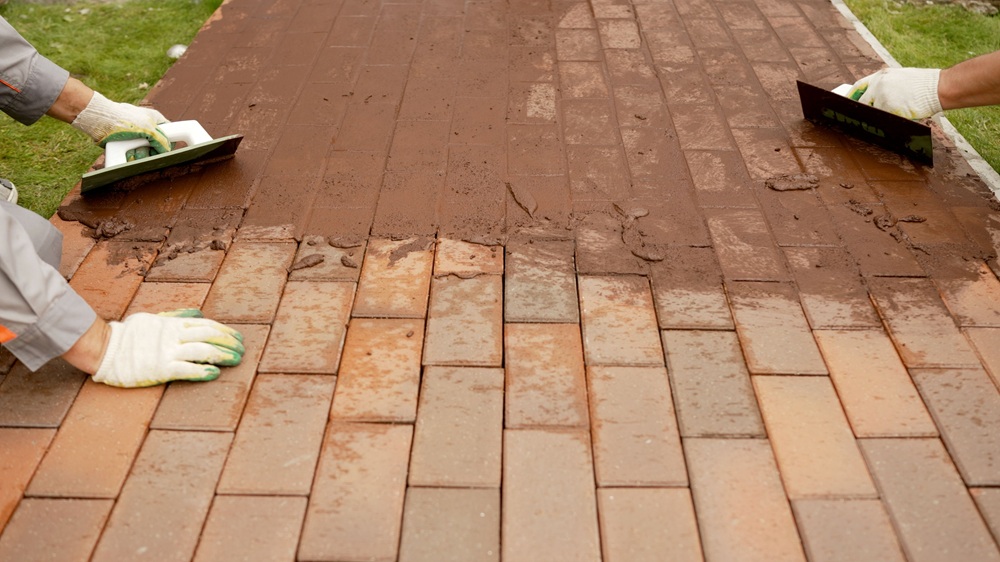
When a contractor resurfaces a walkway, they clean the surface, fill cracks and shallow voids with patching compound, and apply a bonding agent. Then they pour a new overlay on top. The overlay bonds to the old concrete and creates a fresh surface that can be textured or left plain.
Most residential walkways take one to two days to resurface. After the work is done, the new surface needs time to cure. Homeowners need to plan around a short window when the main entrance path is off limits. Resurfacing cannot fix structural problems. If a slab has heaved from tree root pressure, or if concrete has crumbled deep into the slab body, an overlay will not hold. An overlay needs a solid base to bond to.
When Concrete Walkway Resurfacing Makes More Sense Than Full Replacement
Full replacement costs a lot more and takes longer. Before assuming the whole walkway has to come out, knowing what each approach suits saves time and money.
Signs the Surface Can Be Saved
Resurfacing works when the damage stays at the surface level. Shallow cracks that have not spread through the full slab depth, staining, minor spalling, and surfaces worn smooth are all good candidates for an overlay.
Replacement is the right call when slabs have heaved more than an inch. Tree root damage that has broken concrete apart in sections also points to removal. So does an original pour that was too thin to support a proper bond. When the extent of the damage is unclear, a contractor can probe the depth and tell you which path makes sense.
Concrete Walkway Resurfacing Options for NJ Homeowners
Not all resurfacing products hold up equally well through New Jersey’s freeze-thaw cycles. Homeowners here have three main overlay options: micro-topping, stamped overlay, and broom-finish overlay. Micro-topping is very thin and works well for surfaces that are still sound but have lost their texture. Stamped overlay adds a pattern for homeowners who want the look of stone or brick. Broom-finish overlay is the best choice when safe footing is the priority. It creates an even, non-slip surface without any decorative work.
Across South Orange and the nearby Essex County towns, seniors who receive in-home care often have a caregiver walking the front path with them daily. A broom-finish job removes the uneven patches the caregiver was working around. Homewatch CareGivers of South Orange works with families across Essex County and sees how home condition affects daily care routines.
Drainage: The Step Most Homeowners Skip
Water that pools near the base of front steps or along walkway edges is not just a nuisance. Pooling water speeds up the exact damage that makes resurfacing necessary. When water sits on concrete through a NJ winter, the freeze-thaw cycle does its most destructive work.
A licensed plumber can assess whether the drainage needs a French drain, a catch basin, or soil re-grading before resurfacing begins. Laying a new overlay over an unresolved drainage problem means the same cracking returns within a few years. Sealing after the overlay cures is a step that most homeowners overlook. Exterior painting and sealing contractors often handle concrete sealing as part of a broader exterior project. Pairing the right sealant with the overlay product extends the surface life considerably.
Common Questions About Concrete Walkway Resurfacing
How long does concrete walkway resurfacing last?
A well-installed overlay on a solid base usually lasts between 8 and 15 years. Product choice, climate exposure, and upkeep all affect that range. Resealing every few years and keeping drainage clear around the walkway edges extends it further. NJ freeze-thaw conditions shorten overlay life more than warmer climates do, so surface prep counts more here.
Can a walkway be done in sections, or does it all need to happen at once?
You can do sections one at a time, but seams between old and new overlay are hard to avoid. For a straight walkway from the driveway to the front steps, most contractors prefer a single pour to avoid seams and color variation. If only one section has heaved, that section can come out while the rest gets resurfaced. In those cases the contractor needs to manage transitions so no raised edge remains between sections.
Does resurfacing make a concrete walkway less slippery?
Yes, if you specify the right finish. A broom finish leaves fine parallel grooves that provide grip in wet conditions. Smooth or polished overlays can be more slippery than the worn concrete they replace. When safe footing is the reason for the work, specify a broom finish in writing before the job begins.
What Essex County Homeowners Should Know Before Starting This Work
Most cracked or worn concrete walkways can be fixed without a full replacement. In Essex County, where winters are hard on exterior surfaces, concrete walkway resurfacing extends the life of an existing surface at a fraction of the cost. Families caring for an aging parent can reach the Essex County Office on Aging at 973-395-8375 for referrals to local contractors and fall prevention resources.
Sources
Centers for Disease Control and Prevention, Falls Data and Statistics
Concrete Network, Resurfacing Walkways