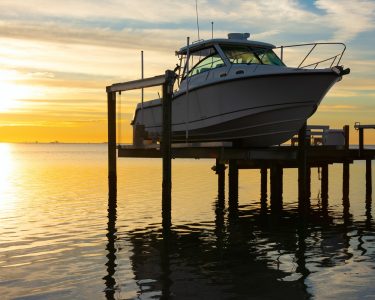

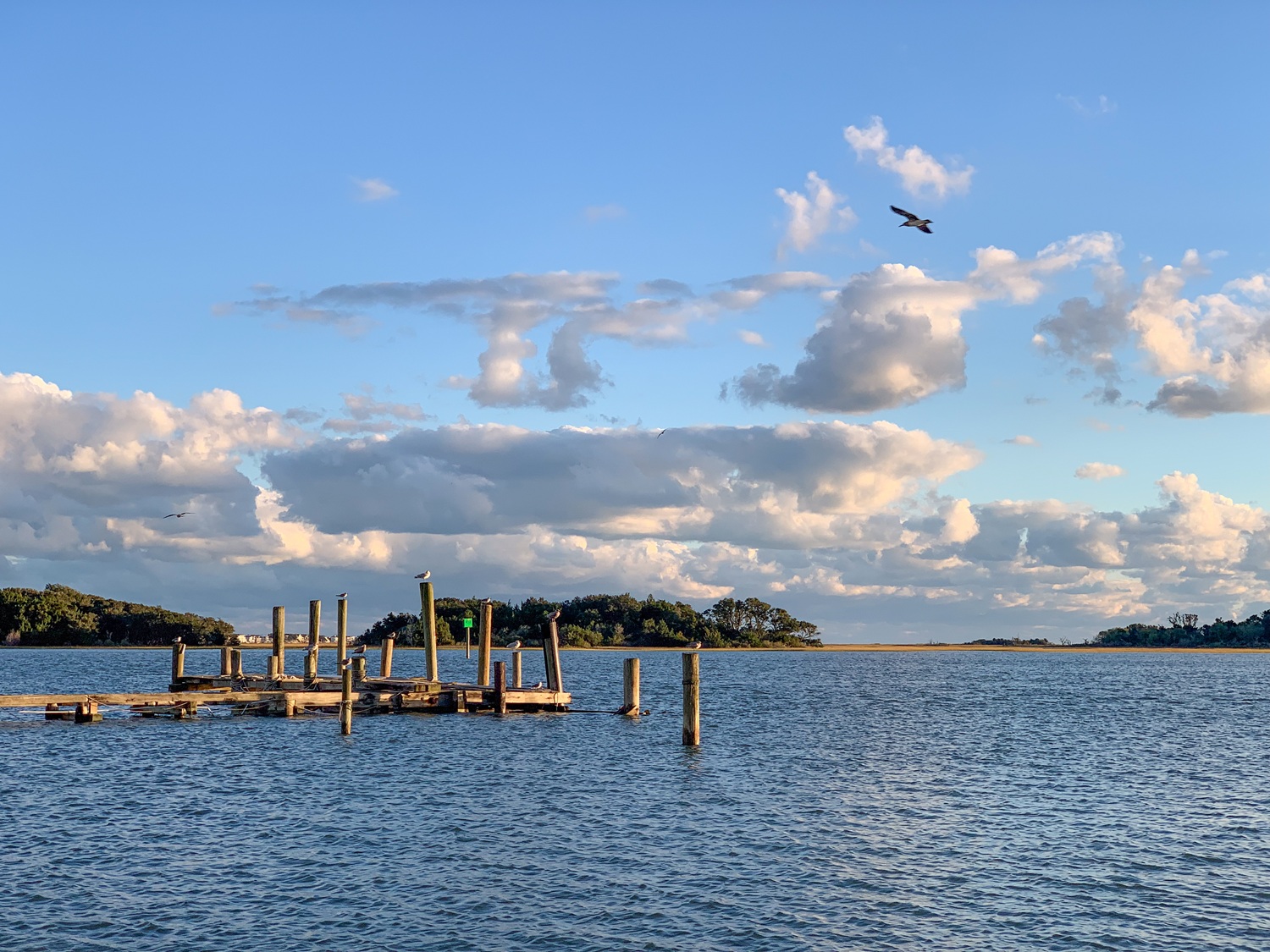
A dock shouldn’t move or sway whenever someone steps off a boat. If it does, there are likely problems with the underlying supports. Fortunately, the cold winter that will soon be upon us is a great time to check your dock pilings, given you know what to look for. That’s exactly what we’ll talk about in this post: some of the signs your dock pilings might need replacement.
Quick Answer
Dock pilings can deteriorate at the waterline, inside submerged wood, or at exposed tops. Gribbles erode the outside of the timber, while shipworms tunnel through the inside. A hollow sound, visible narrowing, or movement under normal use calls for a professional inspection. Wraps help when damage is limited, but a piling that has lost real strength needs replacement.
Where Dock Pilings Start to Deteriorate
Treated timber doesn’t break down all at once. Some parts could look fine while others at the failure threshold. The tidal zone is the obvious place to start. Wood there is soaked and exposed as the water rises and falls, and tiny crustaceans called gribbles chew its surface. And that’s not the only biological threat. Shipworms are mollusks that tunnel into wood below the waterline, making their presence much harder to detect.
Fitting caps on the upper ends is a small dock repair that keeps them dry. An uncapped cut end soaks up rain, especially once checks or splits let water deeper into the wood.
Rusting bolts cause a different problem. As connections loosen, the framing can move even when the piling is sturdy. Tightening hardware won’t fix a failing foundation, but an unstable deck doesn’t automatically mean every piling needs replacing.
Shipworms and Gribbles Leave Different Damage Behind
Shipworms are mollusks, related to clams. They enter through tiny openings and bore tunnels along the grain, so a piling can look nearly untouched while much of its core is gone. Gribbles are small crustaceans that wear away the outer surface instead. Heavy gribble damage near the tide line leaves the piling narrowed like an hourglass.
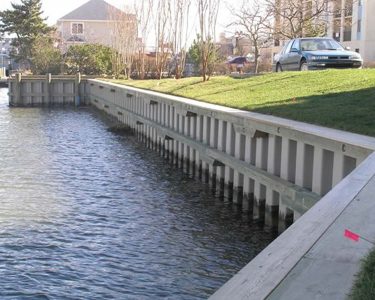
Pilings along the Intracoastal Waterway near Wilmington usually see steadier saltwater exposure than docks farther up the Cape Fear River. Upriver docks aren’t immune, since salinity moves with the tides and rainfall, and salty water can run beneath fresher water at the surface. Wooden bulkhead timbers face the same borers, and a failing bulkhead can let soil wash out from behind it.
How to Check Dock Pilings at Low Tide
Low tide exposes more of each piling, which makes narrowing, torn wraps, and loose connections easier to spot. Always work from stable footing for your own safety. Don’t stand anywhere that feels unstable, and definitely don’t push on any railings to test their stability.
Compare the thickness of the pilings at various points. Is it thinner at the waterline than above it? Are there long cracks running down from the top, rust around bolts, or gaps where the framing meets the supports? On fixed docks, compare neighboring pilings from a safe spot. One that has leaned, settled, or pulled away from the framing needs a closer look.
A light hammer tap on wood you can reach safely gives another clue. Sound wood gives a sharper ring, while hollow or decayed sections sound dull. The test isn’t definitive, and it can’t reach the submerged wood where shipworms often work, so a contractor may need to probe or dive. Don’t drill into treated timber or puncture an intact wrap during a casual check. You might as well be laying out the welcome mat for the borers.
Repairing or Replacing Dock Pilings
Protective wraps keep borers from reaching sound wood, so they work best before serious damage sets in. Engineering guidance for marine timber favors wrapping before roughly 5 percent of a piling’s cross-section is gone, and in some cases up to about 15 percent. Those figures are maintenance guidelines, not a safety limit a homeowner can measure by eye.
A proper wrap runs from above high water to below the mudline. Short sleeves around the tide band alone leave submerged wood exposed. When rot is confined to the top of a piling, a designed splice can sometimes replace the bad section, as long as the connection transfers the dock’s load into the sound wood below.
Wrapping a hollowed piling won’t put back the wood borers have already eaten. Replacement makes more sense when tunneling or erosion has taken much of the sound wood, or when the piling no longer bears its share of the load. Crews then drive new pilings and move the framing onto them. Watch for this when several neighbors show the same damage, because the dock can still look level while the remaining supports bear extra weight.
Pilings under a boat lift bear concentrated loads from the lift and the boat. Damage there affects both the dock’s safety and the cost of restoring the lift.
What North Carolina’s 2024 Dock Law Means for Piling Repairs
Suppose a storm damages eight of the twelve pilings under a dock. Before 2024, rebuilding more than half of a dock’s structural components generally counted as replacement under the Coastal Area Management Act and could require a CAMA permit. Under G.S. 113A-118(g), qualifying docks, piers, and walkways damaged by storms, fire, or normal wear can now be rebuilt without a CAMA permit. In that example, replacing eight pilings wouldn’t require one if the dock qualifies.
Docks or piers wider than six feet, structures with more than 800 square feet of platform, and facilities next to a federal navigation channel don’t qualify. Neither does enlargement beyond five feet or 5 percent, whichever is less. Boathouses, boat lifts, and platforms still fall under the older 50 percent test. Local building inspection still applies, and in-water work may also need a U.S. Army Corps of Engineers permit.
Channel adjacency is the exclusion most owners can’t judge by eye. The state Division of Coastal Management posts a federal navigation channel map for checking it. Even so, the exemption is already in effect while the Coastal Resources Commission writes it into its rules.
What Dock Piling Repair and Replacement Costs
Aside from the piling itself, access restrictions can drastically change the price. If a crew works from the shore, that’s reasonable. But if they need a barge, crane, or other massive equipment for deeper water, costs can skyrocket.
Angi’s boat dock repair cost guide lists these national per-piling ranges:
| Work | Estimated cost per piling |
|---|---|
| Piling repair, including wrapping or partial repairs | $300–$1,000 |
| Full piling replacement | $500–$1,500 |
Always ask whether an estimate includes removing damaged material, reconnecting the framing, and restoring the decking around each piling.
Key Takeaways
- Gribbles erode timber near the tide line, while shipworms can hollow pilings below the waterline.
- A hollow sound, narrowing, loose connections, or movement calls for a closer inspection.
- Wraps protect relatively sound pilings and must run from above high water to below the mudline.
- Treated marine pilings in southern waters are commonly planned for about 25 years of service.
- Qualifying North Carolina docks can be rebuilt without a CAMA permit regardless of how many components are replaced, subject to statutory limits.
Questions About Dock Pilings in Wilmington
How long do dock pilings last?
Treated marine pilings in southern waters are commonly planned around a 25-year service life. That isn’t a warranty or a replacement schedule, since salinity, treatment, physical damage, and borers all change it. A 15-year-old piling with heavy internal damage may need replacing, while an older one with enough sound wood can stay in service.
How deep do dock pilings need to be?
Deep enough to reach bottom material that can support the dock, which varies from site to site. Contractors use soil information and how hard the piling resists driving to set the embedment. In soft marsh mud, more of the piling often ends up below the mudline than above the water.
What are dock pilings made of?
Pressure-treated southern pine is common in coastal docks, treated for marine exposure. Concrete, steel, and composite pilings resist wood borers, though each brings its own installation, corrosion, and cost tradeoffs.
Inspect the Supports Before Spring
At the next low tide, photograph every piling you can see safely. Number the pilings in the photos, and note damaged wraps, narrowing, or connections that look loose. If most of the pilings and much of the framing need work, a replacement dock built at once can cost less than phased repairs. That’s especially true when the decking is near the end of its life anyway. Stay off any section you suspect until a contractor has looked at it.