
Essex County winters are no joke, and your sump pump needs to be able to keep up. Some of the region’s homes have decades-old pits with pumps that might have been replaced three homeowners ago. It’s always easier to carry out a sump pump replacement on a dry afternoon at 2p.m., instead of 2 a.m. when the whole basement’s flooding. Let’s go over how you can gauge whether your pump can handle the coming winter and when repair or replacement makes more sense.
Quick Answer
Most sump pumps last about seven to ten years, though heavy use can shorten that. Frequent cycling, grinding noises, or a pump that cannot clear the pit are signs it may need replacing. Replacing an existing pump typically costs $400 to $700. Before winter storms arrive, test the pump, check the discharge line, and consider backup power.
What This Winter’s Outlook Means for Essex County Basements
NOAA’s October 15 winter outlook favors wetter-than-average conditions along the Eastern Seaboard from December through February. A very strong El Niño is driving it, though NOAA doesn’t say how much will fall as rain, snow, or ice. That means your sump pump will likely be earning its keep this winter. An Essex County plumber can check whether an existing pump keeps up with that extra inflow. While the forecast doesn’t guarantee your basement will flood, it’s a strong indicator to check your equipment beforehand.
Signs a Sump Pump Replacement Is Due
Most manufacturers put a pump’s service life at around seven to ten years, depending on installation and use. If your pump was installed earlier than 2016, take a closer look at it, but age alone doesn’t mean it’s guaranteed to fail. The bigger indicator of that is how it behaves during a storm.
A pump that keeps running after the pit drains may have a float switch stuck in the raised position. One that restarts every minute or two could have a faulty check valve letting water flow back into the basin. Grinding noises are another warning. So is a motor that hums while barely moving water, though a blocked impeller or discharge line can cause that too.
Don’t jump to conclusions here, though. Just because you’re seeing these things doesn’t mean the pump is finished. Follow the manufacturer’s instructions and pour water into the pit until the float rises. It should start, lower the water, and stop on its own. If nothing happens and the area is dry, check whether the outlet has power or a GFCI has tripped. Don’t keep resetting a tripping outlet or reach into a connected pump.
Repair the Pump or Replace It?
Individual parts like float switches and check valves can usually be replaced without getting rid of the whole pump. HomeGuide lists parts at roughly $35 to $70 for a float switch and $15 to $30 for a check valve. Labor comes on top. When a motor repair approaches half the price of a new pump, sump pump replacement usually makes more sense.
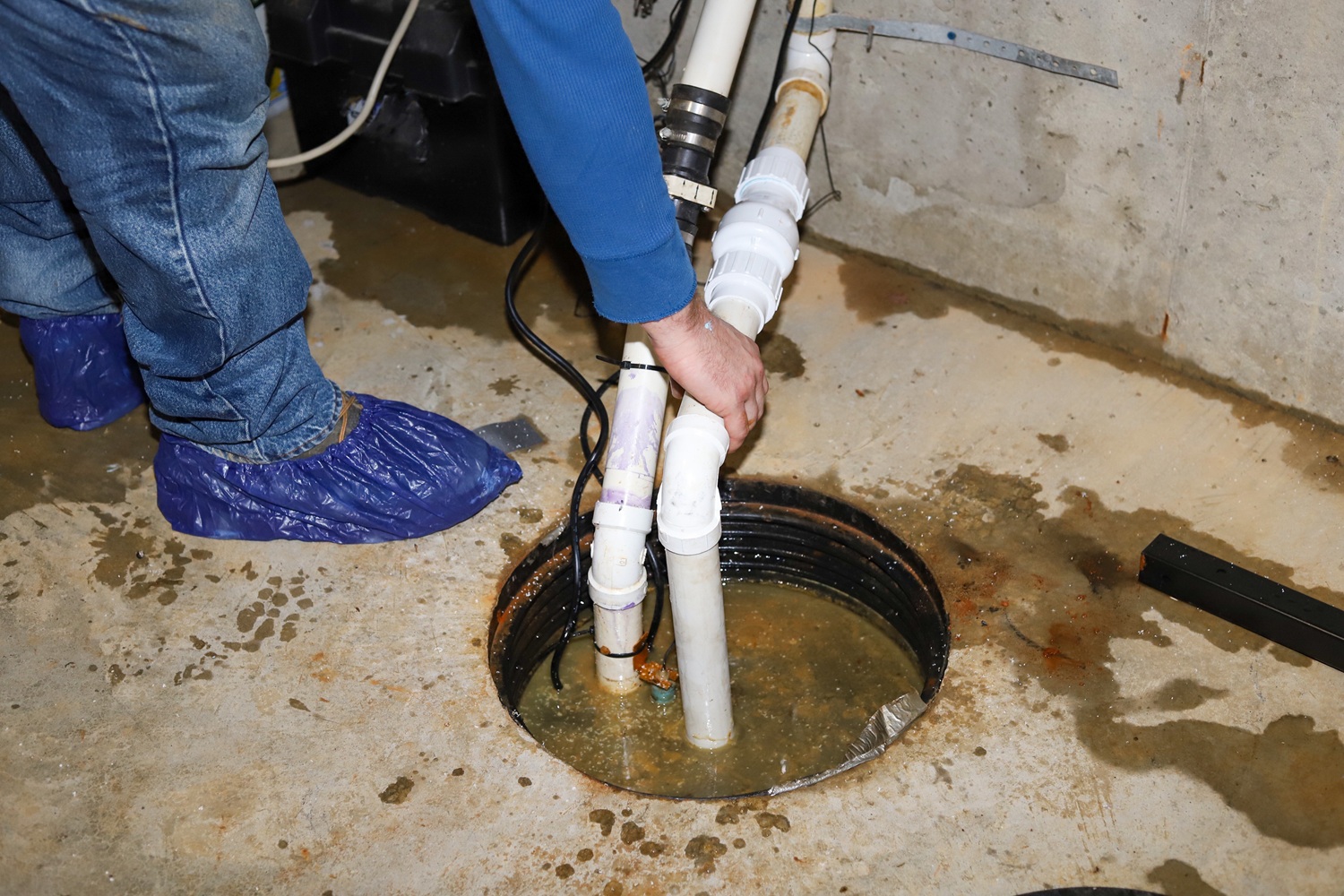
The pit itself can be the problem. A cracked liner, heavy sediment, or a float catching on the basin wall causes trouble even if the motor works. If the pump does need replacing, have the installer inspect the check valve and discharge piping too. Reusing a failed part just leads to the same problems.
Choosing a Pump That Fits the Basement
A replacement pump should suit the water entering the pit and the distance it has to move that water. Submersible pumps sit inside the basin, which keeps them less noisy and out of the way in a finished basement. Pedestal pumps keep the motor above the pit for easier service. They also fit narrow or shallow pits where a submersible will not.
The performance chart is a better metric than simple horsepower to base decisions off, because it’s a more accurate representation of how much water a pump moves at a given height. A long discharge route with several elbows adds resistance that has to be accounted for. In older or narrow pits, a vertical float often fits where a tethered float could catch on the wall.
Backup Options When a Nor’easter Knocks Out Power
A nor’easter can bring down power lines while melting snow keeps feeding water toward the foundation. Without backup power, a standard sump pump stops at the worst possible moment.
A battery backup pump sits alongside the main pump and takes over when the primary loses power or cannot keep up. Manufacturers rate runtime in hours of pumping or number of cycles. Compare that rating with how often your pump runs in a storm, since a long outage can drain it first. Homes with a backup generator can keep the main pump running, as long as the generator has a safe, code-compliant connection.
Water-powered backup pumps run on municipal water pressure instead of electricity. They use roughly one gallon of city water for every one to two gallons removed. Because they connect to the drinking-water supply, they need backflow protection that meets local plumbing rules. Homes on an electric well pump can’t count on them, since the well loses pressure when the power fails.
When the Pump Works but Water Still Backs Up
A working motor cannot drain a basement if its discharge line is blocked. In freezing weather, exposed discharge pipe can ice over where water sits between cycles. The pump then runs without moving water away from the house. Check where the line exits the foundation and where it ends outdoors, especially after a freeze or heavy snow.
A downspout emptying beside the foundation concentrates roof runoff near the basement walls. Adding downspout extensions won’t fix every groundwater problem, but it can cut how much water reaches the pit.
What Sump Pump Replacement Costs
Reusing the existing pit keeps this job inexpensive. HomeGuide puts sump pump replacement in an existing pit at $400 to $700. A new system with a freshly dug pit averages about $1,600. Damaged basins, rerouted discharge lines, and battery backups add to either figure.
Before approving a plumbing estimate, ask whether it includes a compatible check valve, the discharge connections, and removal of the old pump. The installer should also run a water test before leaving.
Key Takeaways
- Most sump pumps last about seven to ten years, depending on workload and maintenance.
- Short cycling, grinding, or a stuck float deserve attention before heavy winter rain.
- Sump pump replacement typically costs $400 to $700 when the existing pit is usable.
- Battery backups suit short outages, generators cover longer ones, and water-powered pumps need city water.
- Fixing downspouts and frozen discharge lines can cut basement water without a new pump.
Questions Homeowners Ask About Sump Pump Replacement
Can I replace a sump pump myself?
Sometimes. Electrical changes, new discharge piping, or a water-powered backup call for a licensed plumber and may need permits. A plug-in swap with the same size pump and existing connections is different. Homeowners with plumbing experience can often manage it.
How often should a sump pump be tested?
Follow the manufacturer’s recommendation, but every few months is a reasonable routine. Test again before a season of heavy rain, and check the discharge outlet after freezing weather.
Is there a better alternative to a sump pump?
If most of the moisture comes from surface runoff, better gutters, longer downspouts, and a corrected ground slope may solve it. University extension guidance generally puts those fixes ahead of more extensive waterproofing. Persistent groundwater beneath a basement floor is different. A drainage system may still need a sump pump unless the lot allows gravity drainage to a suitable outlet.
Why is my basement wet if the sump pump still works?
Not all basement water comes through the sump pit. A leaking supply line, a failing water heater, or wall seepage can leave the floor wet while the pump works. Professional leak detection can find the source before anyone replaces a pump that was never the problem. Condensation on cold pipes can also pass for a leak.
Test the Pump Before Booking a Sump Pump Replacement
Check the pump’s nameplate for an install date, then run a full water test and listen for odd noises. Outside, make sure the discharge outlet is clear and the downspouts aren’t sending runoff toward the foundation. If the pump is near the end of its life or struggles to empty the basin, ask for an estimate. It should cover the pump, the check valve, and a backup that fits your outage risk.