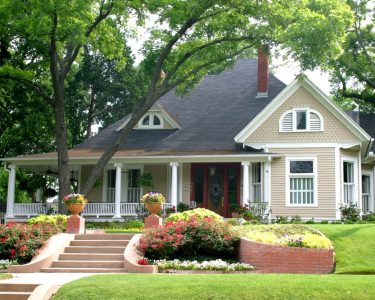

Most people think “nicer yard” when they hear the words “curb appeal.” That’s reductive, and there’s a lot more that goes into curb appeal than most people realize. Especially if you’re trying to sell, your home’s exterior needs to pique buyers’ interest in under 30 seconds from the window of a moving car.
That raises the bar, and the curb appeal ideas that can meet it have a few things in common. They’re visible from the street, signal consistent maintenance, and don’t require extra work from the buyer to appreciate. When a buyer scans a home’s exterior while driving by, they’re triaging the property. They’re not asking “does this look beautiful” but “does anything here signal a problem.” The yard improvements that come up most in contractor walkthroughs follow that same rule.
Why Curb Appeal Matters Before You Call Your Realtor
Buyers form opinions about a home before they walk in the door. Homes that visibly need maintenance attract buyers looking to use that condition as leverage on the price.
What Buyers Notice Before They Get Out of the Car
Peeling paint on the trim, overgrown shrubs blocking the lower windows, a cracked front walkway, a gutter pulling away from the fascia — these are significant red flags in a buyer’s mind. None are expensive to fix, but all signal a lack of care for the home, which isn’t the message you want to send.
Beyond the problem signals, buyers look for intentional cues: a front door color that stands out, clean lawn edges, a well-lit entry path.
Curb Appeal Ideas That Deliver the Best Return on Investment
The highest-return work falls into what contractors call cosmetic surface improvements: repainting or refinishing visible elements, cleaning and trimming what’s already there, and correcting small defects.
The Front Door: High Impact, Low Effort
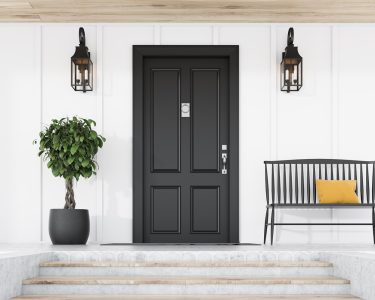
A freshly painted front door is one of the strongest pre-sale exterior improvements, and one that homeowners can tackle over a weekend. Doors that contrast with the siding photograph better and attract more attention in a drive-by. Colors like navy, black, deep forest green, and rich red work across a wide range of exterior palettes.
Hardware is where most sellers cut corners. Swapping out corroded handles, knockers, and house numbers costs under a hundred dollars and looks noticeably better in listing photos. Check the door itself too. If it sticks, has visible rot at the base, or doesn’t hang level, repainting won’t hide that.
Landscape Edging, Trimming, and Fresh Mulch
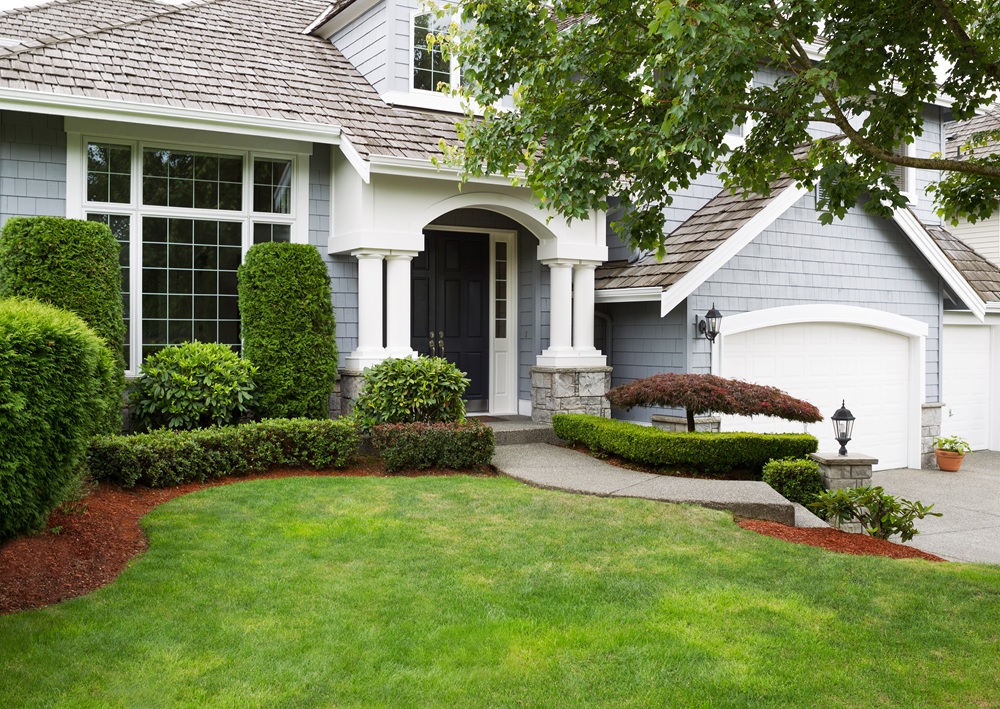
A yard with defined edges, trimmed foundation shrubs, and fresh mulch demonstrates care. A yard where the lawn has crept into the beds and shrubs are growing past the window sills reads as neglected.
Start with three things: edge along all walkways and bed lines, trim all foundation shrubs below the sill line, and lay two to three inches of fresh mulch in every visible bed. Usually a weekend and a few hundred dollars in materials. Don’t add new plantings right before listing. They look out of place when first added, and sometimes read as an attempt to cover something.
Exterior Repairs That Work Against You If Left Undone
Outdated style is one thing. Visible neglect is another.
Peeling paint on fascia and trim, cracked or missing caulk around windows and doors, sagging gutters, cracked walkway sections, and a broken fence panel are all inexpensive to address — far cheaper than the price adjustment a motivated buyer will ask for when they spot them. Work on these before taking any photos.
The outdoor living maintenance details a trained eye catches on-site often include things the homeowner stopped noticing: a cracked paver at the front steps, a fence section that shifted over the winter, weathered deck boards visible from the street. Small fixes, but costly to ignore.
Exterior renovation ideas worth considering can make sense too, but only after the obvious repair issues are handled first.
Curb Appeal Ideas for Larger Projects Worth Considering
If you have four to eight weeks before listing and a meaningful budget, there’s a second set of curb appeal ideas to consider. A full exterior repaint is the highest-visibility option: it photographs dramatically better than a spot-repainted house, resolves the deferred maintenance signal from fading paint, and lets you update the color scheme. If you were already planning to repaint the trim and touch up one wall, a full repaint is often more cost-effective than piecemeal work.
Buyers will see a cracked or settled front walkway as a problem. If the front facade heavily features the garage, replacing the door is one of the highest-return exterior projects, according to the Journal of Light Construction’s 2025 Cost vs. Value Report.
When to Bring in a Contractor Instead of DIYing It
Uneven paint lines, caulk applied inconsistently, and pavers that aren’t level stand out to a buyer and their inspector even if you’re satisfied with the result. If the scope feels larger than a weekend project, a conversation about what a full exterior renovation actually involves is worth having first. Cosmetic projects often uncover underlying conditions once work begins, and knowing the full picture before committing to a listing date puts the homeowner in a much better position.
Curb Appeal Ideas: Your Pre-Listing Exterior Checklist
Front door: Freshly painted in a contrasting color. Updated hardware. Clean threshold. No sticking, rot, or alignment issues.
Facade: No peeling or fading paint. Caulk intact around all windows and doors. No visible siding damage.
Windows: Clean glass. Screens in good condition or removed for photography.
Roof edge and gutters: Gutters attached and level. No visible debris from the street.
Driveway: No significant cracks. Clean surface.
Walkway: Level and intact. No raised edges or cracked sections.
Landscaping: Lawn edges defined. Foundation shrubs trimmed below all window sills. Fresh mulch in all visible beds. No dead plants left in place.
If any of these are not in order before photography, fix them first. Listing photos are permanent.
Frequently Asked Questions
How much does it cost to improve curb appeal before selling?
For most homes, the high-impact surface fixes, including door paint, hardware, mulch, edging, and minor repairs, typically run between $300 and $1,500 depending on property size. Larger projects like a full exterior repaint or new walkway run $3,000 to $10,000 or more, and are generally worth pursuing for homes in higher price brackets where the return calculation works. The NAR Outdoor Features report covers cost recovery data for a range of outdoor projects if you want to compare specific improvements.
How long before listing should I start curb appeal projects?
For surface improvements, four to six weeks is enough lead time. For larger projects, eight to twelve weeks gives you room for contractor scheduling and anything unexpected that comes up once work begins. Part of preparing for a home renovation of any scope is building in buffer time. Projects that start two weeks before a listing date rarely finish cleanly.
Repairs First, Then Improvements
The goal is to remove anything that gives a buyer a reason to discount the price before they reach the front door. A plan that starts with repairs and ends with visible improvements almost always outperforms spending the same budget on plantings or additions that buyers may not share your taste for. Fix what signals neglect first. Then improve what reads well from the street. In that order.
Sources
NAR 2023 Remodeling Impact Report: Outdoor Features
Journal of Light Construction 2025 Cost vs. Value Report