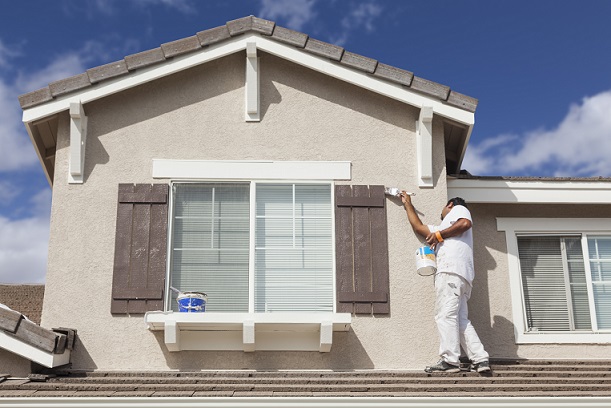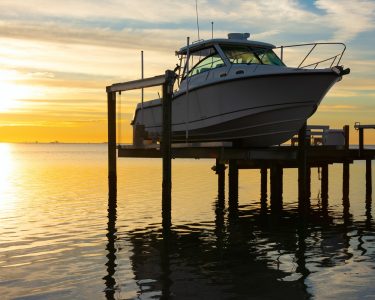

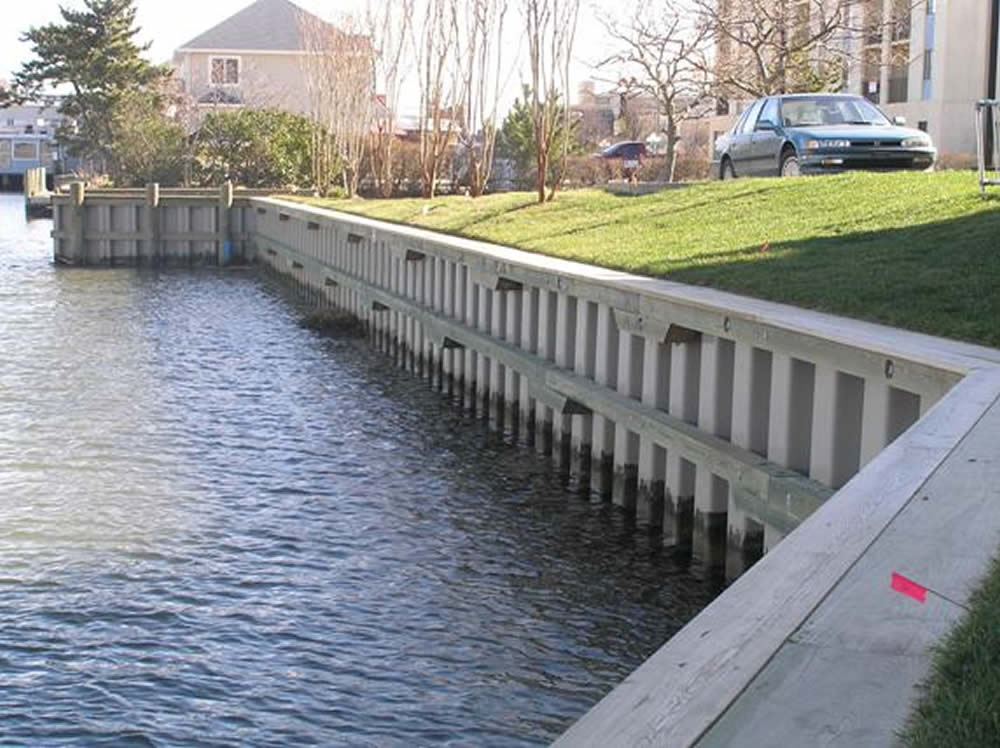
Most NC waterfront property owners who buy an existing home have no idea what their bulkheads are made of or when they were built. If the wall is holding and nothing looks obviously wrong, they usually assume that it’s fine.
Bulkhead lifespan depends on material, exposure, maintenance history, and how many storm seasons it has absorbed. In southeastern North Carolina, storm seasons place real stress on waterfront structures. Knowing what’s already in place determines whether the structure still has useful life or is approaching failure.
For waterfront properties along the Cape Fear River and the Intracoastal Waterway (ICWW), performance depends on local conditions. Soil composition, tidal movement, and storm exposure all affect how a bulkhead holds up over time. Bulkhead construction and repair along the Cape Fear River and ICWW requires familiarity with those specific conditions. What holds up in a protected canal in another region may not perform the same way in Wilmington’s brackish waterways.
Quick Answer
How long a bulkhead lasts in NC depends on material. Wood is the most vulnerable in coastal brackish environments. Vinyl is better at resisting rot and marine organisms. Concrete is the most durable option.
All materials weaken over time, especially in areas with consistent wave energy and storm exposure, according to NC Sea Grant. Regular inspection and timely repairs extend lifespan regardless of material. In North Carolina, bulkhead replacement requires a CAMA general permit from the NC Division of Coastal Management, with a $400 fee and a 120-day completion window once authorized.
How Long Does a Bulkhead Last? What NC Waterfront Owners Should Know
North Carolina bulkheads are usually built from concrete, steel, wood, or vinyl. Each material behaves differently in the brackish conditions, and each fails in different ways.
Bulkheads can handle low-energy wave conditions, but they weaken over time in environments with sustained pressure. Along the ICWW, boat wake creates repeated lateral force on tiebacks. Tidal movement in the Cape Fear estuary pushes water against the wall daily. Storm surge adds pressure from the water side while saturating the soil behind it. These forces affect structural integrity over time.
Wood Bulkheads: Vulnerability in Coastal Brackish Water
Wood is the most common material in older NC waterfront properties. It’s used extensively in installations from the 1980s and 1990s before vinyl became more widely used.
The challenge with wood in coastal NC is brackish water exposure. The Cape Fear River estuary contains fluctuating salinity levels influenced by tides and rainfall. That environment speeds up deterioration in ways that freshwater doesn’t.
Marine borers, particularly Teredo worms, are present in coastal waters. These organisms bore into submerged wood and hollow it internally. The damage is not visible from the surface until the structure has already weakened significantly.
By the time wood feels soft or spongy at the waterline, the material below the surface is often far more compromised. Pressure treatment slows deterioration but does not stop it in salt or brackish conditions.
A well-maintained wood bulkhead will last longer than a neglected one, but both eventually reach a point where they fail.
How long a floating dock lasts and how long a boat lift should last are questions worth considering alongside the bulkhead. All three structures face the same environmental pressures. Thus, homeowners should assess them together, not in isolation.
Vinyl and Concrete: What Greater Durability Actually Requires
Vinyl sheet pile is now the standard choice for many new bulkheads in NC because it avoids the failure modes that shorten the life of wood installations. It doesn’t rot, and marine organisms can’t bore into it. It performs consistently in salt and brackish environments.
Vinyl still requires proper installation and maintenance. If tiebacks fail or corrode, the wall can begin to bow outward under soil pressure. This movement is usually gradual and visible before it fails completely. Catching it early is the difference between simple repair and full replacement.
Concrete is the most durable bulkhead material and is commonly used in marinas and commercial settings. These environments need higher load capacity due to vessel traffic and water depth. A properly engineered concrete bulkhead can function for decades with regular inspection.
In residential settings, concrete appears more often in higher-energy areas along the Cape Fear River where wave action places more stress on the structure.
Steel bulkheads are less common in residential properties. Steel offers strength but requires ongoing maintenance due to corrosion risk in salt and brackish water environments.
Signs Your Bulkhead Is Failing Before It Fails Completely
Bulkhead failures aren’t immediately visible because they happen over time. A wall that looks intact may already have structural issues beneath the surface.
What to Watch For Along the Cape Fear River and ICWW
Structural movement: Bowing or leaning toward the water is the most important warning sign. A straight wall that develops a curve indicates tieback stress or failure. As movement increases, soil pressure shifts to fewer anchors, accelerating failure. This is not cosmetic.
Misalignment along the top cap or separation at joints suggests the structure is shifting as a whole.
Soil and drainage signals: Sinkholes or voids near the bulkhead indicate soil loss through or beneath the wall. This often results from failed filter fabric or structural gaps.
Standing water on the landward side after rain may indicate blocked drainage or hydrostatic pressure buildup.
Hardware and connections: Corroded tie rods and anchor failures are common along the ICWW. These components prevent the wall from rotating outward. If they fail, the wall will move.
Leaning pilings near the bulkhead or at adjacent docking facilities can also signal soil instability behind the wall.
NC Sea Grant recommends inspecting bulkheads every season. Also document conditions before and after storms to track gradual changes.
How Long Does a Bulkhead Last When Southeast NC Storms Are in the Mix?
Storm conditions place a different type of stress on bulkheads than daily tidal movement.
What Hurricane Season Does to Bulkhead Timelines
Storm surge pushes water against the wall while saturating soil behind it. This pressures the bulkhead from both directions. A bulkhead designed for normal conditions may not handle that combined load.
Damage from storms is often delayed. A bulkhead may appear intact immediately after a hurricane but have weakened tiebacks or disrupted soil support. Problems such as bowing or void formation may appear months later when normal tidal and wave loading resumes.
Recent storm history in Wilmington makes this concrete. Hurricanes Florence, Dorian, and Isaias affected the region in consecutive years. Each event triggered emergency CAMA permits that included bulkhead repair and replacement, reflecting widespread damage across coastal counties.
One homeowner visually inspected their wooden bulkhead after Hurricane Isaias. It looked fine on the surface, but soil shifting pulled the bottom half of the bulkhead out of alignment. The homeowner didn’t notice any bowing until tides receded about a month later.
Properties that experienced many storms without post-storm inspection may carry hidden cumulative damage. Often, that damage isn’t visible until the next season’s loading.
Building waterfront structures that survive southeastern NC storms and preparing your Wilmington marine construction site for storm season cover the broader seasonal planning context that applies to the whole property.
Bulkhead Repair vs. Replacement: What Drives the Decision
Repair is appropriate for localized damage. This may include isolated panel failure, limited tieback corrosion, or a single void behind the wall.
Replacement becomes more practical with widespread damage. Continuous bowing, many anchor failures, or structural degradation across the wall’s length indicate systemic issues that localized repairs can’t fix.
Material plays a role in this decision. It’s possible to repair vinyl bulkheads with isolated damage in sections. Wood bulkheads compromised below the waterline usually need replacement because they’ve lost structural integrity.
Bulkhead condition also affects the dock and any other structures anchored in adjacent soil. When soil shifts behind a failing wall, dock pilings lose the stability they depend on. A full-service marine construction team that handles pile driving, bulkhead work, and dock systems together can check how one structure’s condition is affecting the others. A single assessment covers the whole site instead of each structure in isolation.
When NC Permitting Enters the Timeline
Bulkhead construction and replacement in North Carolina fall under the Coastal Area Management Act.
Any work in coastal waters requires a CAMA permit from the NC Division of Coastal Management. Standard residential bulkhead work uses a general permit under 15A NCAC 07H .1100.
Key requirements:
- $400 permit fee
- On-site meeting with a DCM representative
- Alignment approval before work begins
- 120-day completion window after authorization
New Hanover County is one of the 20 coastal counties under CAMA jurisdiction. Larger or more complex projects may need a major permit with extended review timelines.
Starting the permit process early prevents delays once construction is ready to begin.
FAQ: How Long Does a Bulkhead Last
How long does a bulkhead last in North Carolina?
There is no fixed lifespan because performance depends on material, exposure, and maintenance. NC Sea Grant notes that all bulkheads weaken over time, especially in higher-energy environments. The most accurate way to assess remaining service life is a professional inspection, not an age-based estimate.
What type of bulkhead lasts longest in coastal NC?
Concrete provides the longest service life and is the standard for commercial and marina applications. Vinyl is a durable residential option that resists the rot and marine organism damage that shortens wood lifespans in brackish water.
How do I know if my bulkhead needs replacement?
Bowing, soil loss near the cap, misalignment, and corroded anchors all indicate structural issues that warrant professional evaluation. NC Sea Grant recommends seasonal inspection and post-storm documentation as the most reliable way to catch problems early.
Does storm damage shorten how long a bulkhead lasts?
Yes. Storm surge creates pressure from both directions, weakening tiebacks and disrupting soil support without visible damage. Delayed failure after storm events is common.
Do you need a permit to replace a bulkhead in NC?
Yes. Bulkhead work in NC’s 20 coastal counties requires a CAMA general permit, with a $400 fee. An on-site meeting with a DCM representative must occur before work begins, and all work must be completed within 120 days of authorization.
Know What You Have Before the Next Storm Season
Bulkheads rarely fail without warning. Movement, soil loss, and gradual structural change usually appear over time before failure becomes obvious. The ones that fail suddenly are usually the ones nobody was watching.
Seasonal inspections and post-storm documentation make it easier to identify problems early. Maintaining a five-foot planting buffer along the wall and keeping trees and shrubs set back at least ten feet protects the buried structure from root damage while reducing erosion pressure at the cap.
When a professional assessment is needed, Logan Marine has been building and repairing along the Cape Fear River and ICWW since 2013. Their assessments are calibrated to the soil conditions, tidal range, and storm exposure that define this stretch of coast.
Hurricane-proofing your waterfront home exterior becomes more effective when the bulkhead protecting the property is structurally sound.
Sources
The Guide to Coastal Living — NC Sea Grant, NC State University
General Permit for Construction of Bulkheads and Riprap Revetments — NC Division of Coastal Management (15A NCAC 07H .1100)