
Floating docks are that prized pinnacle every waterfront homeowner strives for. It’s a status symbol that adapts to changing water levels and provides long-term flexibility. But looking at them from a marine construction perspective brings up many questions. Most property owners ask “How long does a floating dock last?” before they get in too deep. The answer depends on several factors that extend beyond the dock itself.
Understanding lifespan helps homeowners plan budgets, compare dock options, and avoid costly surprises down the road. In real-world floating dock construction, durability is closely tied to the dock’s design, installation, and maintenance needs, especially when working within proven frameworks for marine construction and floating docks. Look past the surface-level marketing claims.
Let’s break down floating dock longevity from a construction perspective. We’ll focus on the factors that truly affect longevity across different waterfront environments.
Quick Answer: How Long Does a Floating Dock Last?
A properly constructed floating dock usually lasts 20 to 30 years or longer. From a marine construction perspective, lifespan depends on construction quality, materials, environmental exposure, and maintenance practices. In real residential waterfront installations, modular floating docks and pile-guided systems that are professionally built and correctly anchored often last decades longer than poorly installed systems, even when using similar materials.
Why Floating Docks Often Last Longer Than Fixed Docks in Changing Water Levels
The whole point of a floating dock is that it moves with the water, not against it. It rises and falls with the tides, floods, and seasonal changes. By going with the flow, a floating dock endures less structural stress over time and varying water conditions. Many modern modular floating dock systems are specifically engineered to manage this movement efficiently.
A fixed dock stays rigid as the water levels change. Staying that solid over decades puts a lot of strain on the pilings, fasteners, and framing connections. Floating docks distribute loads more evenly and absorb movement instead of fighting it.
For many waterfront properties, that flexibility directly contributes to a longer usable lifespan.
Floating Dock Lifespan by Component: What Homeowners Should Expect
Several components that age at different rates make up floating docks. Understanding the construction importance of each part tees up realistic expectations for long-term ownership.
| Dock Component | Common Materials | Typical Lifespan |
| Floating system | Polyethylene or foam-filled floats | 25–30+ years |
| Decking | Composite, treated wood, eco-friendly dock materials | 15–30 years |
| Frame | Aluminum or galvanized steel | 20–30+ years |
| Hardware | Stainless or galvanized steel | 10–20 years |
In many long-term installations, the floating system outlasts the surface decking. Docks often remain structurally sound long after boards or hardware need replacement.
How Your Choice of Dock Decking Impacts Long-Term Durability
Decking is the most visible and frequently replaced part of a floating dock. In both coastal and inland environments, composite decking and other eco-friendly dock materials typically last longer than traditional wood and resist rot, splintering, and UV damage. These materials also reduce ongoing maintenance demands.
Pressure-treated wood decking can perform well but may need replacement more often, usually within 10 to 15 years. Moisture exposure, sun, and foot traffic speed up wear. In many floating dock construction projects, the frame and floats are still in good condition when decking reaches the end of its life.
Replacing decking doesn’t mean the whole dock has failed.
Why Floating Dock Construction Quality Determines How Long Your Dock Lasts
Materials alone do not determine how long a floating dock lasts. The quality of the floating dock construction itself has a huge impact on safety and long-term durability. Doubly so for modular floating docks that experience dynamic waterfront conditions.
Proper construction accounts for movement, load distribution, and repeated stress over decades of use. Poor installation can shorten lifespan dramatically, even when using premium materials.
Key construction factors include:
- Anchoring systems matched to depth and bottom conditions
- Dock layout designed for wave and wake exposure
- Connection points that allow controlled movement in modular systems
- Hardware selected for freshwater or saltwater environments
Construction-related failures often appear years later, long after installation is complete.
How Dock Anchoring Systems Affect Floating Dock Lifespan
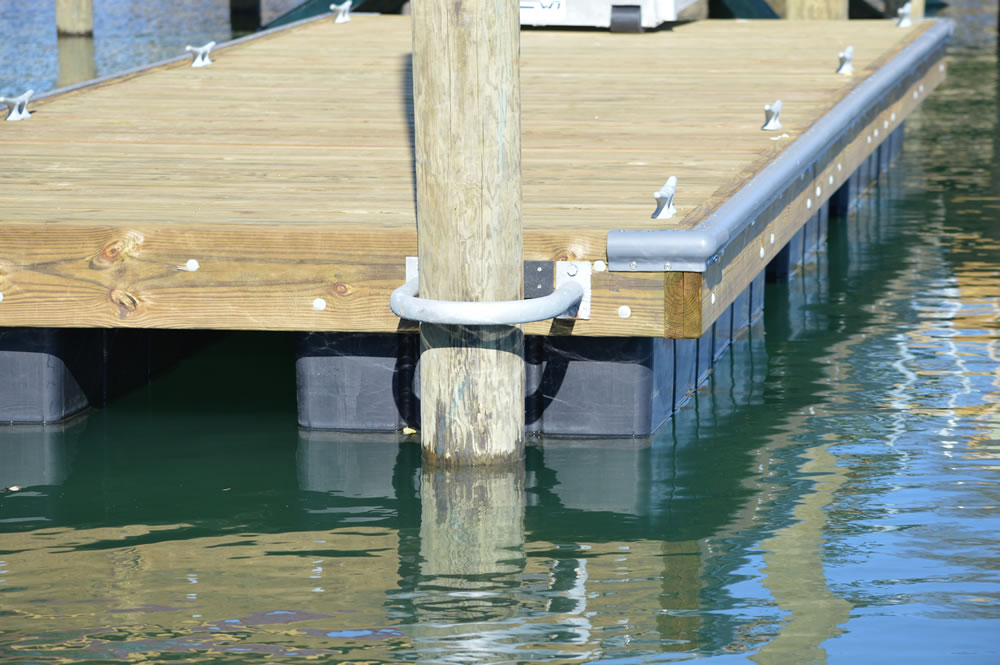
Anchoring systems control how a floating dock moves throughout changing water conditions. Common solutions include pile-guided systems, which allow vertical movement while limiting lateral drift, making them popular in both residential and marina settings.
Other anchoring methods include:
- Fixed pilings
- Weighted anchors
- Chain and cable systems
- Shore connections
Improper anchoring can cause excessive movement, twisting, or stress at connection points. Correct anchoring is one of the most important elements of floating dock construction.
Environmental Factors That Influence Floating Dock Longevity
Where a floating dock is installed matters just as much as its construction quality. Exposure levels across different waterfront environments can make or break the dock’s lifespan.
How Water Conditions and Boat Traffic Impact Dock Wear
Calm inland waterways typically allow docks to last longer. Heavy boat traffic, strong currents, and constant wake exposure add a lot of wear and tear to the connections.
How Climate, Storms, and Seasonal Changes Affect Dock Lifespan
Regions with freeze-thaw cycles place added stress on dock materials. Ice movement, storms, and temperature swings can reduce lifespan. Thus, any floating dock construction worth its salt should take them into consideration.
Saltwater vs. Freshwater: How Location Changes Dock Durability
Saltwater is corrosive and requires higher-grade materials. Docks built without marine-grade or corrosion-resistant components often deteriorate faster.
How Storms and Flooding Affect Floating Dock Performance Over Time
Floating docks generally perform better than fixed docks during flooding events. Because they rise with water levels, modular floating docks and pile-guided systems are less likely to be submerged or structurally compromised.
But, storms still pose risks. Wind, surge, and debris can damage unsecured docks. Floating dock construction projects should always be proactive, not reactive, about storm resilience.
For homeowners in storm-prone areas, applying strategies similar to these hurricane-proofing recommendations for waterfront exteriors can significantly reduce damage risk.
Floating Dock Maintenance Expectations for Long-Term Use
Maintenance helps squeeze the most longevity out of a dock. But even the best maintenance on the planet can’t make up for poor construction quality. Most maintenance tasks are simple, periodic, and preventative, especially when homeowners follow proven best practices for protecting a floating dock from long-term wear and exposure.
Common maintenance practices include:
- Inspecting hardware and pile guides annually
- Cleaning algae and debris buildup
- Checking floats for levelness and water intrusion
- Adjusting anchors or pile-guided systems as conditions change
Neglecting small issues can allow minor problems to become major repairs over time.
How Often Do Floating Docks Need Repairs or Component Replacement?
Most floating docks need minor repairs long before full replacement becomes necessary. Hardware, cleats, ladders, and decking usually wear out first in long-term use.
Structural components such as floats and frames often remain functional for decades. In many professionally built modular floating dock systems, replacing individual parts extends usable life without requiring a full rebuild.
This modular design is one reason people consider floating docks a long-term waterfront investment.
Warning Signs Your Floating Dock May Need Repair or Replacement
Homeowners should check docks regularly for early warning signs. Addressing issues early often prevents larger structural failures.
Common signs include:
- Uneven or sinking dock sections
- Excessive wobbling or lateral movement
- Cracked or deteriorating decking
- Corroded or loose hardware
- Visible float damage or water intrusion
Always evaluate any signs of failure as soon as possible.
Floating Dock Construction vs. DIY Dock Installation: Lifespan Differences
DIY floating dock kits are available, but lifespan outcomes vary widely. In real-world waterfront conditions, many docks that fail early were not designed as true modular floating docks or were installed without proper anchoring systems.
Professional floating dock construction accounts for factors kits often overlook. Load calculations, pile-guided system design, and site conditions are evaluated before installation begins.
Over time, professionally constructed docks tend to need fewer major repairs and offer longer service life.
Why Proper Dock Installation Planning Protects Long-Term Durability
Installation planning affects how a dock handles daily use and extreme conditions over decades. Factors such as boat size, traffic patterns, shoreline layout, and environmental sensitivity all influence long-term performance.
A dock built without considering these elements may experience uneven loading or repeated stress in the same areas. Over time, that stress shortens usable lifespan.
Installation planning should also consider seasonal risks, including advance preparation steps similar to those used when preparing a marine construction site for Wilmington’s storm season.
Thoughtful planning protects both the dock and the surrounding shoreline.
Floating Dock Lifespan Compared to Fixed Dock Construction
Floating docks often outlast fixed docks in areas with fluctuating water levels over long periods. The changing conditions eat away at fixed docks, making them more vulnerable.
In stable water bodies, fixed docks can still perform well. For many waterfront homeowners, floating docks, especially modular floating docks with pile-guided systems, offer greater adaptability and resilience.
Lifespan comparisons should always take local conditions into account over generalized guidelines.
Understanding Floating Dock Costs Through a Long-Term Lifespan Lens
A longer-lasting dock often costs more upfront. Higher-quality materials, eco-friendly dock materials, and professional floating dock construction increase initial investment.
Over the full lifespan of the dock, those costs are often offset by fewer repairs, reduced replacement needs, and lower risk of structural failure. Lifespan should be viewed as part of total ownership cost.
Short-term savings can lead to long-term expenses.
How Long Can a Professionally Built Floating Dock Really Last?
Many floating docks exceed 30 years of service when properly constructed and maintained. In long-term waterfront installations, floats, frames, and pile-guided systems often remain functional even longer.
Upgrades and component replacements allow docks to evolve rather than be replaced entirely. Lifespan is frequently extended through thoughtful maintenance and periodic improvements.
Longevity is rarely an accident.
Key Takeaways: Floating Dock Lifespan and Construction Insights
- Most floating docks last 20 to 30 years or longer
- Floating dock construction quality is as important as material choice
- Modular floating docks allow easier upgrades and longer service life
- Proper anchoring and pile-guided systems extend dock lifespan significantly
- Maintenance preserves performance but does not correct poor installation
Planning Floating Dock Construction for Decades of Use
Most floating docks are capable of lasting 20 to 30 years or longer when built correctly. From a marine construction perspective, lifespan depends far more on floating dock construction quality, anchoring systems, material selection, and environmental planning than on marketing claims.
For waterfront homeowners, understanding how modular floating docks, pile-guided systems, and eco-friendly dock materials affect longevity is essential to making a smart long-term investment. A well-planned dock can remain safe, functional, and reliable across decades of changing conditions.
Taking a construction-first approach helps confirm that a floating dock delivers value throughout its full lifespan.