
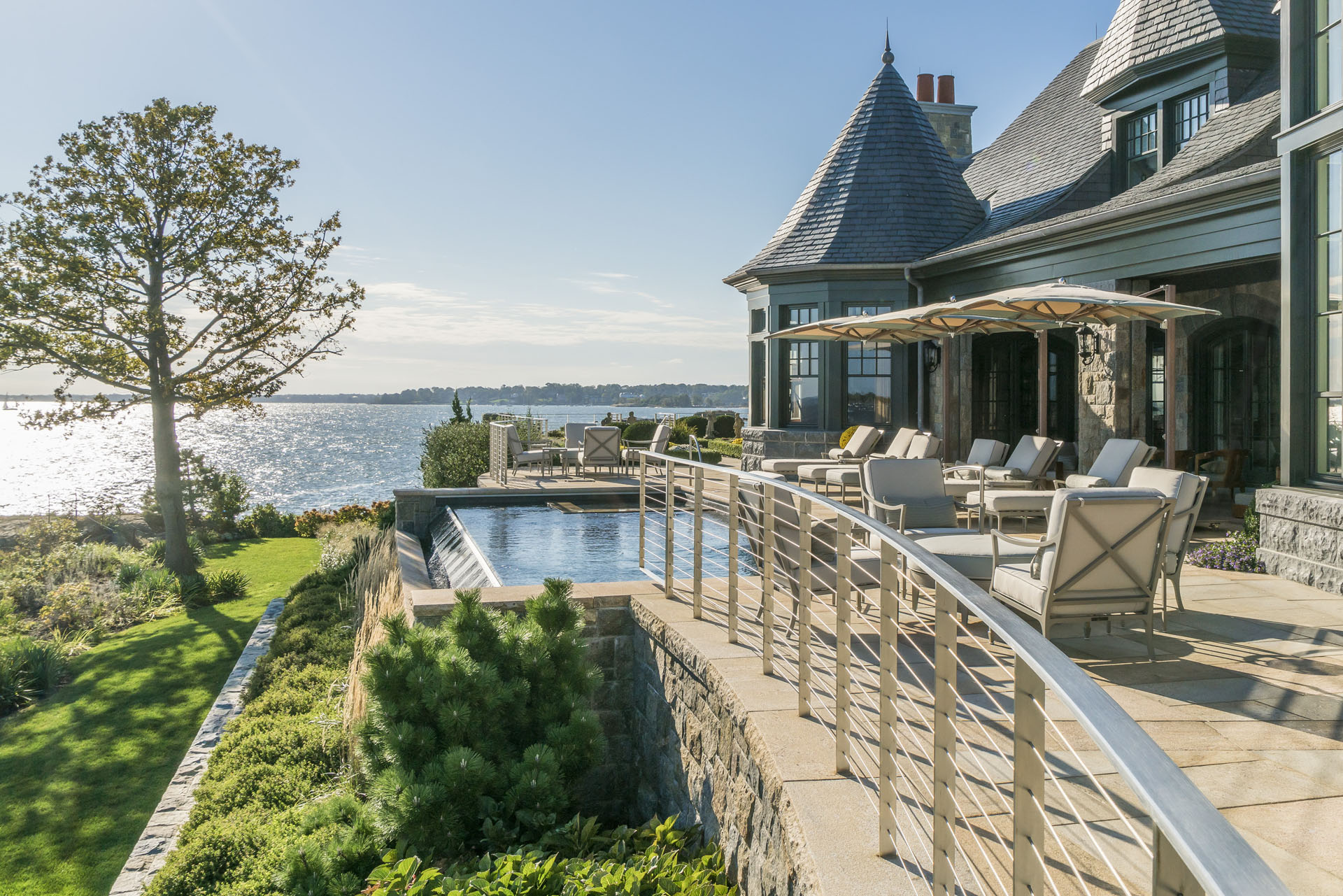
In the Connecticut shoreline, a pool transcends its status as a mere backyard feature. It cements itself as a part of daily coastal living, illuminated by the sun, kissed by the wind and salt air. Those elements make pools especially appealing, but they also demand a smarter design approach than that of inland properties.
Style’s a huge part of coastal pool design in Connecticut, but there’s more to it than that. The salt air, persistent wind, and intense sunlight place constant stress on materials, finishes, and comfort. When design decisions account for these forces from the start, the result is a pool that feels natural to the setting and holds its beauty for years.
Quick Answer: How Do You Design a Coastal Pool in CT That Lasts?
Designing a long-lasting coastal pool in Connecticut means planning for sun exposure, prevailing winds, and salt air from the Long Island Sound. The most successful coastal pools use corrosion-resistant materials, wind-conscious layouts, glare-controlled lighting, and native landscaping. These choices protect finishes, improve comfort, and help the pool age gracefully in shoreline conditions.
Why Pool Design Near the Connecticut Coast Requires a Different Approach
Pools near the Connecticut shoreline face environmental pressures that inland pools don’t. The salt air corrodes even the most durable materials, for example. Over time, that takes a toll on metals, finishes and fixtures. hese challenges are exactly why understanding what makes a pool made for the coast in Connecticut is essential before planning any shoreline project.
Wind adds another layer of complexity. While breezes cool the air, they can also chill water temperatures, increase evaporation, and make seating areas uncomfortable. Sun exposure makes these things worse, reflecting light off open water, increasing glare and fading finishes.
Coastal pool design must account for all three forces together. Ignoring even one often leads to faster wear and reduced comfort. Many shoreline properties also present grading and soil challenges, and learning how builders approach tough coastal lots can help homeowners avoid costly compromises.
How to Plan Sun Exposure for a Coastal Pool Along the CT Shoreline
The sun’s orientation is an often overlooked part of how coastal pools feel and perform. Open horizons and reflective water signal boost that sunlight throughout the day. Handled correctly, they can make the swimming experience that much better. Handled incorrectly, they can put a serious damper on the day.
Problems arise when sun exposure goes unmanaged. Decking can overheat, glare can make the pool uncomfortable to use, and finishes may fade prematurely. Thoughtful planning balances warmth with visual comfort.
Sun-smart coastal pool design usually includes:
- Pool orientation that captures warmth without excessive glare
- Shade structures such as pergolas or architectural overhangs
- UV-stable finishes and lighter-toned decking to reduce heat buildup
Wind-Smart Pool Layouts That Keep Connecticut Coastal Pools Comfortable
Wind is an inevitable part of life, but you can’t let it control how often you use your pool. Understand how the air moves across your property, to determine the best places for shelter against it. When pools feel colder or less usable than expected, it’s time to rack your brain for some CT shoreline pool wind protection ideas.
Even if the sun’s blistering, your pool will lose heat faster and feel colder if there’s no wind protection. When gusts funnel across open water or between structures, it gets uncomfortable. That’s why wind protection must be included from the get go instead of tacked on as an afterthought.
Effective wind mitigation often involves:
- Placing pool houses, walls, or raised features to break prevailing gusts
- Using glass fencing to reduce airflow while preserving views
- Layering landscaping to soften wind without fully blocking it
With the right wind management, the pool environment feels calmer and noticeably warmer.
Salt-Resistant Pool Materials That Protect Coastal Pools in Connecticut
Material selection is one of the most important decisions in coastal pool design. Salt exposure shortens the lifespan of standard materials, even with diligent maintenance. Homeowners researching the best materials for saltwater pools in Connecticut quickly discover that coastal conditions demand a higher standard.
Metals and finishes that perform well inland often fail faster near the shore. Salt residue settles invisibly and builds over time, corroding and breaking down the surface. Choosing proven coastal materials reduces long-term repairs and protects the investment.
High-performing coastal material choices include:
- Marine-grade stainless steel for structural and exposed components
- Epoxy-coated hardware for rails, anchors, and fasteners
- Glass tile or quartz aggregate finishes for low porosity
- Composite decking designed for moisture and UV exposure
There are also affordable salt-resistant pool options for Connecticut homes. Composite decking, properly sealed concrete, and mid-range quartz aggregates often provide strong coastal performance without the premium cost.
Coastal-Ready Pool Materials Comparison
| Material or Feature | Why It Matters Near the Coast |
| Marine-grade stainless steel | Resists rust and salt-related pitting |
| Epoxy-coated hardware | Extends lifespan of rails and fasteners |
| Glass tile or quartz aggregate | Nonporous and easier to clean |
| Composite decking | Withstands moisture and sun exposure |
| UV-stable finishes | Prevents fading in strong coastal light |
Designing a Coastal Pool Area That Feels Comfortable All Season Long
A coastal pool should feel usable throughout the season, not just on the best few days. Wind, sun, and temperature swings all affect how often homeowners enjoy the space.
Comfort comes from creating zones that respond to changing conditions. Shade, shelter, and durable furnishings allow the pool area to adapt throughout the day and season.
Common comfort-enhancing features include:
- Pergolas or cabanas for filtered shade
- Retractable awnings or louvers for adjustable light control
- Sheltered seating near walls or landscape buffers
- Marine-rated outdoor fabrics that resist mildew and fading
These features help coastal pools remain inviting from spring through fall.
Coastal Pool Lighting in CT: How to Create Nighttime Glow Without Glare
Nobody will want to use your coastal pool after dark if the lighting’s lacking. Glare becomes much more noticeable as light reflects off the water, glass, and surrounding materials. Homeowners who want to refine their approach can explore this guide on pool lighting that shines without glare for deeper insight into fixture placement and color temperature.
Account for this with warm lighting that creates a softer, more relaxing nighttime atmosphere. Cooler white lights tend to sparkle harshly on still water, making the space feel bright but uncomfortable.
Effective coastal lighting design relies on:
- Warm LEDs in the 2700–3000K range
- Downward-aimed fixtures to avoid surface reflection
- Layered lighting rather than single bright sources
This approach enhances visibility while preserving a calm coastal mood.
Landscaping Ideas That Support Coastal Pool Design in Connecticut
Landscaping around a coastal pool adds to the aesthetic, but also serves a functional role. The right plants, for instance, help manage wind, filter salt spray, and stabilize soil in shoreline environments.
Native and salt-tolerant plants tend to thrive with less intervention. They withstand exposure better than ornamental varieties and maintain their appearance through seasonal shifts.
Well-planned landscaping supports:
- Natural wind buffering
- Reduced salt drift near hard surfaces
- Privacy without blocking views
When integrated thoughtfully, landscaping reinforces the pool’s connection to its coastal setting.
Designing Coastal Pools in CT With Long-Term Maintenance in Mind
Coastal pools enjoy designs that anticipate long-term care. Even durable materials last longer when layouts support easy inspection and cleaning.
Maintenance-friendly design includes accessible fixtures, finishes that tolerate rinsing, and drainage that directs salt-laden water away from sensitive surfaces. These decisions reduce wear over time.
Pools designed with maintenance in mind maintain their appearance longer and need fewer major repairs.
Common Coastal Pool Design Mistakes Homeowners Make
Many coastal pool issues stem from treating shoreline projects like inland builds. Standard materials, unprotected layouts, and overly bright lighting may look fine at first. But, they struggle under salt air and constant exposure. Designing specifically for coastal conditions helps avoid premature wear and comfort issues later.
Coastal vs. Inland Pool Design in Connecticut: What Homeowners Should Know
The contrast between coastal and inland pool design highlights why shoreline pools need specialized planning. Inland pools often focus on privacy and seasonal use, while coastal pools must handle year-round exposure.
Coastal vs. Inland Pool Design Comparison
| Design Factor | Coastal Pool (CT) | Inland Pool |
| Material selection | Marine-grade, UV-stable | Standard materials |
| Lighting approach | Warm, glare-controlled | Brighter mixed tones |
| Landscaping | Salt-tolerant natives | Decorative ornamentals |
| Maintenance planning | High exposure awareness | Seasonal focus |
| Orientation | Wind and sun optimized | Privacy oriented |
Design Details That Help Coastal Pools Blend Naturally With the Shoreline
Small design details often determine whether a pool feels integrated or out of place. Coastal pools enjoy elements that echo their natural surroundings. In some shoreline settings, designing for the view with a vanishing edge can further enhance the connection between the pool and the landscape.
Design details that reinforce coastal cohesion include:
- Pale stone decking that stays cooler underfoot
- Rounded coping edges that mirror natural rock forms
- Frameless glass fencing that preserves views and reduces wind
- Furniture in driftwood or teak tones
Frameless glass fencing also aligns with modern discreet safety solutions for luxury backyards, protecting family members without interrupting sightlines.
At-a-Glance: Smart Coastal Pool Design Priorities
- Plan for sun, wind, and salt exposure from day one
- Choose corrosion-resistant, coastal-rated materials
- Design layouts that reduce wind without blocking views
- Use warm, glare-free lighting near water
- Select landscaping that supports comfort and durability
Key Takeaways for Smart Coastal Pool Design in Connecticut
- Design coastal pools for constant exposure to sun, wind, and salt
- Salt-smart materials protect finishes and hardware over time
- Wind-conscious layouts improve comfort and usability
- Glare-free, warm lighting enhances nighttime enjoyment
- Native landscaping supports durability and visual harmony
- Maintenance planning should begin at the design stage
Bringing It All Together: Designing a Pool That Truly Belongs on the CT Coast
A successful coastal pool works with its environment rather than against it. When you align durability, comfort, and aesthetics, the space feels effortless and enduring. Thoughtful coastal pool design in Connecticut considers sun exposure, wind behavior, salt air, and long-term maintenance as part of a single system.
By choosing the right materials, layouts, lighting, and landscaping, homeowners can create pools that remain inviting year after year. If you are planning a shoreline project, contact a local expert for personalized coastal pool design in Connecticut and guidance tailored to your property’s unique conditions.